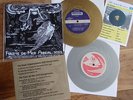
Jethro Tull ? Stand Up ? Rare 1969 Reprise Records 1st Press LP w/Pop-Up Cover
$
17


Favourite Auctions
To save auctions to your favourites, please login
If you don't have an account, please register
Description
Welcome to Classic Cadillac Records! My goal is to provide each and every customer with the best possible buying experience, no matter the size of the order. Unlike most sellers, I advertise all my items clearly and in as much detail as possible, without shouting at you in all caps. I take multiple high quality pictures and never use stock photos, so you know exactly what you’re buying. I take great pride in my work and go the extra mile, which can clearly be seen in my listings compared to other sellers that put minimal effort into theirs. I visually grade all my records as accurately as possible and will never grade anything above Near Mint unless it’s still sealed. Please note that a visual grade can differ from a play grade, and am happy to spot check a record upon request. All orders are shipped within 1 business day (usually sooner) and packed with extra care to ensure fast, safe arrival. I combine shipping on multiple orders to save you money and gladly ship worldwide. Please look closely at all pictures, read all relevant details and ask any questions you may have before buying. I offer a full 30-day return policy on everything I sell, so buy with confidence! And most importantly, thanks for looking!
Stand Up Cover art by James Grashow Studio album by Jethro Tull Released 1 August 1969 (UK)
October 1969 (US) Recorded April–May 1969 at Morgan Studios, London, also Olympic Studios on 24 April 1969 Genre Hard rock, folk rock, blues rock Length 37:48 Label Island (Europe)
Reprise (US and Oceania) Producer Terry Ellis and Ian Anderson Jethro Tull chronology This Was
(1968) Stand Up
(1969) Benefit
(1970) Singles from Stand Up
- "Sweet Dream (UK and Europe)"
Released: October 1969 - "Bourée"
Released: October 1969 (Europe only)
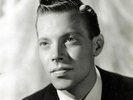
Stand Up is the second studio album by the British rock band Jethro Tull, released in 1969. Before recordings for the album began, the band's original guitarist Mick Abrahams resigned because of musical differences with Ian Anderson; Abrahams wanted to stay with the blues rock sound of their 1968 debut, This Was, while Anderson wished to add other musical influences such as folk rock. He was replaced by guitarist Martin Barre, who appeared on every Jethro Tull album from this point on.
Stand Up represents the first album project on which Anderson was in full control of the music and lyrics. The result was an eclectic album with various styles appearing in its songs, yet an album which remained somewhat in the blues rock mould, which would be the last such album from Jethro Tull.
The album quickly went to number 1 in the UK charts, while the non-album single "Sweet Dream" rose to number 7.
Recording
The band began recording the album on 17 April 1969, starting with "A New Day Yesterday", "Back to the Family", "Fat Man", "Jeffrey Goes to Leicester Square" (referring to singer Ian Anderson's schoolmate Jeffrey Hammond), "Nothing Is Easy" and "Bourée". Most of the songs were recorded at Morgan Studios in north London, but "Bourée" was recorded at Olympic Studios in south London because Morgan Studios was already booked for 24 April. The general routine was that the band would arrive at the studio at 9 am to work on one or two songs which would be finished by 4 or 5 pm. Recording engineer Andy Johns tried some new techniques; for example on "A New Day Yesterday" he achieved a swirling, stereo-shifting guitar effect by swinging an expensive Neumann U67 microphone on its cable in wide circles around the studio.[4] The song "Bourée" proved the most difficult session, with Anderson and the band unsatisfied with any of the takes they recorded. The final version was compiled later from several takes, with more touches added by Anderson. Two more songs were recorded on 1 May 1969: "For a Thousand Mothers" and "We Used to Know".
Album cover
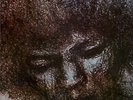
The design of the album cover started with a visit to New Haven, Connecticut during a concert tour in late February 1969. Under the direction of producer Terry Ellis, the band met a woodcarver named James Grashow who followed them for a week in order to properly represent them in wood. The resulting gatefold album cover, in a woodcut style designed by Grashow, originally opened up like a children's pop-up book so that a cut-out of the band's personnel stood up, evoking the album's title. Stand Up won New Musical Express's award for best album artwork in 1969.
Musical style
The album still shows a great blues influence, as in the first track "New Day Yesterday". The song "Fat Man" shows an interest in unusual instrumentation, as Ian Anderson plays mandolin, one of the first times the instrument had been used by a rock band. The acoustic pieces, like "Reasons for Waiting", already show Anderson under the influence of Roy Harper. The instrumental "Bourée" (one of Jethro Tull's popular concert pieces) is a jazzy re-working of "Bourrée in E minor" by Johann Sebastian Bach.
Ian Anderson has said that the chord progression in "We Used to Know" was picked up subconsciously by the Eagles when they toured together in 1971 or 1972 and used in their song "Hotel California". However Don Felder, who wrote the music for "Hotel California", did not join Eagles until 1974. In a 2016 interview, Anderson stated that the chord progression had likely been used in earlier songs and also called "Hotel California" a "much better song" than "We Used to Know".
Themes
Although not a concept album, Stand Up lyrically is filled with references to Anderson's relationship with his parents (a subject continued on Benefit), especially in "Back to the Family" and "For a Thousand Mothers". Observational poetry could also be found, as in "Fat Man" and "Jeffrey Goes to Leicester Square". The difficult life before the band's success were described in "We Used to Know" – remembering the hard life Anderson and bassist Glenn Cornick had at the beginning of the group.
Critical reception
Professional ratings Review scores Source Rating AllMusic Robert Christgau B? PopMatters Record Collector Rolling Stone (favourable)Stand Up received mixed reviews upon its release, but more recent evaluations praised the album as a whole, for the production and musicianship.
The 1969 Rolling Stone review was quite positive, stating that the album "has a fairly low raunch quotient, true to form, but it is quite marvelous" and also that "the album is not really funky; rather, it is a meticulously crafted work (no sterility implied) which deserves careful listening. At a time when many of the established stars are faltering, it is a particular pleasure to hear an important new voice." The contemporary Disc and Music Echo review was less favourable; it considered the expensive cover the "most impressive" part of the album and Jethro Tull a good live band but still incapable of producing a "musically interesting" release. American critic Robert Christgau reiterated his dislike of the band, but judged the album "adequate".
A retrospective AllMusic review was positive, saying that the band had "solidified their sound" with the album, bringing an "English folk music" influence to several of the songs, atop an overall blues rock foundation. Sean Murphy of PopMatters more emphatically wrote that Stand Up was a "meaningful document from what turned out to be a very transitional moment in rock history... a document created in a rapidly closing artistic window, pre-prog but post-British blues and psychedelic rock." He praised the musicianship of the players and remarked the first examples of "the first-rate lyricist Anderson would quickly become." The Record Collector review highlights how "the album captured the band on a vertiginous upswing, jubilant with confidence following the drafting in of guitarist Martin Barre" and contained "a fresh batch of diverse but uniformly strong compositions".
Legacy
A variety of rock artists have cited Stand Up as an all-time favorite album over the years, including Pearl Jam's Eddie Vedder, Aerosmith's Tom Hamilton, Joe Bonamassa, and Joe Satriani.
During an interview with BraveWords in 2015, Anderson selected Stand Up as his favorite Tull album: "I suppose if you were to really twist my arm, I would probably go back to 1969, with the Stand Up album, because that was my first album of first really original music. It has a special place in my heart."
Track listings
All songs written by Ian Anderson, unless otherwise indicated. (Original LP album states "All titles written by Ian Anderson").
1969 Original release
Side one No. Title Length 1. "A New Day Yesterday" 4:10 2. "Jeffrey Goes to Leicester Square" 2:12 3. "Bourée" (Instrumental; J. S. Bach, arr. by Anderson) 3:46 4. "Back to the Family" 3:48 5. "Look into the Sun" 4:20 Side two No. Title Length 6. "Nothing Is Easy" 4:25 7. "Fat Man" 2:52 8. "We Used to Know" 4:00 9. "Reasons for Waiting" 4:05 10. "For a Thousand Mothers" 4:13price rating