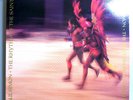
James Brown HOT (Still Sealed) MINT Old Store Stock
$
35


Favourite Auctions
To save auctions to your favourites, please login
If you don't have an account, please register
Description
Still Sealed Mint Minus
James Brown
HOT
Polydor Records 6059 (1975)
Missing a small portion or the top right corner of shrink wrap
This should not effect the vinyl or value but leaves a small ding on corner.
Besides this blemmish, this album is MINT
A Rare Find
I will gladly give combined shipping discounts!!!
Check out my other items!
Be sure to add me to your favorites list!
1 Hot (I Need to Be Loved, Loved, Loved) James Brown James Brown 6:03 2 So Long James Brown 3:20 3 (I Love You) For Sentimental Reasons James Brown 3:51 4 Try Me James Brown James Brown 5:42 5 The Future Shock of the World James Brown James Brown 4:04 6 Woman James Brown James Brown 3:51 7 Most of All James Brown 4:03 8 Goodnight My Love James Brown 5:07 9 Please, Please, Please James Brown James Brown 6:571970–1976: Godfather of Soul
Main article: The J.B.'sIn March 1970, most of the members of Brown's mid-to-late 1960s road band walked out on him due to money disputes. Additionally, The Famous Flames singing group disbanded for the same reason, with only original and founding member Bobby Byrd electing to remain with Brown. Brown and Byrd subsequently recruited several members of the Cincinnati-based The Pacemakers, which included Bootsy Collins and his brother Phelps "Catfish" Collins; augmented by the remaining members of the 1960s road band (including Fred Wesley, who rejoined Brown's outfit in December 1970) and other newer musicians, they would form the nucleus of The J.B.'s, Brown's new backing ensemble. Shortly following their first performance together, the band entered the studio to record the Brown-Byrd composition, "Get Up (I Feel Like Being a) Sex Machine"; the song and other contemporaneous singles would further concretize Brown's influence in the nascent genre of funk music. This iteration of the J.B.'s dissolved after a March 1971 European tour (documented on the 1991 archival release Love Power Peace) due to additional money disputes and Bootsy Collins' use of LSD; the Collins brothers would soon become integral members of Parliament-Funkadelic, while a new lineup of the J.B.'s coalesced around Wesley, St. Clair Pinckney, and drummer John Starks.
In 1971, Brown began recording for Polydor Records which also took over distribution of Brown's King Records catalog. Many of his sidemen and supporting players, including Fred Wesley & the J.B.'s, Bobby Byrd, Lyn Collins, Vicki Anderson and former rival Hank Ballard, released records on the People label, an imprint founded by Brown that was purchased by Polydor as part of Brown's new contract. The recordings on the People label, almost all of which were produced by Brown himself, exemplified his "house style". Songs such as "I Know You Got Soul" by Bobby Byrd, "Think (About It)" by Lyn Collins and "Doing It to Death" by Fred Wesley & the J.B.'s are considered as much a part of Brown's recorded legacy as the recordings released under his own name. That year, he also began touring African countries and was received well by audiences there. During the 1972 presidential election, James Brown openly proclaimed his support of Richard Nixon for reelection of the presidency over Democrat candidate George McGovern. The decision led to a boycott of his performances and, according to Brown, cost him a big portion of his black audience. As a result Brown's record sales and concerts in the United States reached a lull in 1973 as he failed to land a number-one R&B single that year. Brown relied more on touring outside the United States where he continued to perform for sold-out crowds in cities such as London, Paris and Lausanne. That year, Brown also faced problems with the IRS for failure to pay back taxes, charging he hadn't paid upwards of $4.5 million, five years earlier, the IRS claimed he owed nearly $2 million.
In 1973, Brown provided the score for the blaxploitation film Black Caesar. He also recorded another soundtrack for the film, Slaughter's Big Rip-Off. Following the release of these soundtracks, Brown acquired a self-styled nickname, "The Godfather of Soul", which remains his most popular nickname. In 1974, he returned to the No. 1 spot on the R&B charts with "The Payback", with the parent album reaching the same spot on the album charts; he would reach No. 1 two more times in 1974 including "My Thang" and "Papa Don't Take No Mess". Later that year, he returned to Africa and performed in Kinshasa as part of the buildup to The Rumble in the Jungle fight between Muhammad Ali and George Foreman. Admirers of Brown's music, including Miles Davis and other jazz musicians, began to cite Brown as a major influence on their own styles. However, Brown, like others who were influenced by his music, also "borrowed" from other musicians. His 1976 single "Hot (I Need To Be Loved, Loved, Loved, Loved)" (R&B #31) used the main riff from "Fame" by David Bowie, not the other way around as was often believed. The riff was provided to "Fame" co-writers John Lennon and Bowie by guitarist Carlos Alomar, who had briefly been a member of Brown's band in the late 1960s.
Brown's "Papa Don't Take No Mess" would be his final single to reach the No. 1 spot on the R&B charts and his final Top 40 pop single of the 1970s, though Brown continued to occasionally have Top 10 R&B recordings. Among his top ten R&B hits during this latter period included "Funky President (People It's Bad)" and "Get Up Offa That Thing", the latter song released in 1976 and aimed at musical rivals such as Barry White, The Ohio Players and K.C. and the Sunshine Band. Brown credited his then-second wife and two of their children as writers of the song to avoid concurrent tax problems with the IRS. Starting in October 1975, Brown produced, directed, and hosted Future Shock, an Atlanta-based television variety show which ran for three years.
Funk Soul
price rating