JOSE CURBELO & ORQ w/SANTITOS COLON: FIESTA#1207 ('54)
$
75


Favourite Auctions
To save auctions to your favourites, please login
If you don't have an account, please register
Description
TITLE : MAKE MINE CHA-CHA-CHA...MAMBO FOR ME..OHOOH!THAT MERENGUE...!
ARTIST : JOSE CURBELO & ORQUESTA (Feauturing among others the great Santitos Colon!, Tony Molina, Etc)...LATER IN '57 SANTITOS RECORDED DANCE MANIA WITH TITO PUENTE!!
LABEL & RECORD #: FIESTA #1207 (1953-54) SEE THE CRISTOBAL DIAZ AYALA WEB SITE FOR MORE INFO!!!
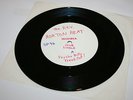
VINYL CONDITION: HEAR SOUNDS CLIPS INCLUDED: glossy, tracks from strong VG+ to VG++ SOME NM!
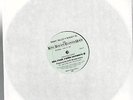
LABELS CONDITIONS: SEE SCAN : NM
COVER CONDITION: SEE SCAN : LIGHT "AGE" WEAR , NO SPLITS!
REMARKS: A GREAT COLLECTORS ITEM!! (TRY TO FIND THIS GEM IN THE WEB!)
A NEW YORK PALLADIUM YEARS STORY: JOSE CURBELO:
In 1959, the "business as usual" attitude of New York City's Latin music world changed when bandleader José Curbelo disbanded and founded the Alpha Artists, a booking agency of Latin music aggregations. What happened the following twenty years is commendable or despicable depending on who you speak to.......at the time nobody asked Tito Rodriguez about him...however if you asked the other Tito (Puente) he was like a GOD....my note..... only once the two TITOs played in the same band, with CURBELO.....) .
Prior to 1959, every Latin band had a manager -- a band representative who would negotiate with club owners the amount of money the group would earn for an evening. The bands were at the mercy of ballroom proprietors, consequently, if a band wanted a gig, it would have to agree to the less-than-musician's-union-scale demanded, or not work at all.
In 1958, pianist/bandleader Charlie Palmieri directed a quintet which featured Johnny Pacheco on flute at the International Casino. The quintet was performing five hours a night for $180. When Curbelo offered Palmieri $200 for two hours work, Palmieri became the first of many Latin music artists to signa three year contract with Alpha Artists. Shortly thereafter, every music group of importance, including Tito Puente, Machito, Tito Rodríguez, La Playa Sextet, Pete Terrace, Orlando Marin, Ray Barretto, Noro Morales, Vicentico Valdés and Orquesta Broadway, had Curbelo representing them. The status quo of club owners of "take it or leave it" soon ended. They either agreed to Curbelo's demands or they wouldn't have any of the prominent bands. With Curbelo's help, musicians were now earning more money for one evening than ever before.
By the mid-60s, when the boogaloo era was flourishing, Curbelo decided to stage dances to increase his cash flow and operate his agency. The young boogaloo bandleaders were hired and paid less than established bands even though the boogaloo was the magnet that packed dance halls.
In 1969, the boogaloo bandleaders decided to band together and demand top billing and same pay as established orchestra leaders, given that they were the drawing attraction. They rebelled against Curbelo and left Alpha Artists. (My note: some web sites and musicians blame, Curbelo as the Czar, Puente, as the bandleader who along with the other great "big band" groups were hurt by the Boogaloo, and DJ Syd Symphony...radio air play, for the boogaloo demise!!) When questioned about his role during the boogaloo mania of the late '60s, Curbelo said, "I started promoting dances and included groups which specialized in boogaloo; the boogaloo bandleaders turned on me; they wanted more money and billing over bands like Tito Puente. This confrontation was bad for business. As a dance promoter, I hired bands for the lowest possible prices; as an agent, I always tried to get the highest price possible; in doing both, I hurt the boogaloo bands which should have been my first concern. When I realized I did them wrong, I stopped staging dances and booked bands only. I was going to make it up to them, when all of a sudden, the boogaloo had died out."
Curbelo has been vilified by a few musicians for his belief that Tito Puente is Latin music's greatest musician, and for allowing Puente to receive the best gigs and top dollar. Curbelo made sure that between 1960 and 1971 Puente received top billing over every artist except Celia Cruz (my note: a legend tells Tito Rodriguez steppping up a ladder and substituting his last name Rodriguez to the top and Puente to the bottom of the Palladium marquee!!!). He was like a father protecting his son from harm. Curbelo has been the subject of many discussions and I recall what my mentor, Machito Grillo, once told me. "Curbelo is the type of person you want representing you, he fights like a savage animal until he gets you what you've asked him for."
Over the years, I have many opinions about Curbelo, and have most agreed with the publisher of Latin New York magazine who printed in the September, 1978 issue:
Highly successful men are either loved or hated; José Curbelo has been highly successful in music, both as a performer and a businessman. Many promoters have resented him through the years. His crime: demanding respect and top dollar for the talent he represented. In a business filled with small time hustlers, habitually mounting promotions on con jobs, and bad checks, Curbelo was a power to reckon with -- even more powerful than the musicians' union. The mentality of promoters has always been to pay talent as little as possible, while lining their pockets with maximum profit. While the musicians' union couldn't stop a promoter from underpaying bands (or not at all), José was able to literally freeze top talent until a promoter made good his debts. At one time he almost had every major attraction under contract. While most people identify the title "King of Latin Music" with Tito Puente, few realize who is the power behind the throne... the person is José Curbelo. Although Puente has fought with all his musical genius and drive to retain his title, it was Curbelo behind the scene, wheeling and dealing to secure it. As a booking agent, Curbelo ruled with an iron hand, demanding top billing for Puente on every poster and advertisement, creating an image and demanding top dollar for his talent. Throughout his professional career, "José Curbelo has been and continues to be a fierce competitor, a fighter, a doer, a gentleman in the Spanish tradition who commands 'Respeto'."-- IZZY SANABRIA.
"The first thing I did," said Curbelo, "was to get a musicians card so I could work; after I paid for it, I was told that a union regulation prevented me from working until after three months. My first job was at La Martinique at 57th Street & 6th Avenue. Months later in December I was at the union hall when I met a 16 year old musician named Ernesto "Tito" Puente. We were hired for the same gig and it was then I noticed what a great drummer he was. That same week I was offered a job at Miami's Book Club. I recommended Tito for the drummer's spot; Tito accepted and we headed for Miami in my car. We roomed in a bungalow for $5.00 a week. Our septet played Latin, American pop, waltzes, and fox trots. After three months we returned to New York. Tito went his way, I went mine."
Curbelo went on to perform with the orchestras of Xavier Cugat, Juancito Sanabria and Oscar De La Hoya before organizing his 9-piece group in 1942. His orchestra, along with Machito and the Afro Cubans, supplied music for La Conga Club's diners and dancers.
Before 1942 ended, the Curbelo image began to change from bland to fiery Cuban rumbas. After all, he had to compete with Machito's Nague, Chacumbele and La Paella. The true Curbelo sound emerged when he cut loose with piano montunos. Curbelo, as well as Sacassas and Noro Morales, learned that non-Hispanics preferred the Afro-Cuban sound much more than the watered-down Latin American pop sound. His arousing rumbas were mentioned by the columnists of New York dailies.
On a few occasions, Curbelo's face appeared in newspapers with stories about his love affairs with a few of society's gorgeous ladies. By 1946, the Curbelo orchestra was among Latin music's top ten orchestras and a pioneer of the then developing Latin New York sound. His recordings for Coda Records: Llora, Tu Come Pellejo, Canelina and Que No, Que No, featured vocalist Tito Rodríguez, who in 1962 during a musicians' grievance was unable to prove Curbelo had a monopoly on New York's Latin music industry (uhmmmm!)
"Let's set the record straight," said Curbelo, during this interview in 1977 at his office, then located at 53rd St. and Broadway. "I never resented or tried to hurt Tito Rodríguez. I respected him as a man and a great musician. He had this thing about Tito Puente, he was jealous of him and wanted billing over Puente. I did not agree to that since Tito Puente is a composer, a music arranger, a record producer and plays several instruments. What angered me most was his lack of respect of Tito's music credentials. Yes, I protected Tito Puente, the same way I protected everyone under contract to me, and if you want to know why Puente got the best gigs or top dollar, just listen to his recordings and then you'll know why."
The 1946 and '47 Curbelo RCA recordings have the two Tito's as Curbelo sidemen. In 1949, Tito Puente and vocalist Vicentico Valdés became overnight sensations with the Curbelo-Bobby Escoto composition of Abaniquito. In 1952, Tico Records recorded two of Curbelo's most arousing mambos, Paula and El Jibarito. Then in the mid '50s, Curbelo's group included conguero Sabu Martínez, trombonist/vibraharpist Jack Hitchcock, tenor saxophonist Al Cohn, timbalero Jimmy Santiago, and Latin music's best vocalists, the female Mechita, along with Bobby Escoto, Gilberto Monroig, Santitos Colon, Mon Rivera, Tony Molina and Willie Torres.
Curbelo's Fiesta recordings of Cha Cha Cha In Blue (my note:one of the most seeked after recording of Cha Cha In Blue was the one Ismael Rivera made with the early Lito Peña's Orquesta Panamericana singing in english.....up to my knowledge it was recorded only on a 78 rpm record!), Que Se Fuñan, and La Familia were in every jukebox in Hispanic communities across the United States. In 1971, he left the New York scene for a career in Miami real state.
He returned in 1976, signed all of the charangas on the scene; included special attractions like La Lupe, Santos Colon, Vitin Avilés, Linda Leyda, and the up-and-coming trumpet conjunto of Willie Millan and Saoco. By the beginning of the '80s, new powers emerged to control the New York Latin music world. At the moment, José Curbelo lives in Miami. He has accomplished much in life, but what he is most proud of, is how he improved the Latin musician's livelihood and got them the respect they deserved.
TRACKS SIDE A"
1- POCO PELO
2- LA LA LA
3- DO RE MI
4- GUILLERMINA
5- MAMBO Y CHA CHA CHA
6 ATIENDEME
TRACKS SIDE B:
1- LA LUNA
2- GUAGUANCO EN NEW YORK
3- LOS FANTASMAS
4- BANDOLERA
5- RENDEZVOUS
6- MIMI
WEB REMARKS: THE NEW YORK 1950s "FIESTA" LABEL PARTIAL DISCOGRAPHY: (in red my choices)
FLP-1201 Ramon Marquez & His Orch. : Cha Cha - Mambo - Merengue
FLP-1202 Monchito & His Mambo Royals : Cha Cha Cha - Mambo - Merengue
FLP-1203 Various Artists : Mambo
FLP-1204 Jose Curbelo & His Quintet : Cha Cha In Blue
FLP-1205 Various Artists : Cha Cha Cha - Mambo - Merengue
FLP-1206 The Tower Islanders : Calypso, Vol. I
FLP-1207 Jose Curbelo & His Quintet : Cha Cha Cha - Mambo - Merengue
FLP-1208 Rene Touzet & The Cha Cha Rhythm Boys : "88" Below The Border
FLP-1209 Tony & Lucille : Dance Lessons In Cha Cha Cha & Merengue
FLP-1210 The Cha Cha Rhythm Boys : All Time Cha Cha Cha & Merengue Hit Parade
FLP-1211 Various Artists : Cha Cha Cha - Mambo - Merengue
FLP-1212 The Tower Islanders : Calypso, Vol. II
FLP-1213 Cuban Cha Cha Cha: Orquesta Fiesta Cubana : "A Dance Date In Havana"
FLP-1214 Music From Spain: Orquestre Bisquets : Paso Dobles
FLP-1215 Various Artists : Arriba!
FLP-1216 Sir Lancelot : Calypso
FLP-1217 Various Artists : Fiesta Time: Cha Cha Cha, Mambo, Merengue, Tango, Samba, Bolero, Rumba
FLP-1218 Juanito and Chico De Madrid : Flamenco
FLP-1219 Jose Curbelo and His Orchestra : Wine, Women and Cha Cha
FLP-1220 Cha Cha Rhythm Boys : The Best Of The Lot
FLP-1221 Randy Carlos and His Orchestra : Having A Ball
FLP-1222 Various Artists : Let's Go Latin
FLP-1225 Argueso and His Orchestra : Cha Cha, Tango, Mambo, Merengue
FLP-1233 Monchito and His Orchestra : Viva! Cha Cha Cha
FLP-1237 Argueso and His Orchestra : Red, Hot & Latin
FLP-1238 Various Artists : Stereo Rhythms (Demonstration Record)
FLP-1242 Jose Curbelo and His Orchestra : Instrumental Cha Cha Cha - Mambo - Merengue
FLP-1243 Argueso and His Orchestra : Tangos
FLP-1245 Randy Carlos and His Orchestra : Hot Cha Cha
FLP-1252 Randy Carlos and His Orchestra : Swingin' With Randy
FLP-1258 Chico O'Farrill : Tropical Fever
VOCALIST: TONY MOLINA:
Over his long and steady career Tony Molina became one of the most in demand singers to ever pack ballrooms. Performing live and on recording as vocalist and conga player, his ability to draw in an audience was put to good use by the orchestras of Joseito Roman, Tito Puente, Fausto Curbelo, Jose Curbelo, Alfredito, and Ramon Argueso to name only a few. And when not on the road, he was the house singer at the Roseland Ballroom in New York.
Dubbed the "Latin Frank Sinatra" by radio stations because of his ability to deliver powerful ballads as well as up tempo tunes, Molina's fame spread via live broadcasts as well as recordings. Tony Molina's voice appeared at the top of charts both in this country as well as internationally.
Many of the albums featuring Tony as vocalist are now considered collectibles including one he recorded with his own orchestra. One album he recorded on the Fiesta label with the Jose Curbelo Orchestra became one of the biggest selling recordings of the year 1954. Two cuts from this album (Poco Pelo and La La La) quickly became international hit!!
VOCALIST: SANTOS (SANTITOS) COLON:
Recién llegado a la plaza neoyorquina, Santitos Colón encontró cabida en la orquesta del virtuoso trompetista boricua Jorge López, permaneciendo en sus filas durante casi dos años (1950-1952). Posteriormente, figuró en la del saxofonista español Tony Novo (1952-1953) y en la del pianista cubano José Curbelo. Luego, recomendado por Mongo Santamaría y Willie Bobo, emprendió la que sería más fructífera y significativa pasantía por una orquesta en su carrera: la dirigida por el gran Tito Puente «El Rey del Timbal». Curiosamente, su ingreso a este bandón fue para llenar la vacante dejada por Gilberto Monroig, quien fuera su compañero en la Orquesta Tropicana, la última con que ambos trabajaron en Puerto Rico. Y su debut estuvo bendecido: a fines de aquel mismo año participó en la grabación del LP “Dance Mania” (RCA Victor, LP-1692), que habría de ser el más exitoso en toda la discografía de Puente. Una de las selecciones que incluyó, el bolero “Siempre junto a ti”, del cubano Pepé Delgado, se eternizó en el repertorio de Santitos. Aun durante su posterior etapa como solista el público se la exigía.
SHIPPING CHARGES........FOR GATEFOLDS With 2 Lps ADD S&H FOR 2
ITALY CUSTOMERS:
ITALY……. ADD $11 FOR REGISTRATION!!! No exceptions! Sorry, I’m following Other Dealers Suggestions Regarding Problems With the Delivery/Handling of Items…I personally had 2 of 4 problems, Mexico was the Other) in ten years (Thousands Of Records Sold) in the business!!!
(Gli acquirenti italiani sono tenuti ad aggiungere 11 dollari per la spedizione registrata. Non si fanno eccezioni)
POSTAL RATES & WEIGHTS - LPs
LBS.
0.82
1.4
1.9
2.6
3
# of LPs
1
2
3
4
5
USA MEDIA $4.00 $4.00 $4.00 $4.25 $4.50 USA PRIORITY $6.50 $9.50 $9.50 $11.50 $11.50 EUROPE $14.00 $16.50 $19.00 $24.00 $26.00 ASIA $14.00 $16.50 $19.00 $24.00 $26.00 SOUTH AMERICA $11.50 $15.00 $18.50 $23.50 $27.00 CENTRAL AMERICA $11.50 $15.00 $18.50 $23.50 $27.00 CARIBBEAN $11.50 $15.00 $18.50 $23.50 $27.00 MEXICO $10.00 $13.50 $16.00 $20.75 $22.00 CANADA $6.25 $8.25 $10.25 $13.00 $14.00
* We offer a money back + shipping costs guarantee on our records (unless otherwise noted) if you feel the LP was not graded properly We Must Be Notified Of Any Discrepancy in 2 Days after received. . We will issue a full refund upon its return, once our mistake has been verified. Record Must Be Returned in 3 Days…Foreign in 7 Days….We have available the insurance option…
WE USE STURDY CARDBOARD MADE BY BAGS UNLIMITED IN ORDER TO TO PROTECT YOUR RECORDS FOR ANY MISHANDLING/DAMAGE WHILE IN-TRANSIT
Record Grading: Standard guidelines for grading records comes down to a subjective judgment that may vary from person to person. We grade records and LP covers visually AND (when possible) play-tested. We make every effort to give full disclosure (remember that the LP has at least 12 tracks and the grading may vary between each other) and your satisfaction is guaranteed. Don't assume that our vinyl determination of "Very Good+" is the same as yours!
MM RECORDS: are shiny, with no visible defects. They might have some minor superficial (“Paper”) scuff but they should play without any noise. Writing, stickers or other markings cannot appear on the label, nor can any “spindle marks” from someone trying to blindly put the record on the turntable. Major factory defects also must not be present; a record and label obviously pressed off center is not Near Mint. If played, it will do so with no surface noise. (NM records don’t have to be “never played”; a record used on an excellent turntable can remain NM after many plays if the disc is properly cared for.)
NM COVERS: have no creases, ring wear or seam splits of any kind.
NM PICTURES SLEEVES: should look as if they never housed a record. This is a great reason to remove your 45s from their picture sleeves and keep them separate. Just keeping the 45 inside the sleeve will cause damage than can reduce the grade of the sleeve.
VG++ (Excellent) RECORDS: Barely noticeable play wear and background noise. May have surface scuffs and/or superficial marks, which will be inaudible or indiscernible from the background, no scratches. Very nice, no flaws noted.
VG++ COVERS: Artwork is still as close to perfect as can be. Some impression to the cover (minor outer ring wear) but no ink wear! Some slight creases to the corners, but not wrinkled and obtrusive to the eye. The corners can show white (where the artwork pasted slick was) meaning, slight wear. No seam splits or writing on the cover or taped repairs can make this grade.
VG+ RECORDS: may show some slight signs of wear, including light scuffs or very light scratches that do not affect the listening experience. Slight warps that do not affect the sound are OK. Minor signs of handling are OK, too, such as telltale marks around the center hole, but repeated playing has not misshapen the hole. There may be some very light ring wear or discoloration, but it should be barely noticeable
.VG+ COVERS: should have only minor wear. A VG+ cover might have some very minor seam wear or a split (less than one inch long) at the bottom, the most vulnerable location. Also, a VG+ cover may have some defacing, such as a cut-out marking. Covers with cut-out markings can never be considered Near Mint Unless Tiny/Small (EG: Tiny DH).
VG+ PICTURE SLEEVES: might show some very light creasing where it is obvious that a record once resided (or still does reside). A VG+ picture sleeve might have some very minor seam wear or a split (less than one inch long) at the bottom, the sleeve’s most vulnerable location.
VG RECORDS: have more obvious flaws than their counterparts in better shape. They lack most of the original gloss found on factory-fresh records. Groove wear is evident on sight, as are light scratches deep enough to feel with a fingernail. When played, a VG record has surface noise, and some scratches may be audible, especially in soft passages and during a song’s intro and ending. But the noise will not overpower the music otherwise. Minor writing, tape, or a sticker can detract from the label. Many collectors who have jukeboxes will use VG records in them and not think twice. They remain a fine listening experience, just not the same as if it were in better shape.
VG COVERS and PICTURE SLEEVES: will have many signs of human handling. Ring wear in the middle or along the edges of the cover where the edge of a record would reside, is obvious, though not overwhelming. Some more creases might be visible. Seam splitting will be more obvious; it may appear on all three sides, though it won’t be obvious upon looking. Someone might have written or stamped a price tag on it, too.
RECORDS GRADED VG OR BELOW WILL BE "SOLD AS IS"
(We Will Try To Grade Them As Accurately As Possible!)
TERMS & CONDITIONS
- You bid to win
- I am Honest & Fair and expect you to act in the same manner
- If you change your mind after the auction - I will still be charged by ebay for re-listing the item & for the final auction fee - so will need to file an unpaid item dispute to ensure that I am reimbursed by Ebay - I do not do it as some kind of revenge! so please understand my predicament
- Please ask any questions PRIOR to placing a bid
- Payment within 5 days
- my postage & packaging rates are fair & dispatch will be prompt
- Please leave feedback when your item arrives - then I know that you have received it and I can leave feedback for you
- If you are unhappy in any way please contact me first! Prior to using Negative feedback as we may have been able to reach a resolution that makes both of us happy!
- NEGATIVE FEEDBACK will always be left for timewasters
- Items are listed as accuretly as possible & any faults observed will be brought to your attention in the listing
- Lets make Ebaying a fair & honest way of buying & selling Reasonably products online!