Introducing The Beatles LP 1062 ORG US 1964 VERSION 1 VEE JAY RECORDS LABEL...
$
31


Favourite Auctions
To save auctions to your favourites, please login
If you don't have an account, please register
Description
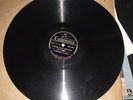
THIS VERSION 1 VARIATION WAS PRESSED BY VEE JAY RECORDS COMPANY IN EARLY 1964. THE SET WAS ORIGINALLY ACCOMPANIED WITH THE ORIGINAL VEE-JAY DIE-CUT GENERIC "WHITE" INNER DUST SLEEVE. THERE IS AN EVIDENCE OF THIS RECORD BEING PLAYED BUT IN A VERY SMALL AMOUNT. FINE SCRATCHES ARE VISIBLE ON THE GROOVES INCLUDING SCUFF MARKS ON BOTH SIDE.
IT IS IN A NICE VG+ CONDITION AND THE SIDE ONE LABEL IN NEAR MINT CONDITION. THE SURFACE OF THE LABEL HAS REMAINED IN ITS ORIGINAL FINISH LIKE NEW SINCE THE DAY IT FIRST LEFT THE RECORD PRESSING PLANT. AMAZINGLY! TOO BAD THAT THE FLIP SIDE LABEL DID NOT SURVIVED AS NICE AS THE SIDE ONE. BUT THE RECORD WILL PLAY NICE. THIS LISTING IS FOR THE RECORD ONLY, NO COVER; SORRY. (INNER SLEEVE WILL BE PROVIDED)
OUT OF ALL THE BEATLES VEE-JAY ALBUMS AND ANY OTHER U.S. COMMERCIAL ISSUED ALBUM, THIS PARTICULAR VERSION OF "INTRODUCING THE BEATLES" IS NOT THE RAREST VARIATION. BUT IT IS AN EARLY 1964 VERSION ONE MONO PRESSING. SONGS TITLES ON THE LABELS ARE IN VERY FINE PRINT IN SILVER. VERY FINE, AND SMALL INCLUDING THE WORD “SIDE 1” and “SIDE 2”! “the” in the title Introducing the Beatles is all in lower case. NOT CAPS. No ”LONGPLAYING” and “MICROGROOVES” are on the labels.
Please view the photos on the condition as this is the exact item you will receive. And it will be mailed in a record mailer box for safe arrival.
If you have any questions, please feel free to contact me.
PLEASE NOTE, I DO NOT SHIP TO CALIFORNIA.
THANK YOU FOR LOOKING!
BELOW ARE SOME INTERESTING TRUE FACTS THAT I THOUGHT YOU MIGHT LIKE TO READ UP ON ABOUT THIS ONE AND ONLY VEE JAY RECORDS COMPANY THAT TOOK PLACE IN AMERICA...
FIRST OFF....
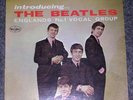
INTRODUCING THE BEATLES LP COVER DESIGN (PHOTO) WAS ORIGINALLY DESIGNED BY ANGUS McBEAN. PICTURE WAS FROM A JANUARY 1963 PHOTO SESSION. (In my thoughts has he ever received royalties?)
Vee-Jay Records is an American record label founded in the 1950s, specializing in blues, jazz, rhythm and blues and rock and roll.
Vee-Jay was founded in Gary, Indiana, in 1953 by Vivian Carter and James C. Bracken, a husband-and-wife team who used their initials for the label’s name. VEE-JAY.
Vee-Jay had a significant success with pop/rock and roll acts, notably the Four Seasons (their first non-black act) and the Beatles. Vee-Jay acquired the rights to some of the early Beatles recordings in a licensing deal with EMI, in which the main attraction at the time was another EMI performer, Frank Ifield.
Vee-Jay's biggest successes occurred from 1962 to 1964, with the ascendancy of the Four Seasons and the distribution of early Beatles material.
Documentation....
“Introducing…THE BEATLES”
(VJLP-1062)
Released January 10th, 1964
*
Vee Jay records had the historic privilege of releasing the very first Beatles album in the United States. Vee Jay records was a successful black label based in Chicago which boasted its major successes with R&B, blues and soul records. By 1962, they had grown in strength enough to include popular music artists, most notably the Four Seasons, and had multiple placements in the Billboard Hot 100 to its credit.
In 1962, Vee Jay records were offered a chance to release a #1 British single in America by Frank Ifield called “I Remember You”, which Vee Jay took to the top 5 in the US. As part of the deal, they accepted a five year contract with an unknown new British band called The Beatles, even though they had yet to have a proper recording session.
Vee Jay released the very first Beatles single in the US, “Please Please Me / Ask Me Why”, on February 7th, 1963 (misspelling the artist as Beattles), which got very little attention and did not place at all on the Billboard charts. They then released a second single on May 27th, 1963, “From Me To You / Thank You Girl” which did get some attention in certain US markets, but only reached number #116 on the Billboard pop charts.
Part of the problem, it is claimed, was that Del Shannon had released a cover version of “From Me To You” which was competing with The Beatles original version on the charts. Since Del Shannon’s version only reached number 77 on the Billboard pop chart in June of 1963, it is evident that the timing was just not right for The Beatles to make an impact in the United States.
Origin of the Album....
Since Vee Jay records had the US contract for releasing The Beatles' records at the time (EMIs US affiliate Capitol Records passed at their opportunity), Vee Jay had prepared to release the first Beatles album in July of 1963, which Vee Jay titled, “Introducing…THE BEATLES, Englands No. 1 Vocal Group”.
For pressing the album, they had the mother plates constructed on July 22nd, 1963. This is why some conclude that the album was released in July 1963, being that this date can be seen in the trail-off area of many of the original albums. Distribution of the album didn’t happen at all until months later because of a “shake-up” at Vee Jay headquarters.
Vee Jay Management Problems....
On August 3rd, 1963, it was released in the press that Vee Jay’s president, Ewart Abner, Jr., as well as others in executive positions, had exited the firm. Also, significantly, The Four Seasons had filed suit against Vee Jay for nonpayment of royalties. This had also been the case with The Beatles' US royalties, as little as they were. Being that The Four Seasons were their top money maker at the time, Vee Jay had no choice but to cut expenses somehow, which resulted in halting the release of many of the proposed albums on their future roster, including “Introducing…The Beatles”.
A gray area then presented itself concerning Vee Jay’s contract to release The Beatles records in the US. EMI asked Vee Jay to release them from the contract they had for Frank Ifield, which Vee Jay did. The future releases for Frank Ifield were on Capitol records. It was then assumed by EMI that this negotiation also released The Beatles from their five year contract with Vee Jay records. Vee Jay claimed that this was not the case, and that they still had the rights to release any Beatles product they had in their possession as they saw fit to do in the future.
Enter Capitol Records...
Capitol Records then entered the Beatles picture. They negotiated a contract with Brian Epstein, The Beatles' manager, to have the rights for all Beatles product, past and future. Capitol agreed to a $40,000 campaign to promote their new Capitol single and subsequent album. Ed Sullivan had already agreed by this time to have The Beatles appear on his show in February 1964. Television news and magazines had been running features on "Beatlemania" as it was happening in England in late 1963.
This temptation was too great for Vee Jay to pass up. Even knowing that a “gray area” existed regarding their still having their initial five year contract with The Beatles, they were in enough financial straits to hold their breath and finally release the proposed “Introducing…The Beatles” album, as well as re-releasing the single “Please Please Me” (this time backed with “From Me To You”). The album was rush-released on January 10th, 1964, becoming the first Beatles album ever released in the United States. They beat Capitol records at their own game by releasing their album ten days before “Meet The Beatles”, the first “official” Capitol Beatles album.
This event did not go unnoticed by Capitol. They filed suit against Vee Jay with an injunction against manufacturing, distributing, advertising, or otherwise disposing of records by The Beatles. This legal fiasco went on for months with multiple suits and countersuits being filed. An early court ruling was against Vee Jay because of their inclusion of the songs “Love Me Do” and “PS I Love You” on their Beatles album, being that both songs were published through Beechwood Music, a subsidiary of Capitol Records. Vee Jay acted quickly by re-pressing the album without those two songs, replacing them with “Ask Me Why” and “Please Please Me.” This new version of the album was released on January 27th, 1964.
Success of “Introducing…The Beatles”.....
The album ended up selling well over a million copies, evidenced by Vee Jay presenting The Beatles with a gold album for “Introducing…The Beatles” backstage at their Hollywood Bowl concert on October 23rd, 1964. The album spent nine straight weeks at the number 2 position on the Billboard album charts, not quite being able to beat out Capitol’s “Meet The Beatles” to the number 1 spot.
INTERESTING FACTS....
It was a shame that the first Beatles album to appear in the US was rush-released in an unflattering record sleeve. The front cover picture was actually a reversed image of the original photograph (as can be seen on the British EP “The Beatles’ Hits”) which is why the parting of their hair and their facial features look somewhat odd.
Usually the reverse side of American LP record sleeves had pictures of the artists as well as liner notes encouraging potential record buyers of the quality of the music contained therein. In this case, because of the rush-release, the back of the sleeve contained only a list of the song titles, underscored by the statement, “America’s greatest recording artists are on Vee-Jay Records.” In fact, the first record sleeves pressed didn’t even have this. The first back cover had advertisements for other albums released on Vee Jay records, such as Jimmy Reed and The Four Seasons. When these ran out, blank white sheets of paper were placed on the back of the album jacket until the back sleeve with the song list could be prepared. Because of the immense hype generated through the Capitol records ad campaign, Vee Jay felt this album would sell even without informing the customers what songs were contained on it. And they were right!
Vee Jay had to eventually relinquish its rights to the early Beatles catalog by October 15th 1964. Before that time came though, they released as many singles, EPs and albums as they saw fit to cash in on the Beatle craze while they could. They even re-released the “Introducing…The Beatles” album in two additional forms. The first was “The Beatles vs. The Four Seasons” (VJDX 30) on October 1st, 1964. This was a double album consisting of The Beatles disc coupled with “'The Golden Hits of The Four Seasons.” Being a higher priced double album, this compilation only peaked at number 142 on the Billboard charts, selling only 20,000 copies.
The second form was the album “Songs, Pictures And Stories Of The Fabulous Beatles” (VJLP 1092) on October 12th, 1964. It was the actual original “Introducing” album placed in a new sleeve. It managed to fool some Beatle fans, as it peaked at number 63 on the US charts, selling 400,000 copies.
Capitol records decided to focus on the early Beatles catalog on March 22nd, 1965 with their album release “The Early Beatles.” As this album only peaked at number 43 on the Billboard charts, Beatles fans were showing themselves not willing to buy the same group of songs they had already purchased many times over. Being that Vee Jay records finally went out of business in May 1966, and “Introducing…The Beatles” has been out of print since October 1964, Capitol records had the official release of the early Beatles catalog, and will for the indefinite future.
It is of interest to note that Capitol records failed to release two of the songs on the “Introducing” album on any Beatles’ album during their career, even when they were in dire need of songs to release on their makeshift US albums. “Misery” and “There’s A Place,” two Lennon/McCartney originals, were not released by Capitol on any album until March 24th, 1980 on the compilation album “Rarities.” Until this date, most Beatles fans considered these two songs “lost” Beatles tracks, as they were not available on any album in the US until then.
Recording The Album....
Recording the entire album in just over 12 hours (excluding the previous single releases) seems like an enormous feat considering the weeks, months and even years recording an album can take today. Although it has been admitted by The Beatles that it was hard work, it wasn’t something that they weren’t used to. Paul stressed in a 1988 interview that, since they were used to the rigors of playing in Hamburg, Germany, having a 12 and a half hour recording session was “no big deal.” They were used to playing sometimes from 7:00pm until 3:00am, six nights a week. Since mid-1960, they had been performing live non-stop on virtually a daily basis. In actuality, the day this album was recorded was on an off day from their first headlining national tour. They weren’t exactly in the peak of physical condition this day, having worked throughout the country through one of the coldest British winters on record. The album had to be completed on this day because of two scheduled performances they had the next evening.
The many books written about their early performance experiences in 1960-62 can make Beatle fans only wonder admiringly at what they sounded like way back then. Lennon, in an interview in 1976, described this album as the closest thing you can get to experiencing how The Beatles sounded live in Hamburg and Liverpool, less the audience of course.
*
Of all the confusion that surrounded the Beatles’ early U.S. releases, perhaps nothing compares with the story of their first American album, Introducing … the Beatles. It was released by Vee-Jay Records on Jan. 10, 1964, 10 days before Capitol issued Meet the Beatles!
The story of how and why this happened began about a year earlier. When the group's second single, "Please Please Me", was released in the U.K., EMI, the parent company of its label Parlophone, offered it to Capitol, its U.S. label. But Capitol turned it down. Another EMI property called Transglobal was brought in to find an American home. So the record was picked up by Vee-Jay, a Chicago R&B label that had hits with Betty Everett, the Impressions, Jerry Reed and the Staple Singers. The company released the song on Feb. 7, 1963.
-ADVERTISEMENT-
While it didn’t become a national hit, "Please Please Me" performed respectably in a few major markets, and plans were made to release the Beatles' debut album of the same name in the U.S., albeit with a modification. At the time, albums in the U.S. didn’t usually have more than 12 songs, two fewer than Please Please Me. So the title track was removed along with the single's B-side, "Ask Me Why," and the album was renamed Introducing … the Beatles.
Vee-Jay intended to have the record in stores by the end of July, but a major financial crisis at the label, which saw the resignation of its president, postponed the release date. Citing nonpayment of royalties from the single, Transglobal voided its contract with Vee-Jay.
By late fall, word about the group started to spread nationwide, and Capitol agreed to release the band's new single, "I Want to Hold Your Hand." As it climbed the charts, Vee-Jay, which still had the earlier masters and most of the artwork ready to go, decided to put out the album, beating Capitol to the punch and figuring that the much-needed cash was worth any legal troubles.
But the label quickly discovered a different legal issue. A week after the record's release, Vee-Jay was slapped with a restraining order by Beechwood Music, which owned the rights to "Love Me Do" and "P.S. I Love You." So the label replaced the two songs with the pair they initially removed, and reissued the LP in early February. It rose to No. 2 on the Billboard 200, where it was kept from the top spot by Capitol's Meet the Beatles!
Then came the matter of the Transglobal issue. Over the next two months, Vee-Jay and Capitol fought in the courts, with Vee-Jay releasing a new version of Introducing … the Beatles every time one of Capitol’s injunctions was lifted. In April, an agreement was reached whereby Vee-Jay had six months to market the songs it controlled, at which point the rights would revert to Capitol.
By the time the changeover took place in October, 1.3 million copies of Introducing … the Beatles had been sold. Possibly because of all the myriad versions, the album has long been a target for counterfeiters looking to prey on unsuspecting consumers.
I CAN GO ON AND ON BUT FOR NOW I’LL STOP HERE. THERE ARE A LOT MORE THAT ARE VERY INTERESTING. VERY! Thank You, and I certainly hope that you have enjoyed learning the story behind this record production. It is indeed fascinating!
price rating