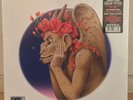
GRATEFUL DEAD [Dark Star/Born Cross] UK [promo] 45/PS
$
203
![GRATEFUL DEAD [Dark Star/Born Cross] UK [promo] 45/PS](https://www.popsike.pics/pix/20100128/360230246442.jpg)

![Pic 2 GRATEFUL DEAD [Dark Star/Born Cross] UK [promo] 45/PS](https://www.popsike.pics/pix/20100128/360230246442_2.jpg)
![Pic 3 GRATEFUL DEAD [Dark Star/Born Cross] UK [promo] 45/PS](https://www.popsike.pics/pix/20100128/360230246442_3.jpg)
![Pic 4 GRATEFUL DEAD [Dark Star/Born Cross] UK [promo] 45/PS](https://www.popsike.pics/pix/20100128/360230246442_4.jpg)
Favourite Auctions
To save auctions to your favourites, please login
If you don't have an account, please register
Description
innersleeve1 Store
1968/77 [UK] WARNER BROS Records SAM 79
PROMO ONLY
LIMITED EDITION PRESSING
made
EXCLUSIVELY FOR THE UK PUBLICATION
DARK STAR
BEING OFFERED HERE IN NM-
[UNPLAYED CONDITION]
*****
*** please note ***
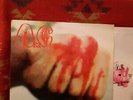
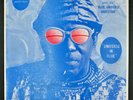
magazine & advertisement
are only pictured to enhance provenance
*** auction is only for 45 and picture sleeve ***
magazine not included
*
VINYL is NM-
1 or 2 very light sleeve related hairlines
never played!
PICTURE SLEEVE is EX++
very light handling wear
--------------------------------------------------------------------------------------------------------------------------------------------------------------------------------------------------
"Dark Star" is the defining song of the Grateful Dead. If you appreciate "Dark Star," you appreciate the Grateful Dead, you are "on the bus," in the group's parlance. If you don't, you're not. The fundamental element in the Grateful Dead's music is free-form improvisation, and with "Dark Star" they found a frame for their wildest explorations. In early 1967, the Grateful Dead, newly signed to Warner Bros., recorded and released their debut album, The Grateful Dead, which, though infused with their unusual style, was still a fairly conventional album of songs. After its release, as they began working on material for their second album, guitarist Jerry Garcia contacted a friend of his, poet Robert Hunter, and asked him to submit lyrics for use in the group's compositions. Hunter, then living in New Mexico, mailed three, and he later returned to the San Francisco Bay area, where the group was based, and began working with them on new material. When he heard them rehearsing a jazzy, modal piece that bore some resemblance to John Coltrane's "A Love Supreme" and also recalled Miles Davis' "So What," he began writing. The words were highly abstract, with a haiku-like impressionism, leading into a phrase that was similar to the opening of T.S. Eliot's poem "The Love Song of J. Alfred Prufrock," "Shall we go then, you and I." The lyrics gave a momentary structure to the improvisations that characterized most of the song. Jerry Garcia later said that they helped shape the direction the song took, noting that "the reason the music is the way it is, is because those lyrics did suggest that to me. That's what happened. They are saying, 'This universe is truly far out.' That's about it. You could take whatever you will from that suggestion. For me, that suggestion always means, 'Great, let's look around. Let's see how weird it really gets.'" (These remarks are quoted in Blair Jackson's biography Garcia: An American Life [New York: Viking, 1999].)
The Dead seem to have recorded a short version of "Dark Star," running less than three minutes, at the sessions for their second album, Anthem of the Sun, and they began playing it in concert, probably premiering it on December 13, 1967, in Los Angeles. They played the song regularly during 1968, but it did not appear on Anthem of the Sun. Instead, the studio version was used as the non-LP B-side of the 1968 single "Born Cross-Eyed," taken from the album. In concert, "Dark Star" continued to develop, and on February 27, 1969, the Dead played a version of the song that ran more than 23 minutes. This performance was recorded and released on the double-LP Live/Dead on November 10, 1969, taking up the entire first side of the first disc. The release helped to educate listeners across the country about what the Dead were trying to do, especially in the case of "Dark Star," which they had been performing frequently during the year -- 64 performances out of 145 shows during 1969. To Deadheads, as fans were coming to be called, "Dark Star" was the ultimate Grateful Dead experience, the "trip" the band represented in its fullest form. (An excerpt of the Dead playing "Dark Star" was heard on the soundtrack of the film Zabriskie Point, which opened in early 1970.) The Dead never again performed "Dark Star" as frequently as they had in 1969, though it remained in their repertoire until their temporary retirement from performing in 1974, with a final performance at the Winterland auditorium in San Francisco on October 18, 1974. When they returned to performing in 1976, it was only rarely played, in fact, only five times in the next 15 years, until October 9, 1989, when, at a show at the Hampton Coliseum in Hampton, VA, where they were billed as "formerly the Warlocks" (the name they had used before the Grateful Dead), they played it again for the first time in more than five years and then returned it to occasional use, continuing to play it at least a couple of times a year until 1994, the year before the band's demise.
This uneven performance history has tended to enhance the mystique of "Dark Star," its reappearances being greeted with rapture by Deadheads. It has appeared on several Grateful Dead albums since Live/Dead. The Warner Bros. compilation ^What a Long Strange Trip It's Been: The Best of he Grateful Dead contained the original studio version, and live versions have been included in many of the band's archival releases of the 1990s and 2000s. The box set So Many Roads (1965-1995) featured two performances of it. "Dark Star" has been covered by jazz and experimental music performers, as well as performers associated with the Grateful Dead. Henry Kaiser put it on his 1988 album Those Who Know History Are Doomed to Repeat It (with Robert Hunter reciting the lyrics), his 1990 album Heart's Desire, and, in a medley with "A Love Supreme," on his 1995 album Eternity Blue; former Grateful Dead keyboard player Tom Constanten put it on his 1989 album Fresh Tracks in Real Time and his 1992 album Nightfall of Diamonds (the record's title a line from the song); Dead Ringers put it on their self-titled album in 1993; David Murray used it as the title track of his 1996 album Dark Star: The Music of the Grateful Dead; jazz group Jazz Is Dead covered it on their 1998 album Blue Light Rain; and Merl Saunders, a frequent musical associate of Jerry Garcia, recorded for his 1998 album With His Funky Friends: Live.
All Music Guide
_________________________________________________________________________________________________________________________________
WE COMBINE SHIPPING!
[the more you buy, the more you save]
International bids with PAYPAL payment only--1st Class International (airmail) shipping ONLY
All records carefully packed in LP shipping boxes with cardboard packing.
Record and inner sleeve removed from cover and put in poly-sleeve. (UNLESS SEALED)
INDUSTRY STANDARD PACKING METHOD
We've been buying and selling quality vinyl for over 15 years!
Purchases fully guaranteed! Return shipping not refunded, records must be in same condition.
Check out my other items!