Ernesto LECUONA CUBAN BOYS Movie CARNIVAL IN COSTA RICA Maracas/ Rumba Bomba
$
25


Favourite Auctions
To save auctions to your favourites, please login
If you don't have an account, please register
Description
A series of great Latin, Spanish, Portuguese and Brazilian dance and folk songs
Check out more Latin recordings for sale by clicking the link below
Over 100 Latin recordings available now!
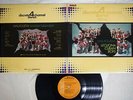
CUBAN RHYTHMS by the Lecuona Cuban Boys, a popular Cuban orchestra founded by Cuban Composer Ernesto Lecuona
who composed the music for the movie Carnival in Costa Rica
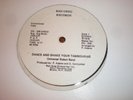
Lecuona Cuban Boys – Rumba-Bomba / Maracas
Label: Majestic – 1115
Format:
Shellac, 10", 78 RPM
Country: US
Released: 1947
Genre: Latin
Style: Rumba
Tracklist
A Rumba-Bomba Lecuona; Ruby
B Maracas Lecuona; Ruby
voc Manyo Lopez Ernesto Ojea
Please see top of the page for condition
Carnival in Costa Rica is a 1947 American musical film directed by Gregory Ratoff and written by Samuel Hoffenstein, John Larkin, and Elizabeth Reinhardt. It was released in Technicolor by Twentieth Century-Fox. Dick Haymes, Vera-Ellen, Cesar Romero, and Celeste Holm starred as two pairs of lovers who try to thwart an arranged marriage at Carnival time in Costa Rica.
The studio took pains to reproduce an authentic Costa Rican ambience in the studio, as well as having several sequences actually shot in Costa Rica. The film contains a few minor imprecisions regarding local customs; these, however, can be said to be found in virtually all musical productions which, after all, are not meant to be documentaries, but entertainment. The entire musical score was penned by Ernesto Lecuona.
The Lecuona Cuban Boys was a popular Cuban orchestra which toured the world for over forty years.
The band was founded by Ernesto Lecuona, whose role was that of a patron-entrepreneur. He did not actually play with the band, but sometimes gave a piano recital before the band played. The core of the band was put together in 1931 as Orquesta Encanto; the band changed name early in 1934.[1] On tour in Europe, in 1934, Lecuona returned to Cuba, and Armando Oréfiche took charge of the band in Europe. Ernesto gave them the gift of his name, which, at the time, was a property well worth having, and the right to use a number of his compositions.
The LCB was exceptional strong in arrangements, compositions and instrumental quality (most of them could play two or three instruments). Their only weak spot was the lack of a really first-rate Cuban singer, but that was not so important as might seem because they played so often to non-Latin audiences. Some of their pick-up singers could sing in English, and many of their numbers were instrumentals. The band played the full range of Cuban popular music, but their speciality was the conga. Though it was perhaps Eliseo Grenet who first composed a conga in its ballroom dance style,[2] it was certainly the LCB who took it round the world and made it famous.[3] The LCB was therefore the first conjunto to use the conga drum regularly in its performances, and not Arsenio Rodríguez, as is often supposed.
The band initially organized itself as a collective, but in practice Armando Oréfiche (composer, arranger, pianist) was the leader. Other band members were Ernesto 'Jaruco' Vázquez (trumpeter, guitarist, composer, arranger); Adalberto 'Chiquito' Oréfiche (tenor sax and bongo); Agustin Bruguera (timbales, conga, voice); Gerardo Bruguera (tenor sax and clarinet); Jesús Bertomeu (trombone); Jorge Domínguez (alto sax, clarinet, violin); Daniel González (alto sax, clarinet, violin); Guillermo Hernández (guitar, tumba, guiro, maracas); Enrique López Rivero (trumpet) 1932 34; Alberto Rabagliati (voice) engaged 1934; later Fernando Díaz and Luis Escalante were engaged as replacement trumpeters.
The band toured throughout the world: the USA, Latin America and Europe were the main tours. When World War II broke out, the band went to Latin America and continued their touring there. After WWII there was a dispute within the band, which ended in a split. Armando Oréfiche left with a few members, and started the Havana Cuban Boys; the rest stayed under the old name, based in New York until 1960. The Lecuona Cuban Boys continued to tour, and finally retired in 1975.
price rating