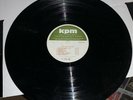
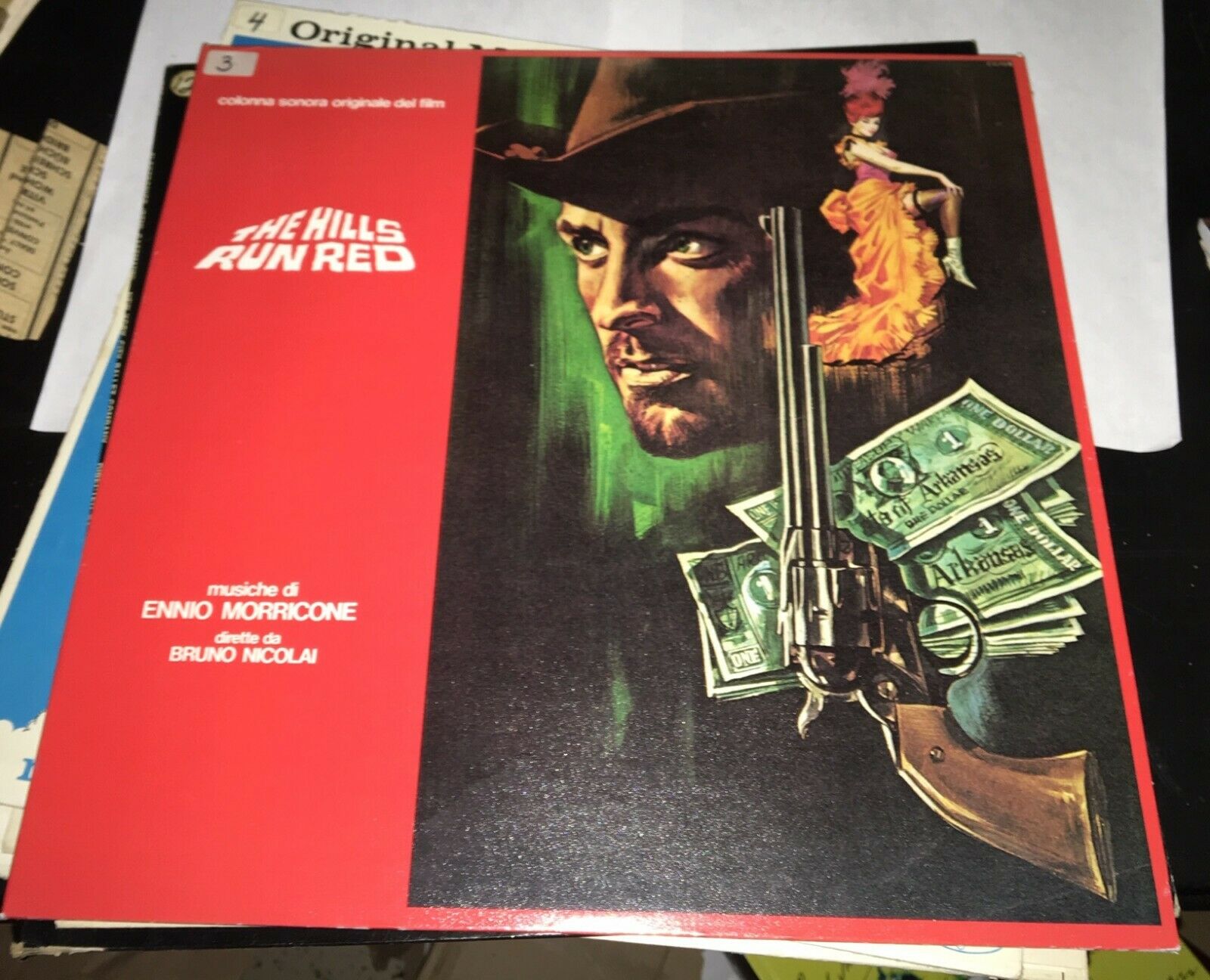
Ennio Morricone The Hills Run Red Poo LP 103 1978 Rare Spaghetti Western Japan
$
50


Favourite Auctions
To save auctions to your favourites, please login
If you don't have an account, please register
Description
Ennio Morricone – The Hills Run Red Label: Poo – LP 103 Format: Vinyl, LP Country: US Released: 1978 Genre: Brass & Military, Stage & Screen Style: Soundtrack Tracklist Hide Credits A1 Home To My Love 1:38 A2 The Hills Run Red 1:34 A3 Fifteen Miles To Prison 1:40 A4 Fiesta Del Sol 0:50 A5 Dreams Into Dust 1:56 A6 Ecstasy Of Strings 1:12 A7 Memories Of Rebecca 2:17 A8 The Fury Of Fire 1:03 A9 Quel Giorno Verrà Vocals – Gino* 2:05 B1 The River Of Dollars 1:50 B2 Five Caro Draw 2:35 B3 The Girl With The Golden Hair 1:37 B4 Doing Time 1:25 B5 Blind Obsession 2:55 B6 Vindication 1:25 B7 Home To My Love 2:42 Credits Chorus – I Cantori Moderni Di Alessandroni Conductor – Bruno Nicolai
The Hills Run Red The 1966 spaghetti western The Hills Run Red has ex-convict Jerry Brewster (Thomas Hunter) seeking revenge against the tyrant responsible for the death of his wife. In post-Civil War Texas, Brewster and Tom Seagull (Nando Gazzolo) flee in a covered wagon with a stash of money they have stolen from Union soldiers. As the two thieves are pursued by the Yankees, they decide to split: Tom draws a lucky card and wins the opportunity to jump from the wagon with the loot; he promises to look after Jerry’s family if Brewster is captured. The Union soldiers catch Jerry shortly thereafter and bring him to Fort Wilson, where he serves a grueling five-year prison term. Upon his release he learns that his wife his died, and that Tom—now a corrupt and powerful landowner—failed to provide her assistance when she fell on hard times.
Brewster endeavors to bring down his former partner in crime with the aid of a mysterious stranger named Getz (Dan Duryea), who helps fend off a group of Seagull’s men sent to kill Brewster. When Jerry learns that Seagull plans to take over the city of Austin, he helps the beleaguered townsfolk fight back by infiltrating a gang of Seagull’s men led by hired killer Mendez (a loathsome Henry Silva). As Brewster gains information from Mendez and organizes Austin’s revolt against Seagull, he is haunted by elements of his former life: his precocious, orphaned son Tim (Loris Loddy) befriends him, and he falls in love with Seagull’s kindhearted but misled sister, Mary Ann (Nicoletta Machiavelli), who shares the same name as his dead wife. Once Jerry’s identity is compromised, he and Getz wipe out the majority of Seagull’s underlings in a dynamite-filled shootout set in the streets of Austin. Brewster kills Mendez as well as his nemesis Seagull, after which Getz (who is actually a government agent charged with bringing down Seagull) appoints him sheriff of Austin, with Mary Ann and Tim by his side.
The Hills Run Red, originally titled A River of Dollars, is notable for being the first western to come from prolific, Oscar-winning producer Dino De Laurentiis. Shot in both Italy and Spain, the film is true to the staples of the genre, featuring: a theme of revenge; blatantly dubbed English; a plethora of blood and violence; a prominent, tuneful score by Ennio Morricone; and Italians working under Anglicized pseudonyms—Morricone was credited as Leo Nichols (as on Navajo Joe, another De Laurentiis western) while Hills director Carlo Lizzani went by Lee W. Beaver. Although reviewers had become jaded by the clichés of the genre by the time of the film’s release, critical response was generally positive. The film compensates for a lack of originality with a relentless pace, Henry Silva’s scenery-chewing performance as Mendez, and—of course—Morricone’s outspoken music.
The score revolves around a handful of pieces that are continually rearranged to suit various scenes and contexts. Morricone’s main title cue features two interwoven ideas associated with Jerry’s hunger for revenge: a haunting, wordless lament for female voice, and an unhinged, primal “riding” theme for brass that is typically answered by a lonesome reprisal of the lament.
A bittersweet love song, “Home to My Love,” is performed by Italian singer Gino Spiachetti (credited here simply as “Gino”) to represent Jerry’s dead wife. If the main title’s lament is Mary’s anguished wail from beyond the grave, this tune is meant to conjure happier memories of Jerry’s lost love. As Brewster falls for Seagull’s sister, she inherits the wife’s melody in a pair of brief cues that are not included on the album.
Recurring suspense music for chromatic strings and brass heightens tension in the film’s standoff sequences; this material is particularly unnerving during Brewster’s meltdown scene, in which the hero announces his murderous intentions to Seagull. A set piece in which Mendez and his men massacre the patrons of an Austin saloon plays without music, lending the sequence a disturbing realism. Similarly, the final shootout in the streets of Austin unfolds with little underscore.
Morricone’s effort to disguise his involvement with the project was apparently unsuccessful. The Hollywood Reporter’s review of the film surmised, “Leo Nichols’s score is in the Ennio Morricone mold, choral chants and heavy percussion which are becoming increasingly tiring.” The Variety reviewer was more tolerant of Morricone’s effort, offering: “Leo Nichols’s music is serviceable.” Despite what critics thought of the score, its role in the film is indispensable, as it angrily pushes the action forward and provides a palpable soul to an ensemble of live-action cartoon characters.
This premiere CD release of Ennio Morricone’s score to The Hills Run Red is mastered—in the absence of any other source—from multiple copies of the monaural bootleg vinyl circulated in the 1970s. This was itself taken from an unreleased album master, thus the cues are edited and arranged outside of film sequence, with misleading track titles. Two cues, fortunately, are mastered from a ¼″ tape source: “The Hills Run Red” (the main title, track 2) and “The Fury of Fire” (track 8), as these were combined to form the track “The Hills Run Red” on the 1969 United Artists Records compilation Great Western Themes Volume Two (UAS 29064), produced by Alan Warner for release in England. The final two tracks in the sequence, 16 and 17, are mastered from a 45rpm The Hills Run Red single released in 1966 in Italy as Ricordi International SIR 20029.
1. Home to My Love This arrangement of Morricone’s Gino-performed love song plays early in the film as Jerry Brewster (Thomas Hunter) rides home from Fort Wilson to see his wife and child after serving a five-year prison sentence . The piece is reprised (albeit in edited form) at the conclusion of the film when government agent Getz (Dan Duryea) appoints Jerry the sheriff of Austin. 2. The Hills Run Red At the beginning of the film, Jerry is captured by Union soldiers and subjected to a violent interrogation. Morricone’s music enters as the scene transitions to Fort Wilson, playing over a main title montage of Jerry serving out his brutal sentence at the prison. In this cue the composer introduces the score’s other primary ideas: the wordless lament for female voice over propulsive percussion and strings; and heraldic, chattering figures that eventually give way to the main theme, a stately monophonic brass line, subsequently joined by a contrapuntal version of the lament. 3. Fifteen Miles to Prison The album jumps ahead to later in the film: At a celebration held on the ranch of Jerry’s nemesis, Ken Seagull (Nando Gazzolo), the villainous Mendez (Henry Silva) confronts Brewster and accuses him of warning saloon owner Horner (Geoffrey Copleston) about an attack on his establishment. The score builds quiet chromatic tension as Jerry acknowledges the betrayal and furiously reveals his identity to Ken. Getz creates a diversion by firing his pistol into the air, panicking a group of horses and sending the animals stampeding away. With Mendez’s men distracted, Brewster rides off with his son, Tim (Loris Loddi), the cue culminating in a disturbed orchestral passage as they reach the deserted town of Austin. 4. Fiesta del Sol A Mexican-flavored source cue for trumpet, guitar and clapping plays just prior to “Fifteen Miles to Prison” (track 3) in the film, as Mendez and his men celebrate a victory over Horner. Mendez insists that Jerry drink with them, leading to a confrontation. 5. Dreams Into Dust Returning to earlier in the film, Jerry arrives at his home to find it empty and covered in dust. He accidentally activates a music box, which briefly plays Morricone’s “Home to My Love” theme; “Dreams Into Dust” begins as Jerry finds his wife’s diary and reads from it, the underscore taking up a delicate rendition of the tune for celesta, guitar and strings. Voiceover narration from Jerry’s dead wife explains how she waited for him to come home and eventually ran out of money; she asked for a loan from Ken, who turned her down. The cue ends as Jerry is overcome with rage and bellows, “Seagull!” 6. Ecstasy of Strings A source hoedown for fiddle and harmonica plays later in the film at a fifth-anniversary celebration for the Mayflower Ranch. The villain’s sister, Mary Ann (Nicoletta Machiavelli), dances with Getz and wonders about Jerry’s whereabouts; Getz agrees to go find him. 7. Memories of Rebecca This unused pop rendition of “Home to My Love” appears to be a version of the main theme absent the vocal or an instrumental statement of the melody, instead simply presenting the accompaniment and emphasizing guitar, strings and backup vocals. There is no “Rebecca” in the film—this track title, like others on the album, was likely created by someone with little connection to or knowledge of the production. 8. The Fury of Fire When Jerry first arrives in Austin, he visits Horner’s saloon and learns of Ken’s whereabouts. A secondary theme, shaped like a series of peaks, builds to the primary anthem as Jerry rides out toward the villain’s Mayflower Ranch; the cue subsides with an echo of the lament after Jerry reaches Ken’s territory and encounters a small boy: Tim, his son. 9. The River of Dollars This cue combines two separate pieces from different scenes in the film: The opening passage for accented brass and strings is heard near the end of the film after Jerry kills Ken and turns over the dead body with his foot; the ensuing arrangement of the score’s main themes plays at the beginning of the film when Jerry makes his fateful deal with Ken and is chased down by the Union soldiers. 10. Five Card Draw A mischievous piano rag emanates from Horner’s saloon as Jerry rides into Austin; the source piece continues as he enters the establishment and joins in a game of dice. 11. The Girl With the Golden Hair This abbreviated reprisal of the pop instrumental of “Home to My Love” heard in “Memories of Rebecca” is also unused in the film. 12. Doing Time A source piece (titled “Come Along and Sing” on the cue sheet) for fiddle and piano accompanies a vocal performance by entertainer Hattie (Gianna Serra) on the stage in Horner’s saloon. Jerry’s good fortune at the dice table draws a crowd and Hattie becomes annoyed, ending the song prematurely to scold him for stealing her attention. Approximately 1:00 of this piece appears in the film. 13. Blind Obsession This track combines four cues from throughout the film. Portentous string chords (0:00–0:17) play as Mendez announces his lecherous intentions to Mary Ann; dissonant string clusters (0:18–0:40) underscore Mendez pulling a gun on a badly beaten Brewster; and tremolo strings and militaristic percussion (0:41–1:27) play as Mendez carries out his vengeance on the saloon patrons. The final segment (1:28–2:53) recalls the suspense material from “Fifteen Miles to Prison”: First heard as Jerry climbs up to the second story of the saloon for a secretive meeting with Horner, it also plays later when Brewster draws Ken out from hiding and kills him. 14. Vindication As Mendez’s men drive a herd of horses through a canyon, Jerry and the Austin townsfolk wait to ambush them from above. (This is the actual track that should be titled “The Fury of Fire.”) The rousing cue that accompanies this sequence eschews more traditional suspense in favor of a reprisal of “The Hills Run Red”; the cue ends just before Jerry gives the signal for the townsfolk to drop burning brush onto the villains below. 15. Home to My Love This reprise of “Home to My Love” does not appear in the film. Aside from the introduction, it is identical to the album’s opening track.
The Hills Run Red (Italian: Un Fiume di dollari, lit. 'A River of Dollars'[2]) is a 1966 Spaghetti Western film directed by Carlo Lizzani. The film stars Thomas Hunter in the heroic lead role, along with veteran American actors Henry Silva and Dan Duryea.
In the aftermath of the American Civil War, two rebel Texans are seen fleeing toward the Mexican border in a wagon, having made off with a huge sum of money stolen from the United States government. Just before reaching the safety of foreign soil they are intercepted by a U.S. army patrol. As the mounted soldiers close in, the men draw cards to decide who will stay on the wagon and draw the pursuit, and who will jump off with the loot and escape, keeping the other man's share safe until he can claim it. Ken Seagull (Nando Gazzolo) wins the draw, jumps off and successfully hides. Jerry Brewster (Thomas Hunter) crashes the wagon, is apprehended by the troopers, and is sent to a military prison.
Five years later, Brewster is released and returns home to reunite with his wife and son. He finds his house deserted and in ruins, but discovers his wife's journal, which tells him that Seagull not only gave her no aid, but told her nothing of the money or the fact that her husband was alive. Maddened by the betrayal, the unarmed Brewster immediately finds himself under gunfire: Seagull has learned of his release and sent men to get him out of the way once and for all. Running into the barn for cover, Brewster finds a mysterious stranger (Dan Duryea) who throws him a weapon with which Brewster kills his attackers. His benefactor, who introduces himself as Winnie Getz, offers to tell Seagull that, while Brewster killed the hired gunmen, Getz himself finished their job and killed their target. The seemingly homeless Getz says he hopes to parlay that false intelligence into a steady job with Seagull.
Getz goes on ahead, while Brewster (now using the name Jim Houston) follows on his quest for vengeance. Brewster soon learns that Seagull, now known as Ken Milton, has used his wealth to acquire a ranch and the services of vicious killer Garcia Mendez (Henry Silva), with whose help he has expanded his holdings by terrorizing other landowners. Brewster also learns that Seagull killed his wife, but finds his young son alive and living nearby as an orphan. The man called Houston gets a job with Mendez (while managing to stay out of sight of his employer "Milton") and, with Getz's help, proceeds to play a double game wherein he rides with Mendez and his killers, but secretly aids their intended victims.
Eventually Brewster, with the help of his son and the surprisingly loyal Getz, confronts and kills Mendez and his men, and eventually Seagull. Afterward Getz reveals himself to be a government agent who had been on Seagull/Milton's trail all along. The government restores all property to its rightful owners, but Getz assures the authorities that the ex-convict Brewster was indeed murdered in the ambush at the empty house, freeing "Houston" to begin a new life with his son.
Selected cast Thomas Hunter as Jerry Brewster Henry Silva as Mendez Dan Duryea as Getz Nando Gazzolo as Ken Seagull Nicoletta Machiavelli as Mary Ann Gianna Serra as Hattie Loris Loddi as Tim Brewster Geoffrey Copleston as Brian Horner Guido Celano as Burger - Blacksmith Puccio Ceccarelli as Mendez henchman Guglielmo Spoletini as Pedro Mirko Valentin as Sancho Jeff Cameron as Randall Production The Hills Run Red was shot in Italy and Spain in 1966 with interiors shot at Dino De Laurentiis Studios in Rome and on newly constructed Western town set at Dinocitta.[1][3] Like Navajo Joe, The Hills Ran Red was one of two spaghetti westerns produced by Dino De Laurentiis in 1966 and both featured a score by Ennio Morricone. When Burt Reynolds proved unavailable
price rating









![Beres Hammond - Can't Stop A Man: The Best Of [New Vinyl LP] Boxed Set](https://www.popsike.info/php/thumbnail.php?url=https://www.popsike.pics/pix/20250117/405483314299.jpg)