EURODISC 3-LP 25-403-XDK: Enrico MAINARDI - J.S. Bach - Die Cellosuiten - GERMAN
$
500


Favourite Auctions
To save auctions to your favourites, please login
If you don't have an account, please register
Description
****Welcome to our listing, thanks very much for looking!
****See our own website! We have lots of out of print LPs and CDs! Find us on the web at -
hearthedifference.net
****Please see our other listings - new items added daily!
****Shipping cost is only an estimate - it depends on the actual weight and size of the package as well as the service required. We do not profit from shipping costs, so if we overcharge, we will refund the difference back to you. It's always best to wait for our invoice before paying for your item. We will combine shipping for multiple items purchased.
Background -
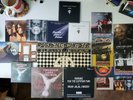
This is a “Holy Grail” Enrico Mainardi collector’s set. This is a super rare 3-LP set housed in a TRI-fold Gate-Fold jacket - made in GERMANY and issued in 1981. A tremendous collectible, in fine overall condition. Pictures with this listing are of the actual item.Enrico Mainardi's talents were nurtured from an early age. He was given a small cello at the age of three, had his initial lessons a year later, and made his recital debut at the age of eight, playing a Beethoven sonata. His father put him into the bruising life of a touring child prodigy at that point, touring Europe. When he appeared in Bologna, his accompanist was the esteemed Italian composer Ottorino Respighi. He debuted in London at the age of 13 at a Promenade Concert conducted by Sir Henry Wood.
One of the most important of his early appearances was at the Bach-Reger Festival in Heidelberg, where he astonished the audience with his playing of the Cello Suite in C major by Bach. He was 16 at the time.
The outbreak of World War I made it impossible for Mainardi to continue touring. He set the instrument aside and took ordinary school studies; four years later, he took up the instrument again. His training had begun at such an early age that it was all a matter of instinct and muscle memory. He found that he had essentially forgotten how to play at a decent level and could no longer create a beautiful tone.
He entered the Academia di Santa Cecilia in Rome to study composition and piano. Disgusted by his lack of competence at cello, he did not attempt to study it until 1924. At that time, he went to Berlin to study with one of the leading teachers of the day, Hugo Becker. He had to re-learn, on an understanding, conscious level, what he had absorbed by instinct as a child.
He was able to re-establish his concert career and this time he added performance in chamber music to his activities. He made notable solo appearances in recital and with the leading orchestras and conductors. In 1933, he was appointed professor of cello at Santa Cecilia and in 1941, succeeded his teacher Becker at the Hochschule für Musik in Berlin on the latter's death.
It took him a while to re-establish his career internationally after World War II. He became especially known for his chamber music performances. He extended his fame in Germany through much of the rest of Europe, though he did not become popular in France or England. However, even in those countries he was recognized as one of the great teachers of the instrument.
He had particular insight, not surprisingly, in the problems faced by talented youngsters who had to consciously learn what they had been taught as children. He was especially adept at recognizing and curing technical problems brought on by bad habits that his pupils had picked up in their younger years.
He did not normally prescribe bowings or fingerings for any particular pieces to his students. Instead, he preferred to teach them principals of fingering and how they related to particular issues in interpretation. He insisted that his pupils learn the entire score for whatever pieces they were playing, not just their own part. This included knowing what all the instruments of the orchestra were doing at any given moment in a concerto. His pupil Joan Dickson (who credits Mainardi with having saved her musical career when it was stalling at age 27) said he taught his students to recognize that proper phrasing is ruled by the harmonic progressions of a composition.
Mainardi was a charismatic performer with very handsome looks and a flair for dressing well. He said he chose his clothing for a concert with a view to what was appropriate for the particular music. Despite this, he did not indulge in platform histrionics to showcase the music or its particular difficulties. His repertoire was especially known for its high quality and intellectual content. Thus, he became known as a reserved performer lacking showmanship, which was, by all accounts, at odds with his off-stage personality. Consequently, he went into history as a musician's musician, rather than a crowd-pleasing one. - Joseph Stevenson
-
LPs made by EURODISC Records, in GERMANY
-
LPs released in 1981
-
LPs are recorded in STEREO
-
Record Catalog Number: 25 403 XDK
-
Record Labels are primarily GREEN with BLACK lettering.
J.S. Bach // Enrico Mainardi
Die Cellosuiten
Solo Cello Suites (complete)
Track Listing - Suite Nr. 1 G-Dur BWV 1007
A1 Prèlude - 3:19
A2 Allemande - 5:23
A3 Courante - 5:30
A4 Sarabande - 4:30
A5 Menuett I Und II - 4:28
A6 Ggue - 2:18
Suite Nr. 2 D-Moll BWV 1008
A7 Prélude - 5:33
B1 Allemande - 5:13
B2 Courante - 3:05
B3 Sarabande - 6:55
B4 MenuettI Und II - 3:46
B5 Gigue - 3:32
Suite Nr.3 C-Dur BWV 1009
B6 Prèlude - 3:58
B7 Allemande - 4:05
C1 Courante - 5:50
C2 Sarabande - 5:54
C3 Bourré I Und II - 4:18
C4 Gigue - 3:50
Suite Nr.4 Es-Dur BWV 1010
C5 Prèlude - 5:52
C6 Allemande - 4:18
D1 Courante - 4:50
D2 Sarabande - 5:16
D3 Bourré I Und II - 6:11
D4 Gigue - 3:10
Suite Nr.5 C-Moll BWV 1011
D5 Prélude - 9:55
E1 Allemande - 6:02
E2 Courante - 4:01
E3 Sarabande - 4:13
E4 Gavotte I Und II - 7:41
E5 Gigue - 3:10
Suite Nr.6 D-Dur BWV 1012
E6 Prélude - 6:32
F1 Allemande - 10:00
F2 Courante - 5:15
F3 Sarabande - 6:11
F4 Gavotte I Und II - 5:48
F5 Gigue - 5:10
Performers / Credits / Other Information -
• Printed By – Mohndruck Reinhard Mohn OHG
• Composed By – Johann Sebastian Bach
• Engineer – Horst Lindner
• Producer – Fritz Ganss (tracks: A1 To D4), Hans Ritter (tracks: D5 To F5)
• Violoncello, Liner Notes – Enrico Mainardi
On Label:
Enrico Mainardi spielt
Johann Sebastian Bach
• Label Code: LC0202
• Matrix / Runout (Label Side 1): 25 400 XK / S 25 400 / A
• Matrix / Runout (Label Side 2): 25 400 XK / S 25 400 / B
• Matrix / Runout (Label Side 3): 25 401 XK / S 25 401 / A
• Matrix / Runout (Label Side 4): 25 401 XK / S 25 401 B • Matrix / Runout (Label Side 5): 25 402 XK / S 25 402 A
• Matrix / Runout (Label Side 6): 25 402 XK / S 25 402 B
CONDITION Details:
The 3-LP TRI-FOLD Gate-Fold Jacket is in excellent overall condition. Eurodisc typically used lighter cardboard on their LP releases, so the jackets were subject to tremendous wear, this set however, is in fine overall shape, with some shelf wear evident, nothing serious. The colors on the jacket are superb, clear and clean (see pictures with this listing as they are of the actual item).
The 3-LPs are in near mint minus overall condition. We found that the vinyl looked superb on this vintage LP set. Terrific German made, glossy vinyl! There are NO serious marks, but there may be some very light spider marks. Spider marks are made by sliding the LPs in and out of the inner sleeves. Most of the time, they are not an audible issue, but that really depends on the sensitivity of your audio gear. However, this is a vintage set and as such, some noise would have to be expected - please do not expect this to sound like a 200 gram audiophile LP set made today! The LPs retain much of their original gloss and sheen. They may have a bit of dust and perhaps a finger print or two on them so they should be cleaned before playing. There are NO serious spindle marks on the record labels either. This is the SUPER RARE set in excellent overall condition - a top HOLY GRAIL collector's item that you've always wanted for your collection!
A Short Note About LP GRADING -
- Mint = Only used for sealed items.
- Near Mint = Virtually flawless in every way.
- Near Mint Minus = Item has some minor imperfections, some audible.
- Excellent = Item obviously played and enjoyed with some noise.
- Very Good Plus = Many more imperfections which are noticeable and obtrusive.
For best results, always thoroughly clean your LPs before playing them.
LPs can be audiophile quality pressings (any collector of fine MFSL, half speeds, direct to discs, Japanese/UK pressings etc., can attest to the difference a quality pressing can make to an audio system).
Do not let this rarity slip by!price rating