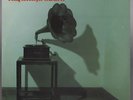
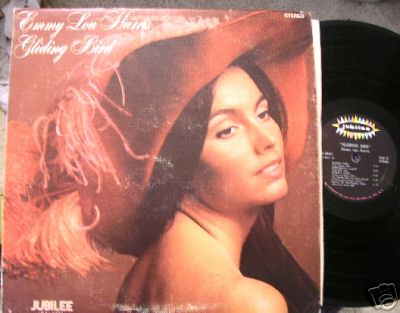
EMMYLOU HARRIS -Gliding Bird, rare debut LP Mint-
$
174


Favourite Auctions
To save auctions to your favourites, please login
If you don't have an account, please register
Description
SPECIALIZING IN OBSCURE, INTERESTING & EXCELLENT VINYL - MOSTLY NOT YOUR RUN-OF-THE-MILL STUFF
CHECK OUT MY OTHER COUNTRY ALBUM LISTINGS
Record Grade: Mint-
Cover Grade: VG+, minor to average wear, promo stamp on back cover
Labels: Black and silver, "colorburst" logo
About the Artist: by Jason Ankeny
Though other performers sold more records and earned greater fame, few left as profound an impact on contemporary music as Emmylou Harris. Blessed with a crystalline voice, a remarkable gift for phrasing, and a restless creative spirit, she traveled a singular artistic path, proudly carrying the torch of "Cosmic American music" passed down by her mentor, Gram Parsons. With the exception of only Neil Young — not surprisingly an occasional collaborator — no other mainstream star established a similarly large body of work as consistently iconoclastic, eclectic, or daring; even more than three decades into her career, Harris' latter-day music remained as heartfelt, visionary, and vital as her earliest recordings. Harris was born on April 2, 1947, to a military family stationed in Birmingham, AL. After spending much of her childhood in North Carolina, she moved to Woodbridge, VA, while in her teens, and graduated high school there as class valedictorian. After winning a dramatic scholarship at the University of North Carolina, she began to seriously study music, learning to play songs by Bob Dylan and Joan Baez. Soon, Harris was performing in a duo with fellow U.N.C. student Mike Williams, eventually quitting school to move to New York, only to find the city's folk music community dying out in the wake of the psychedelic era. Still, Harris remained in New York, traveling the Greenwich Village club circuit before becoming a regular at Gerdes Folk City, where she struck up friendships with fellow folkies Jerry Jeff Walker, David Bromberg, and Paul Siebel. After marrying songwriter Tom Slocum in 1969, she recorded her debut LP, 1970's Gliding Bird. Shortly after the record's release, however, Harris' label declared bankruptcy, and while pregnant with her first child, her marriage began to fall apart. After moving to Nashville, she and Slocum divorced, leaving Harris to raise daughter Hallie on her own. After several months of struggle and poverty, she moved back in with her parents, who had since bought a farm outside of Washington, D.C. There she returned to performing, starting a trio with local musicians Gerry Mule and Tom Guidera. One evening in 1971, while playing at an area club called Clyde's, the trio performed to a crowd which included members of the country-rock pioneers the Flying Burrito Brothers. In the wake of the departure of Gram Parsons, the band's founder, the Burritos were then led by ex-Byrd Chris Hillman, who was so impressed by Harris' talents that he considered inviting her to join the group. Instead, Hillman himself quit to join Stephen Stills' Manassas, but he recommended her to Parsons, who wanted a female vocalist to flesh out the sound of his solo work, a trailblazing fusion of country and rock & roll he dubbed "Cosmic American music." Their connection was instant, and soon Harris was learning about country music and singing harmony on Parsons' solo debut, 1972's GP. A tour with Parsons' backup unit the Fallen Angels followed, and in 1973 they returned to the studio to cut his landmark LP, Grievous Angel. On September 19, just weeks after the album sessions ended, Parsons' fondness for drugs and alcohol finally caught up to him, and he was found dead in a hotel room outside of the Joshua Tree National Monument in California. At the time, Harris was back in Washington, collecting her daughter for a planned move to the West Coast. Instead, she remained in D.C., reuniting with Tom Guidera to form the Angel Band. The group signed to Reprise and relocated to Los Angeles to begin work on Harris' solo major-label debut, 1975's acclaimed Pieces of the Sky, an impeccable collection made up largely of diverse covers ranging in origin from Merle Haggard to the Beatles. Produced by Brian Ahern, who would go on to helm Harris' next ten records — as well as becoming her second husband — Pieces of the Sky's second single, a rendition of the Louvin Brothers' "If I Could Only Win Your Love," became her first Top Five hit. "Light of the Stable," a Christmas single complete with backing vocals from Dolly Parton, Linda Ronstadt, and Neil Young, soon followed; Harris then repaid the favor by singing on Ronstadt's "The Sweetest Gift" and Young's "Star of Bethlehem." For her second LP, 1976's Elite Hotel, Harris established a new backing unit, the Hot Band, which featured legendary Elvis Presley sidemen James Burton and Glen D. Hardin as well as a young songwriter named Rodney Crowell on backup vocals and rhythm guitar. The resulting album proved to be a smash, with covers of Buck Owens' "Together Again" and the Patsy Cline perennial "Sweet Dreams" both topping the charts. Before beginning sessions for her third effort, 1977's Luxury Liner, Harris guested on Bob Dylan's Desire and appeared in Martin Scorsese's documentary of the Band's legendary final performance, The Last Waltz. Quarter Moon in a Ten Cent Town followed in 1978, led by the single "Two More Bottles of Wine," her third number one. The record was Crowell's last with the Hot Band; one of the tracks, "Green Rolling Hills," included backing from Ricky Skaggs, soon to become Crowell's replacement as Harris' vocal partner. 1979's Blue Kentucky Girl was her most country-oriented work to date, an indication of what was to come a year later with Roses in the Snow, a full-fledged excursion into acoustic bluegrass. In the summer of 1980, a duet with Roy Orbison, "That Lovin' You Feelin' Again," hit the Top Ten; a yuletide LP, Light of the Stable, followed at the end of year, with Harris re-releasing the album with three newly recorded bonus tracks in 2004. Shortly afterward, Harris quit touring to focus on raising her second daughter, Meghann. Evangeline, a patchwork of songs left off of previous albums, appeared in 1981. Shortly after, Skaggs left the Hot Band to embark on a solo career; his replacement was Barry Tashian, a singer/songwriter best known for fronting the 1960s rock band the Remains. In 1982, drummer John Ware, the final holdover from the first Hot Band lineup, left the group; at the same time, Harris' marriage to Ahern was also beginning to disintegrate. After 1981's Cimarron, Harris and the Hot Band cut a live album, Last Date, named in honor of the album's chart-topping single "(Lost His Love) On Our Last Date," a vocal version of the Floyd Cramer instrumental. Quickly, they returned to the studio to record White Shoes, Harris' final LP with Ahern at the helm. Her most far-ranging affair yet, it included covers of Donna Summer's "On the Radio," Johnny Ace's "Pledging My Love," and Sandy Denny's "Old-Fashioned Waltz." After leaving Ahern, she and her children moved back to Nashville. There, Harris joined forces with singer/songwriter Paul Kennerley, on whose 1980 concept album The Legend of Jesse James she had sung backup. Together, they began formulating a record called The Ballad of Sally Rose, employing the pseudonym Harris often used on the road to veil what was otherwise a clearly autobiographical portrait of her own life. Though a commercial failure, the 1985 record proved pivotal in Harris' continued evolution as an artist and a risk taker; it also marked another chapter in her personal life when she and Kennerley wed shortly after concluding their tour. Angel Band, a subtle, acoustic collection of traditional country spirituals, followed, although the record was not issued until 1987, after the release of its immediate follow-up, Thirteen. Harris, Dolly Parton, and Linda Ronstadt had first toyed with the idea of recording an album together as far back as 1977, only to watch the project falter in light of touring commitments and other red tape. Finally, in 1987, they issued Trio, a collection which proved to be Harris' best-selling album to date, generating the hits "To Know Him Is to Love Him" (a cover of the Phil Spector classic), "Telling Me Lies," and "Those Memories of You." The record's success spurred the 1990 release of Duets, a compilation of her earlier hits in conjunction with George Jones, Willie Nelson, Gram Parsons, and others. Fronting a new band, the Nash Ramblers, in 1992 she issued At the Ryman, a live set recorded at Nashville's legendary Ryman Auditorium, the former home of the Grand Ole Opry. At the time of the record's release, Harris was also serving a term as President of the Country Music Foundation. In 1993, she ended her long association with Warner Bros./Reprise to move to Asylum Records, where she released Cowgirl's Prayer shortly after her separation from Paul Kennerley. Two years later, at a stage in her career at which most performers retreat to the safety of rehashing their greatest hits again and again, Harris issued Wrecking Ball, perhaps her most adventuresome record to date. Produced by Daniel Lanois, the New Orleans-based artist best known for his atmospheric work with U2, Peter Gabriel, and Bob Dylan, Wrecking Ball was a hypnotic, staggeringly beautiful work comprised of songs ranging from the Neil Young-penned title track (which featured its writer on backing vocals) to Jimi Hendrix's "May This Be Love" and the talented newcomer Gillian Welch's "Orphan Girl." A three-disc retrospective of her years with Warner Bros., Portraits, appeared in 1996, and in 1998 Harris resurfaced with Spyboy. Following the release of Trio II later that year, she and Ronstadt again reunited, this time minus Parton, for 1999's Western Wall: Tucson Sessions. Harris returned the following year with Red Dirt Girl, her first album of original material in five years, which featured appearances from Bruce Springsteen, Patty Scialfa, Jill Cuniff, and Patty Griffin.
MY GRADING SYSTEMS: I’ve been told that I grade conservatively. My NM (near mint) is my highest grade for opened records (which would also include unplayed records). It’s a 9 or 10 on a 1-10 scale. M- would be equivalent to an 8; VG++ to a 7; VG+ to a 6; VG to a 5; VG- to a 4; G to a 3; F to a 2 and P to a 1. The same scale applies when I grade covers (jackets). Significant defects are specifically noted and taken into consideration in the grade.
GRADING DESCRIPTIONS
RECORDS:
- GRADING Grading is based on the following criteria
- Sealed = store stock new
- Near Mint = like new or near new with only one or wo small insignificant defects, a 9 or better on a 1-10 scale
- Mint- = extremely nice. Would be Near Mint, except for a couple of light hairlines or scuffs, which do not affect play
- VG++ = still a very nice record with all or nearly all of its original gloss but may have a few more light, surface marks, hairlines, needle tracks or the like which should not materially effect play
- VG+ = a nice, but used record that may have a series of light scuffs or scratches. It probably plays with a few pops, but has no serious problems.
- VG = a well-used record that still should sound OK when played, but may have moderate surface noise, pops, etc.
- VG- = a very well-worn record that plays through without skipping, but will do until a better copy comes along.
- Good = not actually good at all but probably will play through but with much in the way of surface noise, pops, crackles, etc. Still, will have no cracks, chips or the like
- Fair = you’re getting this record just to own but not to play
- Poor = the sky’s the limit, generally I will discard a record this bad (and sell the cover, jacket or sleeve alone) unless the label holds some particular interest
VISUAL GRADING: All records are visually graded only unless I state that they are play-graded. Some major labels such as the one that uses the Nipper logo - for example, were pressed on better quality vinyl and will sound better than a record which visually appears the same on budget labels. Recording techniques also varied. The sound on live albums may be far inferior to studio recordings. There may also be defects in the pressing which are invisible. The point is that an album on a major label graded VG+ may sound noticeably better than an album on a budget label that is visually graded Near Mint. I have no problem issuing a refund if you are dissatisfied with the sound on a record as long as it’s requested as per my stated return policy below. But please don’t be shocked if a record visually graded Near Mint doesn’t sound state of the art. If I base my grade on a PLAY GRADE, I will state this specifically in my grading section.
COVERS: There are really too many possible defects regarding covers to be as specific in my definitions as I had been with my record grades. But please keep in mind these general grading guidelines:
- I will give greater weight to the condition of the front cover than back cover when assigning an overall grade
- No cover with a cut out hole or saw mark will be graded Near Mint even if it is still in factory shrink and there is no other wear
- I will not reduce the grade of a cover for stickers which are glued to the jacket by the record company (eg. Contains the hit song Expressway to Your Heart); but will reduce the grade for stickers glued on the cover by stores, previous owners, etc.
- If I write that a cover has a bb hole, I’m talking about a small cut out hole
- A saw mark is a narrow cut in the perimeter of the cover, could be anywhere and vary in length from 1/2” to 2” at the most.
- The overall grade takes into consideration any stated defects. For example, if I grade a cover VG+ and then state it has 6” top and bottom seam splits - I’ve already reduced the grade because of the seam splits. If the seams weren’t split, the cover would be graded higher such as VG++ or Mint-.
Shipping Costs:
The buyer pays for shipping. For one or two albums, the cost for priority mail in the United States is $6.50 (if you live west of the Mississippi, the cost is $7.50). For media rate postage within the U.S. the cost will be $4.00 for one or two albums.The cost for shipping a 7” record via 1st class is $2.75 and the cost for shipping a compact disc via 1st class is $3.50.
Save money when I mail 2 or more records in the same package.
Insurance is optional but highly recommended for “high ticket” purchases. Insurance is available only on purchases of over $10.00. The cost for insurance is $1.30 for up to $50; $2.20 for up to $100; $3.20 for up to $200 and $1.00 additional for each additional $100 of insurance. Rates are quoted in my winning bid notices. The shipping charges for box sets, multi-record sets and other items of non-standard size and weight will be quoted.
International Shipments: Overseas customers are welcome to bid. Postage to the U.K., western Europe and Latin America is $12.00 for airmail and $6.50 for surface for one album. Canada is $6.00 airmail (no surface option). To all other countries, postage is $14.00 airmail and $7.00 surface. 7“ records are $5.50 airmail anywhere in the world. Save on shipping cost per record when I mail two or more records in one package.
Please check out my other eBay auctions
. I’ve been listing all types of records - mostly LP’s - including 50’s and 60’s rock ‘n’ roll, country, folk jazz, blues, personalities, new wave and punk, surf, psych, spoken word, comedy, etc., etc....... I try to list unusual, unique or obscure records, not the ones that you see all the time. While a majority of my listings are albums, you’ll often find a nice selection of 45’s, EP’s or picture sleeves...and an occasional 78 or two.My return policy: I don’t get many returns but customers are important to me so I like to offer a relatively hassle-free return policy. However, in order to return the record or other item, you must notify me by e-mail of your intent shortly after your receipt of the record or other item and within a reasonable time after the auction’s close. Also, the item must be returned in its original condition , i.e. the way it was shipped when it left my hands. While a very high percentage of my records arrive safe and sound (I use professional mailers and a filler or two, more for 78’s), they occasionally are damaged in transit. If that happens, I won’t accept the return of the record or other item - that’s why you have the option of obtaining insurance.
My Feedback Policy: Because I've been burnt on a few occasions, I've decided I'm only going to respond to feedback once it is left for me (and I'll try to do so on a weekly basis if not more often).
Any other questions? About anything? Please e-mail me at ibuyvinyl@nc.rr.com .