EDU LOBO Edu '67 Brazil LP MONO bossanova MPB Hear
$
28



Favourite Auctions
To save auctions to your favourites, please login
If you don't have an account, please register
Description
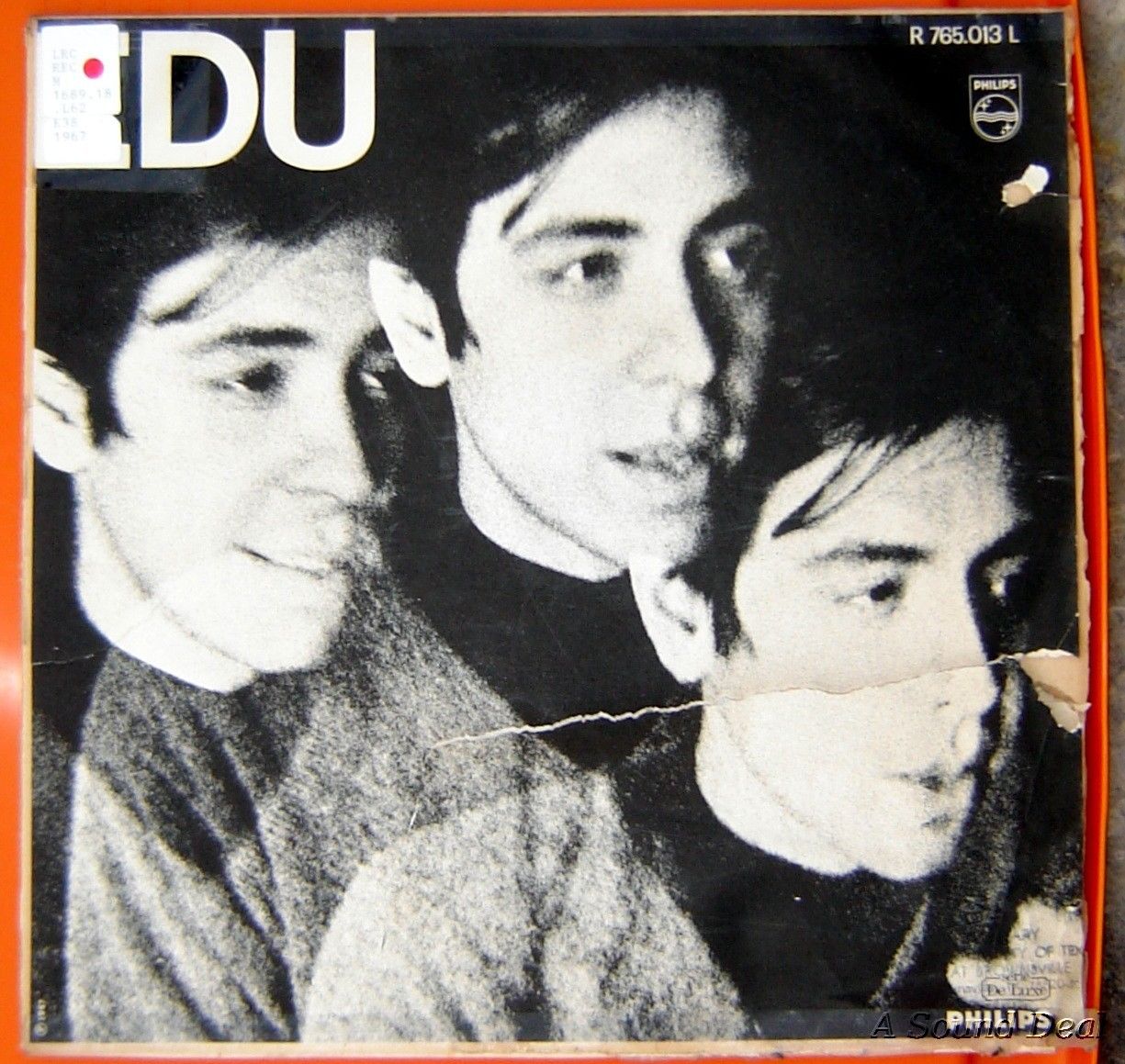
Record: Very Good Plus (VG+) Strong VG+ or better Cover: Good (G) large horizontal tear across lower front pocket, also tape, stickers etc. Labels: tape, stickers Edu Lobo Edu 1967 Brazil Phillips 12" Mono LP SB-15798
Edu Lobo
Edu
1967 Brazil Phillips LP
Original out of print press RARE!
Condition
Vinyl: Very Good Plus (VG+) Strong VG+ or better
Sleeve: Good (G) large horizontal tear across lower front pocket, also tape, stickers etc.
See Item Specifics section above for additional details
(clickable images enlarge)
Tracks:
Edu Lôbo* ?– Edu Label: Philips ?– R 756.013 L Series: Série De Luxe – Format: Vinyl, LP Country: Brazil Released: 1967 Genre: Latin Style: MPB, Bossanova Tracklist A1 No Cordão Da Saideira Arranged By – Luíz Eça*Written-By – Edu Lôbo* 2:45 A2 Corrida De Jangada Arranged By – Gaya*Vocals – 004*Written-By – Capinan, Edu Lôbo* 2:20 A3 Rosinha Arranged By – Edu Lôbo*Written-By – Capinan, Edu Lôbo* 2:40 A4 Jogo De Roda Arranged By – Dori Caymmi (2)Written-By – Edu Lôbo*, Ruy Guerra 2:49 A5 Candeias Arranged By – Dori Caymmi (2)Written-By – Edu Lôbo* 3:24 A6 Dois Tempos Arranged By – Edu Lôbo*Written-By – Capinan, Edu Lôbo* 2:50 B1 Embolada Arranged By – Edu Lôbo*Vocals – Gracinha Leporace, 004*Written-By – Boal*, Edu Lôbo*, Guarnieri* 3:43 B2 Catarina E Mariana Arranged By – Luíz Eça*Written-By – Edu Lôbo*, Ruy Guerra 3:20 B3 Canto Triste Arranged By – Dori Caymmi (2)Written-By – Edu Lôbo*, Vinicius* 4:29 B4 Chorinho De Mágoa Arranged By – Edu Lôbo*Vocals – Gracinha LeporaceWritten-By – Capinan, Edu Lôbo* 1:41 B5 Meu Caminho Arranged By – Dori Caymmi (2)Written-By – Dori Caymmi (2), Edu Lôbo* 3:03 Companies etc Record Company – Companhia Brasileira De Discos Phonographic Copyright (p) – Companhia Brasileira De Discos Made By – Companhia Brasileira De Discos Recorded At – CBD Credits Engineer – Ary Carvalhaes, Célio Martins Layout – Glauco Rodrigues Liner Notes – Flavio Macedo Soares Photography By – Pedro Moraes* Producer, Directed By – João Mello
EDU LOBO Edu '67 Brazil LP MONO bossanova MPB Hear Eduardo de Góes "Edu" Lobo (born August 29, 1943) is a Brazilian singer, guitarist, and composer. He achieved fame in the 1960s as part of the bossa nova movement. His compositions include the world famous Upa Neguinho (with Gianfrancesco Guarnieri), Pra Dizer Adeus (with Torquato Neto) (also known in its English version as "To say goodbye"), Choro Bandido (with Chico Buarque), Beatriz (with Chico Buarque), Arrastão (with Vinicius de Moraes), Canto triste and Ponteio (with Capinam). Ponteio won best song at the 3rd Festival de Música Popular Brasileira in the recording by Quarteto Novo in 1967. He has worked with, and his songs have been covered by artists like Toots Thielemans, Marcos Valle, Elis Regina, Sylvia Telles, Sergio Mendes, Antonio Carlos Jobim, Milton Nascimento, Maria Bethania, Gilberto Gil, Gal Costa, Caetano Veloso, Monica Salmaso, Earth Wind & Fire, and others. Discography A musica de Edu Lobo Por Edu Lobo - Edu Lobo - 1965 Elenco Edu canta Zumbi - 1965 - Edu & Bethania - Edu Lobo / Maria Bethania - 1966 Elenco Reencontro - Sylvia Telles / Edu Lobo / Trio Tamba / Quinteto Villa-Lobos - 1966 Edu - Edu Lobo Sergio Mendes presents Lobo - Edu Lobo - 1970 Cantiga de longe - Edu Lobo - 1970 Elenco Missa Breve - Edu Lobo / Milton Nascimento - 1972 EMI Odeon Deus lhe pague - Varios / Several - 1976 EMI ODEON Limite das aguas - Edu Lobo - 1976 Continental Camaleão - Edu Lobo - 1978 Philips Tempo presente - Edu Lobo - 1980 Polygram Edu & Tom - Edu Lobo / Tom Jobim - 1981 Polygram Jogos de Dança - 1981 - O Grande Circo Mistico - Milton Nascimento / Jane Duboc / Gal Costa / Simone / Gilberto Gil / Tim Maia / Zizi Possi / Chico Buarque / Edu Lobo - 1983 Som Livre Dança da Meia Lua - Edu Lobo - 1985 Sigla O Corsário do Rei - Fagner / Edu Lobo / ChicoBuarque / Blitz / Gal Costa / MPB4 / Nana Caymmi / Lucinha Lins / Tom Jobim / Zé Renato / Claudio Nucci / Ivan Lins / Marco N - 1985 Som Livre Rá-Tim-Bum - Boca Livre, Caetano Veloso, Joyce, Maíra, Quarteto Quatro por Quatro, Ze Renato, Edu Lobo, Jane Duboc, Rosa Maria - 1989 - Corrupião - Edu Lobo - 1993 Velas Meia Noite - Edu Lobo, Dori Caymmi - 1995 Velas Songbook Edu Lobo - Varios / Various - 1995 Lumiar Discos Album de Teatro - 1997 BMG Cambaio - Edu Lobo / Chico Buarque / Gal Costa / Lenine / Zizi Possi - 2002 Tantas Marés - 2010 Biscoito Fino Jazz Bossa Nova 1st Edition,Import 33 RPM Música popular brasileira (Portuguese pronunciation: ['muzik? popu'la? b?azi'lej??], Brazilian pop music) or MPB is a trend in post-bossa nova urban popular music in Brazil. It is not a distinct genre but rather a term that describes musical movement that revisited typical Brazilian styles such as samba, samba-canção and baião and other Brazilian regional music, combining those with foreign influences, such as from jazz and rock. This movement has produced and today is represented by many renowned Brazilian artists, such as Jorge Ben, Novos Baianos and Chico Buarque and Dominguinhos whose individual styles generated their own trends within the genre. The term often also is used to describe any kind of music with Brazilian origins and "voice and guitar style" that arose in the late 1960s. Contents History MPB, loosely understood as a "style", debuted in the mid-1960s, with the acronym being applied to types of non-electric music that emerged following the beginning, rise and evolution of bossa nova. MPB artists and audiences were largely connected to the intellectual and student population, causing later MPB to be known as "university music."[1][2] Like bossa nova, MPB was an attempt to produce a "national" Brazilian music that drew from traditional styles. MPB made a considerable impact in the 1960s, thanks largely to several televised music festivals. The beginning of MPB is often associated with Elis Regina's interpretation of Vinícius de Moraes and Edu Lobo's "Arrastão." In 1965, one month after celebrating her 20th birthday, Elis appeared on the nationally broadcast Festival de Música Popular Brasileira and performed the song. Elis recorded Arrastão and released the song as a single, which became the biggest selling single in Brazilian music history at that time and catapulted her to stardom. This brought MPB to a national Brazilian audience and many artists have since performed in the style over the years. The earliest MPB borrowed elements of the bossa nova and often relied on thinly-veiled criticism of social injustice and governmental repression, often based on progressive opposition to the political scene characterized by military dictatorship, concentration of land ownership, and imperialism. A variation within MPB was the short-lived but influential artistic movement known as tropicália. Many of the albums on Rolling Stone Brazil's list of the 100 greatest Brazilian albums fall under this style.[3] Edu Lobo Edu 1967 Brazil Phillips 12" LP Cover: Good (G) large horizontal tear across lower front pocket, also tape, stickers etc. Record: Very Good Plus (VG+) Strong VG+ or better Labels: tape, stickers SB-15798
This exquisite slice of retro music history is a vinyl sound recording (not a CD). Please reference Item Specifics above for additional detail. Strict Goldmine grading -- Over 17 years on Ebay! Combine Items to Save $$$!
©A Sound Deal
price rating