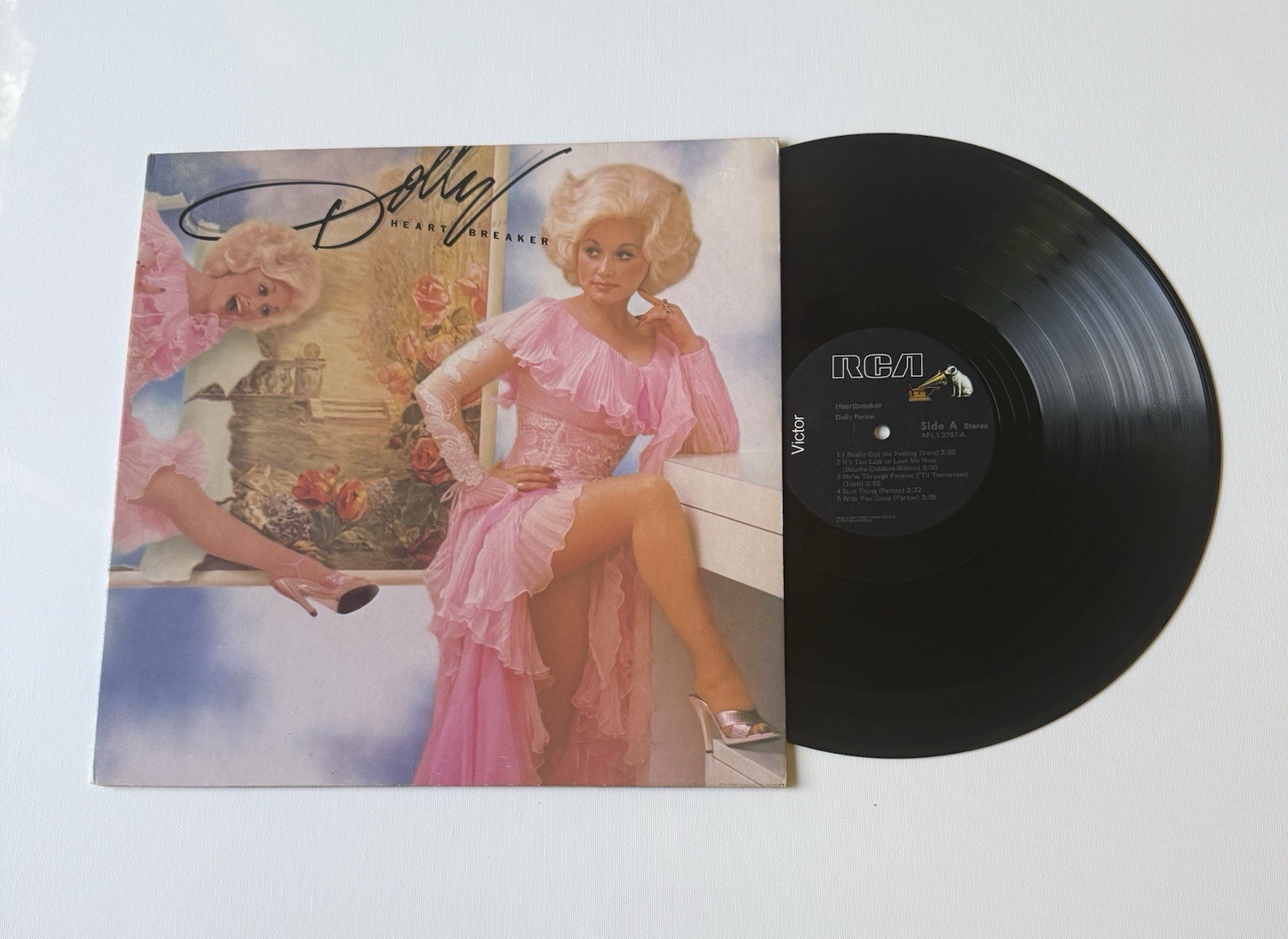
Dolly Parton: Heartbreaker Vinyl-LP AFL1-2797 1st Press Gatefold RCA 1978
$
45

Favourite Auctions
To save auctions to your favourites, please login
If you don't have an account, please register
Description
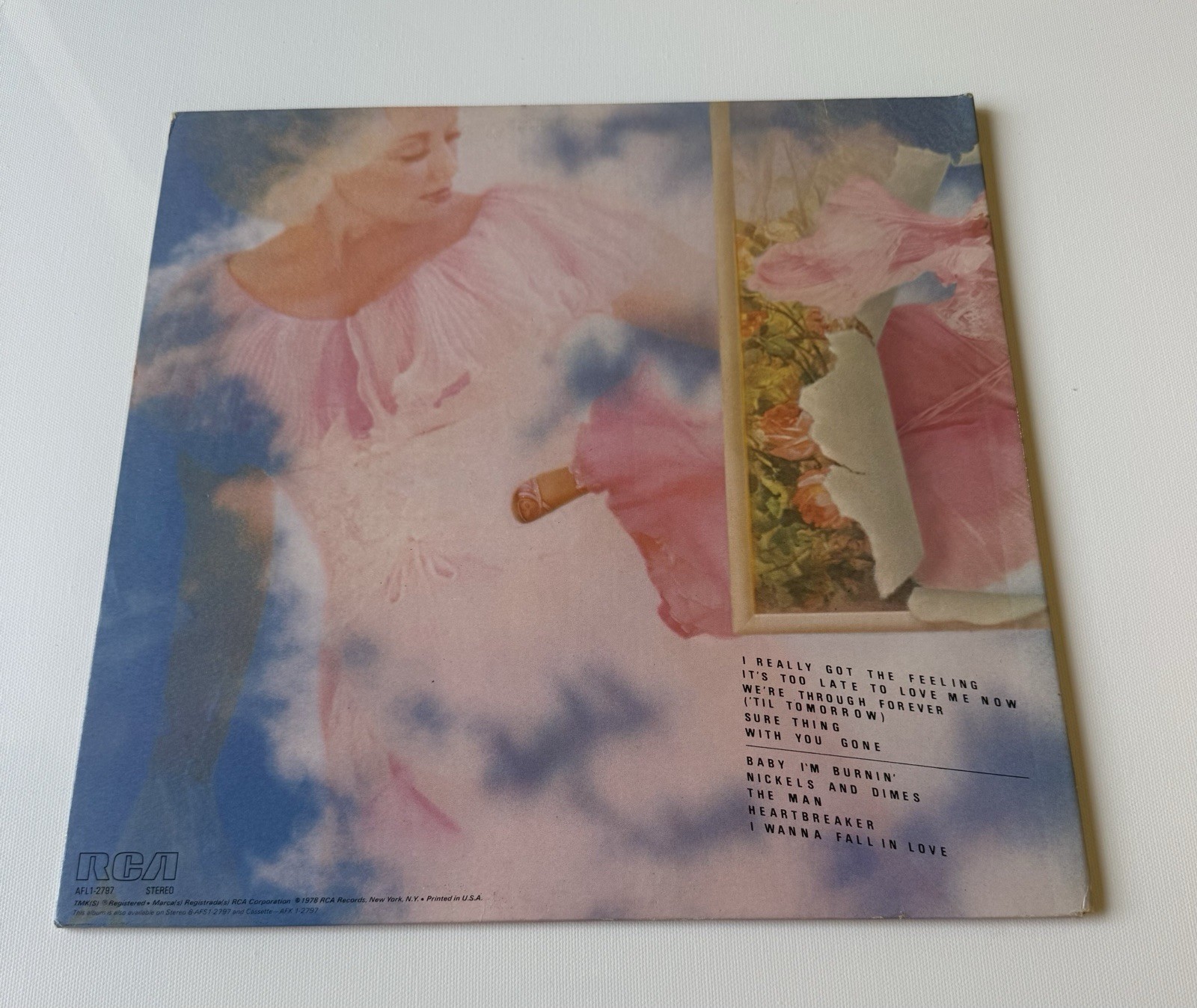
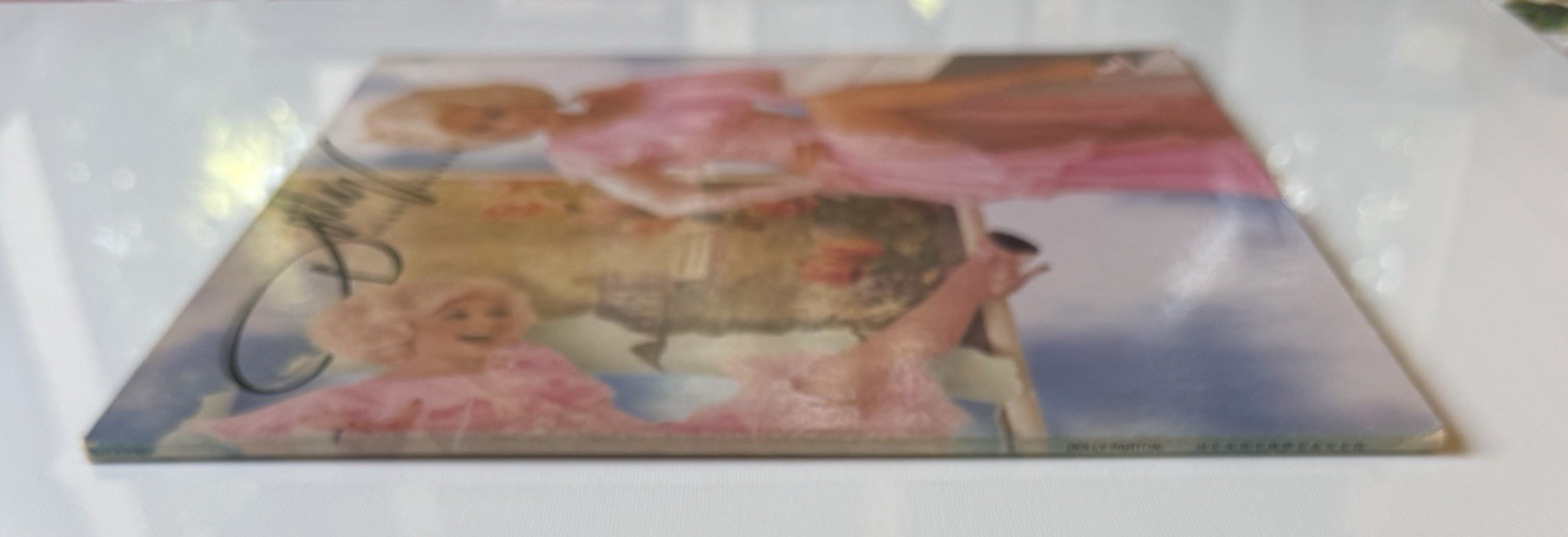
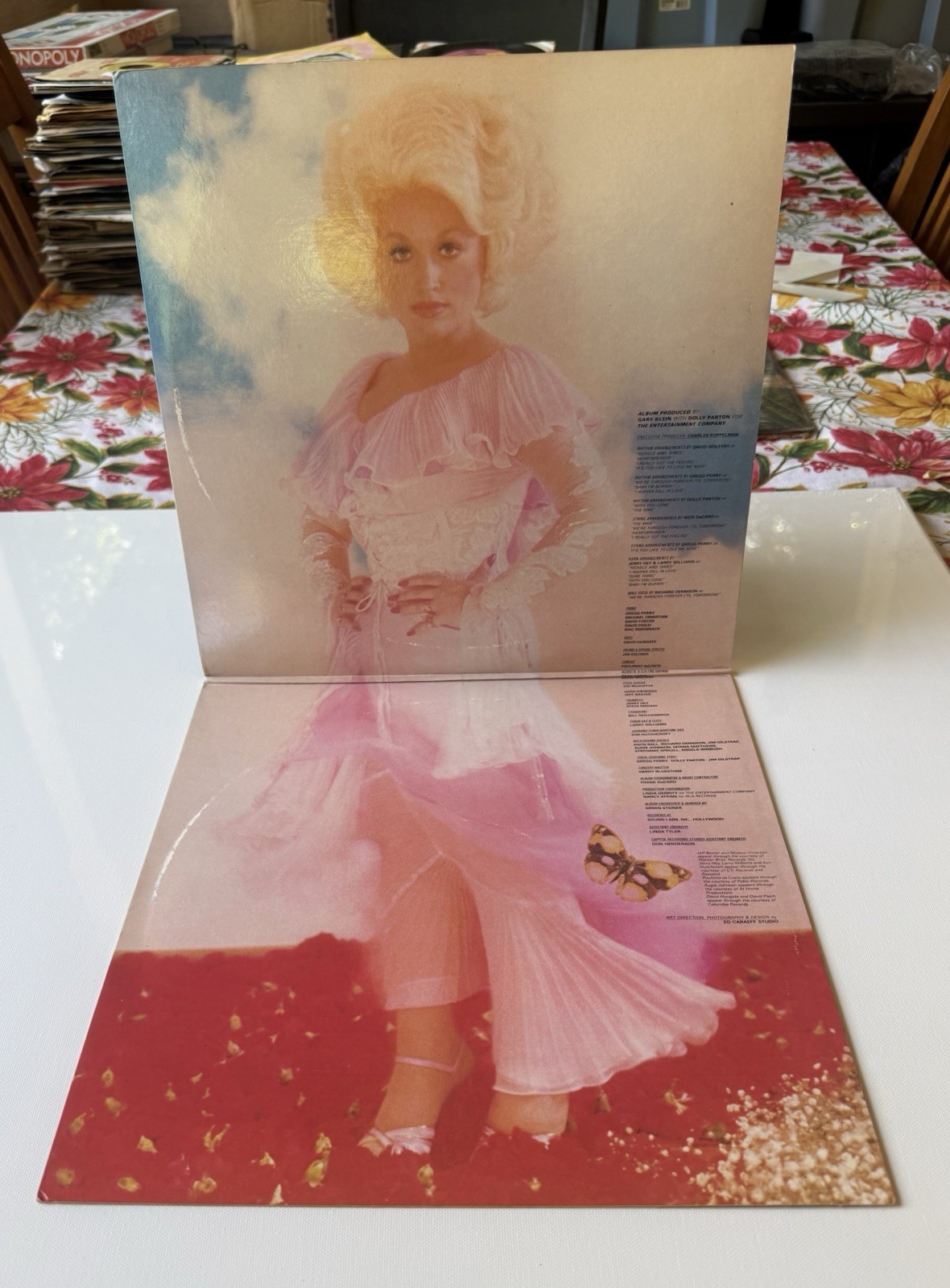
Test played. Vinyl is conservatively graded as a VG with most parts of the record a VG+. Gatefold cover has original shine. See pics.
Comes with a bonus inner paper sleeve and an outer clear plastic bonus sleeve.
The Dolly Parton: Heartbreaker Vinyl-LP AFL1-2797 1st Press Gatefold RCA 1978 is a high-fidelity stereo record in a 12" format, featuring songs by Dolly Parton. Produced by Charles Koppelman, Gary Klein, and Dolly Parton, the album was released in the 1970s by RCA Records. This first pressing comes in an original inner sleeve and is in excellent condition with a very good plus cardboard sleeve. With a run time of 32:02, this LP showcases Dolly Parton's iconic country style and includes compositions by Carole Bayer Sager and various other artists.
This first-press Indianapolis RCA (AFL1-2797, gatefold, 1978) is a late-’70s Hollywood pop-country record cut for radio, not a sparse Nashville session. The lacquer came from The Mastering Lab (TML-M or TML-S in the deadwax), and the original vinyl copies are generally described as crisp, punchy, and rich rather than thin or veiled. 
The production is the whole point of the sound. Gary Klein and Dolly stacked L.A. session players—David Hungate’s bass, Jim Keltner’s drums, Dean Parks and David Wolfert on guitars, Jerry Hey horns, Nick DeCaro and Gregg Perry strings, Paulinho da Costa percussion, and a choir of backing voices. Armin Steiner’s mix at Sound Labs is glossy and forward. On a clean original, that mix arrives with real weight in the bottom and a bright, present vocal that sits on top of the arrangements instead of being swallowed by them. Vintage copies were mastered loud, so the record has punch and solid bass response that later digital versions often flatten.

What it feels like on the table:
Drop the needle and the first impression is polish, not grit. Dolly’s voice is bright and slightly airy, with that characteristic late-’70s sheen—more MOR and crossover than the rawer early RCA country sides. The strings have body rather than just sparkle; the horns have snap. Backing vocals shimmer in layers instead of sitting as a single pad. Bass is warm and rounded, drums have a dry studio smack rather than room bloom, and the whole thing is mixed to sound big on a car radio or a living-room console.
Side A leans ballad and mid-tempo. “I Really Got the Feeling” opens with that radio-ready lift—piano, strings, and Dolly’s vocal riding a clean, slightly compressed groove. “We’re Through Forever (‘Til Tomorrow)” is the lush duet: male vocal (Richard Dennison) and Dolly in a syrupy, string-heavy frame that some listeners find overcooked and others find exactly of its moment. “Sure Thing” and “With You Gone” keep the same glossy density.
Side B is where the record gets its energy. “Baby I’m Burnin’” is the disco-adjacent track: tight rhythm section, horn stabs, and a brighter, more urgent vocal. On a good original it has kick and snap rather than just shimmer. “Nickels and Dimes” and “The Man” pull back a little. The title track is the piano-led ballad—Dolly’s voice intimate against strings and a measured rhythm section. “I Wanna Fall in Love” closes with more of that uptempo, slightly disco pulse.
Pressing character:
A well-kept Indianapolis first press is not an audiophile demo disc in the modern 180-gram sense. It is a commercial 1978 RCA cut: present, slightly hot on top, strong in the midrange, and punchy enough that the title track and “Baby I’m Burnin’” still jump. Surface noise depends entirely on how the copy was stored and played; a clean NM copy can be surprisingly quiet for the era. Inner-groove congestion is possible on the last tracks if the stylus is worn or the copy is worn, which is typical of late-’70s RCA sides that were cut hot. This copy is not worn.
Compared with later CD remasters, the original vinyl usually has more body in the strings and bass and a more physical sense of the vocal. Compared with her earlier, leaner country LPs, this one is denser, more arranged, and more “produced.” That is the record’s personality, not a defect of the pressing.
The ritual:
The gatefold is part of the experience: Ed Caraeff’s surreal, dream-like portraits. Putting the record on is putting on 1978 crossover Dolly—bright voice, stacked Hollywood arrangement, radio punch. On a clean first press it still sounds like a well-made analog pop record of that exact year: rich, a little glossy, and built to hit.
price rating