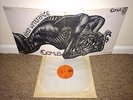
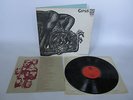
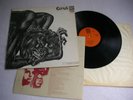
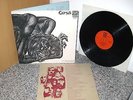
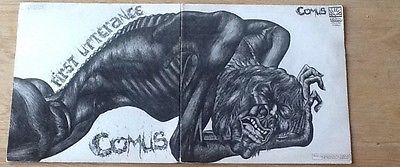
Comus First Utterance 1971 1st press Dawn Records UK DNLS-3019, played 2 times
$
977


Favourite Auctions
To save auctions to your favourites, please login
If you don't have an account, please register
Description
I now want to sell this legendary record that I only have played two times,, the sleeve is in great condition but the edges is a little bit un-edged. I will send it as an traceable letter that is insured.
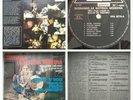
On Mar-17-14 at 08:53:32 PDT, seller added the following information:I just added an extra photo of the matrix stamp but my phone didnt have any macro option...
anyway, the stamp is DNLS 3019 A-3*T and DNSL 3019B-3*T On Mar-17-14 at 09:16:57 PDT, seller added the following information:
The record is in VERY good condition since it has only been played carefully twice.
The cover is also in very nice condition. I think it´s possible to get the insert page totaly flat but I leave that to the new owner.On Mar-18-14 at 03:30:57 PDT, seller added the following information:
Some facts about this record
First Utterance is the debut album of the British progressive rock band Comus. It was released in 1971, with the opening song "Diana" being released as a single.
First Utterance was notable for its unique blend of progressive rock, folk, psychedelia, and elements of paganism and the macabre. The overall thematic tone of the album is of vulnerable innocence facing abusive power,[1] the songs dealing with violence ("Drip Drip"), rape ("Diana", "Song to Comus"), and insulin shock therapy ("The Prisoner"). These themes contrast starkly with the acoustic sound of the record, featuring acoustic guitar, violin, flute, and lyrical, almost Arcadian, female harmonies.
Comus: First Utterance (1971)
Comus was one of those British bands that were somewhere between folk rock and prog rock, but never doing versions of traditional folk material the way of Fairport Convention or Steeleye Span. They have a harder edge than any of those groups, and plenty of creative passages and tempo changes that would make them also considered progressive rock. Plus their themes tend to be quite a bit darker and more sinister, touching on the occult and often gruesome themes. The group used acoustic guitars, bongos, flutes, violin, bass, but no regular drumset. In fact most of the instruments are acoustic, aside from the bass, which is electric, yet they are able to rock! Roger Wootton tends to have a harsh voice, the (not so kind) British rock critics at the time likened to him as Marc Bolan being squeezed to death, but in all fairness he reminds me a whole lot of Family's Roger Chapman, which is a real plus in my book (in fact I can't help but reminded of Family at times in Comus' music thanks to the vocals, and I'm sure the group heard Family, because Family weren't exactly unsuccessful there in Britain, even if they were largely unknown in America). Bobbie Watson is the one handling the female vocals (and the percussion), and often she would sing together with Roger Wootton. Glen Goring would handle guitar alonside Wootton, while Colin Pearson handled fiddle, Andy Hellaby handled bass, and Rob Young would handle flute, oboe, and percussion.
Comus only managed two albums, First Utterance being their debut, on the Dawn label, then, three years later, To Keep From Crying (1974) on the Virgin label (by which point they had lineup changes, and Gong and Henry Cow members helping out, Didier Malherbe and Lindsay Cooper included, although it's my understanding that To Keep From Crying is not as good as First Utterance). "Diana" right away shows the demented nature of the band, with Roger Wootton's Roger Chapman-like vocals, some bizarre vocals and fiddle playing. You know right away this isn't The Pentangle or Steeleye Span! "The Herald" is a rather mellow, dreamy acoustic piece with extended acoustic pieces and female vocals, some of it reminding me of the Hatfield & the North female chorus (which was Barbara Gaskin, Ann Rosenthal, and Amanda Parsons), although this section of "The Herald" is about as Canterbury is it gets. "Drip Drip" is another extended piece, this time more rock-oriented, with more demented vocals, and violin playing. There's some more creative and extended passages. "Song to Comus" is an incredible piece, nice flute and violin work, more demented vocals (what else you expect from Roger Wootten?). "Bitten" is the shortest piece on the album, which is the only one without vocals, and mainly an experimental piece that leads up to the final cut, "The Prisoner". The songs starts off rather soft, but I really love how the music kicks in, a truly wonderful climax.
This album was just one of way too many that fell through the cracks. Although the album came out in a prime time for both folk and prog rock (1971), it was released during a bad time when the British post office was under a strike making it difficult for copies to enter the record stores. Then the album got bad press, obviously this music was over the heads of rock critics, as mentioned already one rock critic described the singer as "Marc Bolan being squeezed to death" and references to munchkins (in regards to the vocals in general). But I understand the band did get support by none other than David Bowie. I'm almost convinced that if it wasn't for him, they wouldn't be given a second chance (that is, to release that second album, To Keep From Crying).
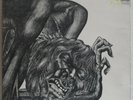
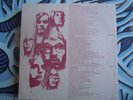
The cover artwork was drawn in ball point pen by Roger Wootton, lead singer and songwriter of the band. The centrefold artwork was painted by guitarist Glenn Goring.