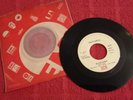
Cliff Jordan - Blowing In From Chicago Analogue Pro - Kirmuss Cleaned & Restored
$
69


Favourite Auctions
To save auctions to your favourites, please login
If you don't have an account, please register
Description
Cliff Jordan/Gilmore Blowing In From Chicago
For the lazy Audiophile: Kirmuss Cleaned & Restored All steps completed Played 1x to ensure sound quality
More info on Kirmuss Ultrasonic Restoration & Cleaning
https://kirmussaudio.com
An Affordable Solution To Maintaining And Restoring Your Vinyl Collection:
GLOBALLY RECOGNIZED AS THE LEADER WITH PATENTED TECHNOLOGY DEVELOPED IN THE USA.
After now 12 years of continued extensive research and trials as well as sales since 2018, audiophile and business owner Charles Kirmuss developed an affordable and simple to use RECORD CLEANING AND RECORD GROOVE RESTORATION SYSTEM based on researching the record making process and the environments that records are manufactured and stored in. Indeed manufacturing products for 4 decades, he leveraged a sonic manufacturer used by others to create a base engine to keep costs down. Studying peer products as well as the cause and effect of standing waves in ultrasonics , cavitation, plasma drive, and the effects of like charges between water and a record, he instituted his own changes and patented embellishments, adding a 70 KHz resonance to a standard 35 KHz sonic further created a safe record suspension system and a method to change the charge of the record to be opposite to that of water in the sonic's tank. Added where discovered in DIY and Chinese ultrasonic systems sold where skewered records upwards of 8 to 12 at a time in a 6 liter tank of water that are at times only partially inserted in a bath, discovered in his study where records need to be spaced properly so as not to see the effect of standing waves created. Not more than 4 records in a 6 liter tank. If more than 4 records are inserted, this standing wave diminishes the effectiveness of using ultrasonic cavitation, and only touching the edges of the record as a result. PROVEN BY THE UNIVERSALLY RECOGNIZED ALUMINUM FOIL TEST that anyone can perform, by building aluminum foil records. (Click on the Audiophile Society of NJ ZOOM presentation. (found on our first page.) It reviews how records are made, reviews cleaning methods and the like. Proven by this test: The Kirmuss process sees records spaced properly. Any less does not see the entire record see the cleaning and restoration action occur.
Kirmuss relies on science and technology. A system not sold by a distributor of sonic cleaners for jewelers and dentists, a system that further does not skewer records and damaging them and their labels, rather, with a patented design and process with proper spacing between records to ensure proper and even effect of removing not only films left from other cleaning processes, including fungus and fingerprints, but moreover the release agent from the pressing process of 70 plus years ago, all hiding groove details as well as the nasty dust embedded in the release agent at the time or pressing or dust that is micro-welded in the groove by the heat created by the dyne of the needle creating those unwanted pops.
Important to note where one should not use ammonia based jewelry cleaning solutions or alcohol or ethylene oxide (Tergitol, Triton 100) solutions to make contact with records.
TO NOTE AS DISCOVERY PROVES: WATER WITH OR WITHOUT A CLEANING SOLUTION ADDED IN AN ULTRASONIC'S TANK WITH A RECORD SPINNING CANNOT SEE ANY SONIC ACTION IN THE RECORD'S GROOVES: THIS AS BOTH THE WATER AND RECORD HAVE THE SAME SLIGHT NEGATIVE CHARGE. From elementary school science, we know that LIKE CHARGES REPELL. THAT IS WHY THE KIRMUSS PROCESS SEES THE RECORD SUBJECTED TO MULTIPLE CYCLES AS THE IONIZING SPRAY THAT IS APPLIED TO THE RECORD CHANGES THE CHARGE OF A RECORD TO A POSITIVE, IS ONLY TEMPORARILY. As the record spins, the charge is reduced. BY REAPPLYING THE IONIZING SPRAY PRIOR TO INTRODUCTION INTO THE SONIC's TANK, THE OPOSITE CHARGE RETURNS: Stripping out first films left over by prior cleaning methods, then the release agent itself. (Shure in the 1970's called this a "pressing oil".)
THUS: A RECORD IS RESTORED, AND NOT JUST SURFACE CLEANED AS OTHER PROCESS DO, THIS IN 4 OR 5 TWO OR 5 MINUTE CYCLES! THIS IS A PROCESS THAT GUARANTEES RESULTS!
The invention is not a common sonic cleaner. Not a look alike. The Kirmuss process guarantees 1.3 to 4+ dB gain over floor from your cartridge.
With ETL C US and CE Electrical and Safety Approvals indicates our commitment to product safety.
Our affordable system will increase your listening pleasure by removing most of those annoying unwanted pops and crackling sounds picked up by the stylus from both new and old records and as a result, giving breath to the artist and music as the needle now "rides" on the stamper, not the record with the release agent coating. /p>
This is NOT some home-made product! It is not a commercial cleaner look alike.
To note, and as is the case with all cleaning systems: at times as the provenance of the record to be processed is unknown to either us or the record owner as to its pressing, its original grade when new, how it was played and stored, as well as the condition of the playback needle and dyne (weight), how the record was cleaned prior and with what chemicals or agents as well as their compatibility to PVC and if the record was played more than once per side in the past period of 24 hours.... .... Indeed, our process as well as other methods cannot repair the inadvertent damage caused to the record by the aforementioned. This said, as we now see the needle "sit" properly in the groove "pocket" as residues and films including the release agent that all have been removed, we may at times hear added noise caused by prior use of alcohol cleaners, but in the same breath, at times, no longer hear the click heard on every revolution caused by a "tone arm skid", as the needle is no longer hitting this "skid mark" that is on the surface of the record as the needle is "riding lower in the groove, now in the "pocket"".
First and foremost; our Patented and Patents Pending record suspension system assures that records of any speed and size see their grooves cleaned SAFELY. No damage to the record by mechanical intrusion of skewers and the like. FOUR RECORDS AT A TIME MAY BE PROCESSED. In one session, records of varying size may be processed. Using a resonance of 70 KHz to the 35 KHz sonic results in RESTORATION. That is why the distance between records is critical in any process using an ultrasonic. Any less distance than the one offered by the KA-RC-1 between the records sees a high standing wave negating the benefits of cavitation.
Secondly; only distilled water with a maximum of 40 mL (1.4 oz) of ISA (Isopropyl) 70% solution constitutes the initial de-grease bath. THE SAFE QUANTITY OF 70% ALCOHOL DOES NOT CLEAN THE GROOVES. The alcohol in safe quantity per the PVC Chemical Compatibility Chart while it may assist in removing fingerprint oils is primarily used to kill the live and dormant fungus that resides on records that comes off using our process. Only in the first 5 minute initial wetting cycle does this remove some of the surface dust, fingerprint oils, dirt, fungus. This as both the record and the water retain the same charge.
In subsequent RESTORATION CYCLES (of either 2 or 5 minutes, followed by a 5 minute final cycle, we apply a PVC FRIENDLY, WATER SOLUBLE, anti-bacterial, anti-fungal and anti-static Ionizing Surfactant spray onto the record. When brushed in using the supplied goat hair brush, the application now changes the charge of the record with relation to the water in the ultrasonic's tank. ...Thus starts the groove cleaning and groove restoration process. The 500 MPH (805 KPH) plasma wave created by cavitation is now attracted to the both the record and the record's groove. (Patents Pending). With the plasma wave now brushing against the applied surfactant, this now first removes accumulated surface contaminants present from other cleaning systems and processes. Unfortunately as the record spins the potential charge difference "washes off". Therefore we re apply the ionizing spray. Thus we continue to process the records in multiple cycles, ( of 2 or 5 minutes), and where we finally remove the release agent found on the record and in the grooves, especially with release agent nor removed, also removed the dust and other contaminants that were micro-welded into the grooves by the heat of the needle making contact with the release "oil" that were causing those unwanted pops and crackles.
DISCOVERED AND KNOWN TO PROFESSIONAL SONIC MANUFACTURERS: Ultrasonics need an ionizing surfactant to aid the plasma wave resulting from the effect of cavitation to be attracted to the record, changing the charge of the record, as vinyl typically repels water. Without this, groove restoration and cleaning may not occur.
You may perform a simple test. Place a record on a horizontal workspace. Pour your favorite cleaning solution on the record. You will see the record "repel" water, suspending it on the record. Using your finger and moving the solution around, you will also see the solution have large droplets of water cover the grooves. The grooves are only 30 microns average diameter. 6 micron diameter at the bottom of an RIA standard pressing. Our process breaks this down: changes the charge of the record. When our process is complete, the record is virtually dry. Another testament to process.
CAUTION: Putting our agent onto a record or into a tank of water with any other ultrasonic for the reasons explained below will not work. DO NOT USE OUR SURFACTANT WITH OTHER ULTRASONIC SYSTEMS AS PERMANENT DAMAGE TO RECORDS MAY OCCUR. SPECIAL NOTE: With the AudioDeske system, we gum up the pump and gear mechanism. ONLY USE OUR KA-AS-1 with our system.
As to determining when a record is clean and restored and when to stop the process: our process allows you to see this first hand.
...As the surfactant is brushed onto the record and into the grooves over multiple 2 or 5 minute cycles, a rise and then a fall, or decrease of the appearance of a toothpaste-like substance that has been brought up by the goat hair brush is noted; this is of materials that were softened by the prior cycles of the ultrasonic cycle process as witnessed. This validates the effectiveness of the system: removing fungus, contaminants, as well as agents applied in prior cleaning methods and systems. The Last Cycle is determined when these materials rapidly evaporate or diminish in quantity. RECORDS COME OUT VIRTUALLY DRY as water is repelled by PVC. The record is clean and is RESTORED.
...ONE CANNOT JUST PLACE RECORDS INTO ANY ULTRASONIC MACHINE AND EXPECT WHERE EVEN OVER AN HOUR IN ANY MACHINE WILL THERE BE ANY REMOVAL OF CONTAMINANTS AND THE RELEASE AGENT. Our patented discovery: due to the like charge of the record with respect to the like charge of the water in the basin, with or without a solvent solution added to the water, the water and record repel each other.
YES WE OFFER A PROCESS, A PROCESS THAT WILL AS STATED BY "THE ABSOLUTE SOUND, March 2020", WHERE WE ARE BILLED AS A RECORD RESTORATION DEVICE; (not just a (surface) record cleaner). QUOTE: " You’ll be rewarded with a more spacious soundstage and truer instrumental timbre.” END QUOTE. (The KA-RC-1) does deliver results as advertised/claimed. April 2020.
price rating