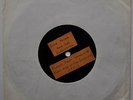
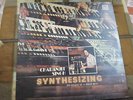
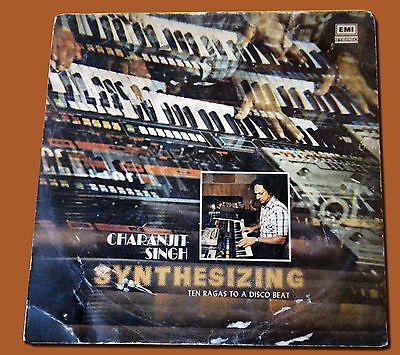
CHARANJIT SINGH Synthesizing 10 Ragas To A Disco Beat ORIGINAL Indian Press LP
$
413


Favourite Auctions
To save auctions to your favourites, please login
If you don't have an account, please register
Description
CHARANJIT SINGH Synthesizing 10 Ragas To A Disco Beat
Amazing album and a great original copy of it! Music needs no introduction.
Original Indian Print and its MINT Unplayed LP.
Never opened from the inside sleeve.
A1
Raga Bhairav
A2
Raga Lalit
A3
Raga Bhupali
B1
Raga Megh Malhar
B2
Raga Yaman
B3
Raga Kalavati
C1
Raga Madhuvanti
C2
Raga Todi
D1
Raga Bairagi
D2
Raga Malkauns
Comments from some serious fans :
------SERIOUS FIND HERE - 1982 PROTO-TECHNO MADE IN INDIA - AN ABSOLUTE TREASURE TROVE OF EARLY ELECTRONIC DANCE MUSIC THAT SOUNDS LIKE APHEX'S ANALORD TRANSPORTED TO EARLY 80'S MUMBAI - DO NOT MISS!* Charanjit Singh's 'Ten Ragas To A Disco Beat' is quite easily one of the maddest records we've ever had in stock. It was originally made in 1982 by a Bollywood soundtrack composer, intending to capitalise on the disco phenomenon with a combination of centuries-old classical Indian Ragas set to a disco backing. To achieve this Charanjit used a prototypical acid set-up of Roland TB303 bass melody sequencer and TR808 drum computer together with a Jupiter-8 keyboard. He basically created a sound which mirrored, and more importantly, pre-dated the first acid house record - Phuture's 'Acid Track' by five years, and even preceded Chip E's 'Jack Trax' in 1985. It's no throw-away novelty record either, instead capturing the hypnotic potential of acid music in the most ornate and scarily prescient fashion, making explicit the similarities of infinitely arpeggiated bass sequences and pure electronic pulses that would soundtrack dancefloors for the next 30 odd years. The more cynical among you will probably be thinking this is Ceephax or Aphex Twin delivering one of the most elaborate in-jokes of their career, but with the gatefold sleeve depicting the original sleeve and some in-depth liner notes from the label and Charanjit, our cynicism is waning in favour of absolute shock and awe. 'Ten Ragas To A Disco Beat' is vintage futurism of the highest calibre, and made all the more amazing by the fact it came from India, a place hardly renowned for its electronic output! This is a remarkable record and comes with our highest recommendation - AN ABSOLUTE FIND.
------Incredible release, I wish I found out about it earlier. This is by far the earliest and most seminal Acid House release - well before the Chicago caught on the 303 potential. Never mind the comparisons being made between Chicago Acid House and this stuff. This music has slim similarities to 1980s Chicago Acid House wave to come. Instead, it actually sounds more like the acid and acid house that was being pumped in Europe in early-mid 1990s - well a decade ahead of its time! This is a musical time capsule. Indian vibes mixed with the soft 303 sounds of acid music (and familiar beat) that by most accounts sound a DECADE ahead of their time, and still sound fresh today.
-------Behold, my children, the legend of acid house: Imagine in your mind Chicago 1987, where a small group of club kids, led by Nathan "DJ Pierre" Jones, give Ron Hardy a record to play at the Music Box. Labelled "Acid Tracks" by Phuture, its uncompromising sound quickly clears the dance floor, but Hardy hammers the tune again and again, until the masses are converted and a new genre is born.
You've heard this story a thousand times. And everything in it is true. Except, it seems, maybe the part about it being the birth of acid. Synthesizing: Ten Ragas to a Disco Beat challenges us to rewind acid's origin story to India 1982, and to move from a sweaty Chicago nightclub to the home studio of a veteran Bollywood musician. In the '60s and '70s Charanjit Singh did time on the Bollywood soundtrack scene, and earned extra cash with his own orchestra playing popular favorites at weddings. In 1982, armed with a now-iconic trio of Roland gear, the Jupiter 8, TB-303 and TR-808, Singh set out to update the entrancing drone and whirling scales of classical Indian music. It's enough of a mind-fuck that rumors circulated on the web claiming the record was a prank spawned by Richard D. James.
A prank it's not. After nearly three decades of near-complete obscurity, the record resurfaced when Bombay Connection label impresario Edo Bouman snapped it up while travelling in India. He had his mind split open when, back at his hotel, he heard the psychedelic mind-meld of East and West on his portable record player. Intrigued, Bouman tracked Singh down: "He was most friendly and surprised I knew the album. I remember asking him how he got to this acid-like sound, but he didn't quite get my point. He didn't realise how stunningly modern it was." Singh's sound didn't appear wholly out of thin air. As music critic Geeta Dayal points out, both the 303 and the 808 had been issued right around the time, and the rhythms of '70s disco had in 1982 only just reached Indian ears. Needless to say, though, the word "disco" in the title is a complete misnomer—there simply wasn't a genre called techno or house that could be invoked.
What stands out most on Ten Ragas is Singh's comparatively original use of the TB-303. Even though it was designed to fill in for a bass guitar, the 303 was notoriously awkward when it came to reproducing conventional basslines—the box was much better suited to produce the otherworldly squelches of DJ Pierre. Singh, however, found a different way to employ the machine. Dayal notes that the TB-303's "glissando" function, the ability to slide from one note to another, makes it perfectly suited for the sort of raga melodies that run slippery up and down the scale. Married to rugged 808s and Terry Riley-style undulating keyboard solos, The result is a haunting, exotic prefiguration of acid's steely futurism, a bit like Kraftwerk live at the Taj Mahal, somehow summoned from the past but envisioning the future at the same time.
-----Ragas and disco – an amazing little combination, with results that are greater than the sum of its parts! This album's hardly the cheesy affair you might expect – and instead of just adding a few typical Indian flourishes to disco music, Charanjit Singh comes up with a unique new groove – one that's filled with plenty of weird keyboards and moog bits throughout – kind of like a collision between Kraftwerk, 70s Bollywood, and P&P Records – all references we can wholeheartedly endorse! The grooves are quite fast – but that makes the keyboard work even more amazing, because Singh can really spin things out pretty damn quickly – coming up with these hypnotic keyboard bits that are more mesmerizing than even the grooves at the bottom. Very nicely packaged, in a bold second chapter for the Bombay Connection enterprise – and titles include "Raga Lalit", "Raga Khupali", "Raga Vaman", "Raga Kalavati", "Raga Todi", "Raga Malkaune", and "Raga Madhuvanti"
-- SERIOUS FIND HERE - 1982 PROTO-TECHNO MADE IN INDIA - AN ABSOLUTE TREASURE TROVE OF EARLY ELECTRONIC DANCE MUSIC THAT SOUNDS LIKE APHEX'S ANALORD TRANSPORTED TO EARLY 80'S MUMBAI - DO NOT MISS!
---Just listened to Megh Malhar and it opens with the sound of thunder, the Raag "Megh Malhar" was originally rendered by Miyan Tansen some 500 years ago to impress the emperor Akbar by summoning rain through it's sound current. Thank you honoring this incredible piece of music.
Condition
The Cover also is in excellent condition with clean sleeves and light scuff marks on the front below.
Record is graded as MINT,Unplayed with its Original Plastic Company sleeve.
Shipping Charges
We offer Standard Shipping through Registered Mail.Registered Mail will cost 15 US$ for 1 record and for each additional LP it will cost 3$ extra,
Worldwide Express Shipping Charges is 35 US$ by DHL Express for the 1st LP and for each extra LP an additional 4$ shipping charges.Items will be shipped out within 72 hours from payment received.Delivery within 4-5 days from despatch.
My Grading Details
M ( mint ) = Brand new
NM ( near mint ) = Very clean copy and played hardly one or two times.Almost New.
EX ( excellence ) = Very light scuffs or none & minor wear on cover
VG+ ( very good plus ) = A few light scratches & some wear on cover
VG ( very good ) = Many light scratches and obvious wear on cover
G ( good ) = Deep scratches & almost damage cover