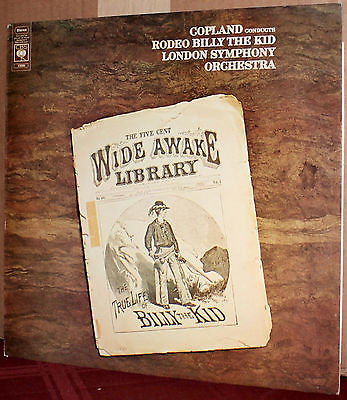
CBS LP S-72888: Aaron COPLAND - Rodeo & Billy The Kid - Copland & LSO - 1960s UK
$
15


$ 15
Sold For
Mar 16, 2017
Sold Date
Jan 21, 2016
Start Date
1
Number Of Bids
USA
Country Of Seller
eBay
Sold at
Favourite Auctions
To save auctions to your favourites, please login
If you don't have an account, please register
Description
****Welcome to our listing, thanks very much for looking!
****Check out our website! We have lots of out of print LPs and CDs! You can find us on the world wide web at -
hearthedifference.net
****Please check out our other listings for more great LPs and CDs - new items added daily!
****To access our eBay store either click on the little red door at the top right section of any of our eBay listings or, click on -
http://stores.ebay.com/Hear-The-Difference
Background -
This LP features ballet suites written by Aaron Copland and performed by Copland himself with the London Symphony Orchestra. Superb performances! The LP is in stereo, with the light blue record labels, made in the UK and issued in the 1960s (perhaps as late as the early 1970s). The vinyl is in near mint minus condition, with only some light spider marks evident (see below for details).Billy the Kid is a 1938 ballet written by the American composer Aaron Copland on commission from Lincoln Kirstein. It was choreographed by Eugene Loring for Ballet Caravan. Along with Rodeo and Appalachian Spring, it is one of Copland's most popular and widely performed pieces. The ballet is most famous for its incorporation of several cowboy tunes and American folk songs and, although built around the figure and the exploits of Billy the Kid, is not so much a biography of a notorious but peculiarly appealing desperado as it is a perception of the pioneer West, in which a figure such as Billy played a vivid role.
It was premiered on 16 October 1938 in Chicago by the Ballet Caravan Company, with pianists Arthur Gold and Walter Hendl performing a two-piano version of the score. The first performance of Billy the Kid in New York City occurred on 24 May 1939, with an orchestra conducted by Fritz Kitzinger.
The story follows the life of the infamous outlaw Billy the Kid. It begins with the sweeping song "The Open Prairie" and shows many pioneers trekking westward. The action shifts to a small frontier town, in which a young Billy and his mother are present. The mother is killed by a stray bullet during a gunfight and Billy stabs his mother's killer, then goes on the run.
The next scene shows episodes in Billy's later life. He is living in the desert, is hunted and captured by a posse (in which the ensuing gun battle features prominent percussive effects) and taken to jail. Billy manages to escape after stealing a gun from the warden during a game of cards and returns to his hideout, where he thinks he is safe, but sheriff Pat Garrett catches up and shoots him to death. The ballet ends with the 'open prairie' theme and pioneers once again travelling West.
Rodeo is a ballet scored by Aaron Copland and choreographed by Agnes de Mille, which premiered in 1942. Subtitled "The Courting at Burnt Ranch", the ballet consists of five sections: "Buckaroo Holiday", "Ranch House Party", "Corral Nocturne", "Saturday Night Waltz", and "Hoe-Down". The symphonic version omits "Ranch House Party", leaving the other sections relatively intact.
The circumstances surrounding the composition of Rodeo led to its having a number of features that set it apart from other Copland compositions. Though many of Copland's works incorporate traditional American folk tunes, Rodeo is unique in that it leaves them quite intact in the score, with very little alteration on the part of the composer. This is likely attributable in part to De Mille's control over the work. Indeed, she had already blocked the entire show before Copland had written a single note and also transcribed several folk tunes, including "Old Paint", for Copland in addition to her blocking notes.
The well-known main theme of "Hoe-Down" is based on a unique version of the American folk song "Bonyparte" or "Bonaparte's Retreat," played by Salyersville, Kentucky fiddler William Hamilton Stepp, which was recorded in 1937 by Alan Lomax for the Library of Congress. A meticulous transcription by Ruth Crawford Seeger of that performance appeared in Lomax's 1941 book, "Our Singing Country".
Many of the themes were autobiographical for De Mille. An extremely skilled dancer, the choreographer nonetheless felt awkward in the offstage world, and the Cowgirl's unwillingness to subscribe to traditional gender roles mirrors De Mille's experience.
-
LP made by CBS Records, in the UK / Great Britain / England
-
LP released in the 1960s (or as late as the early 1970s)
-
LP is recorded in STEREO
-
Record Catalog Number: S 72888
-
Record Labels are primarily BLUE, with BLACK lettering (see pictures for the detail)
Aaron Copland
LP title and music on this rare item -
Copland: Billy The Kid (Ballet Suite)
Copland: Four Dance Episodes from "Rodeo"
Performers -
The London Symphony Orchestra
CONDITION Details:
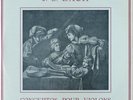
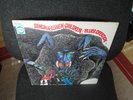
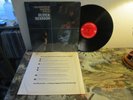
The LP jacket is in near mint minus condition. The jacket is tight and clean, with NO seam splits. The corners are solid. The colors on the jacket are sharp. The corners and seams show just a bit of shelf wear due to the age of this jacket (see pictures with this listing as they are of the actual item).
The LP is in near mint minus condition! There may be a couple of very light marks on the vinyl, most of which are spider marks caused by sliding the LP in and out of the jacket. Some of these marks may sound on some audio systems (this depends on the sensitivity of your audio gear). The LP retains most of the original gloss and sheen! The record was obviously well taken care of. There are NO serious spindle marks on the record labels. That said, acquiring a vintage LP like this is for the performance and rarity of the LP, not necessarily for the sound quality.A Short Note About LP GRADING -
- Mint = Only used for sealed items.
- Near Mint = Virtually flawless in every way.
- Near Mint Minus = Item has some minor imperfections, some audible.
- Excellent = Item obviously played and enjoyed with some noise.
- Very Good Plus = Many more imperfections which are noticeable and obtrusive.
For best results, always thoroughly clean your LPs before playing them.
LPs can be audiophile quality pressings (any collector of fine MFSL, half speeds, direct to discs, Japanese/UK pressings etc., can attest to the difference a quality pressing can make to an audio system).
Don't let this rarity slip by!!!price rating