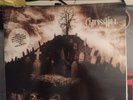
CACTUS "One Way...Or Another " LP EX/VG 1971 Autographed by Jim McCarty WOL
$
26


Favourite Auctions
To save auctions to your favourites, please login
If you don't have an account, please register
Description
One Way...Or Another Review by Lindsay Planer
One Way... Or Another (1971) was the second studio outing to feature the incipient incarnation of supergroup Cactus, comprised of Vanilla Fudge rhythm section Carmine Appice (drums) and Tim Bogert (bass), as well as former Amboy Dukes lead vocalist Rusty Day (vocals/mouth harp), and Jim McCarty (guitar) from Mitch Ryder & the Detroit Wheels and the Buddy Miles Express. Even as their debut was ostensibly rawer, they retained the same amp'ed-up electric blues reminiscent of early Grand Funk Railroad and Foghat. The more polished outcome heard on their sophomore effort is undoubtedly the direct result of assistance from recording engineer extraordinaire Eddie Kramer and their upgraded digs at the recently completed Electric Lady Studios, which they inhabited shortly after the passing of the facilities' owner, Jimi Hendrix. Immediately, the proceedings are thrust into high gear with a languorous and seething interpretation of Little Richard's "Long Tall Sally." While not the extended barnburner it became in concert, it gets things off to a rousing start. The lightweight up-tempo "Rockout, Whatever You Feel Like" could easily be mistaken for Jo Jo Gunne, especially in Day's vocal asides, strongly recalling Jay Ferguson and company. "Rock 'N' Roll Children" is a heavier number with McCarty unleashing rounds of impressive and impellent fretwork churning atop the simmering backbeat. Cactus do what they do best, returning to their boogie rock roots on the suitably named "Big Mama Boogie -- Parts 1 & 2." McCarty's pumping acoustic opening is perfectly augmented by some organic mouth harp courtesy of Day before launching into an explosive assault of pure, unadulterated proto- metal. The cover of Chuck Willis' "Feel So Bad" is given a sizable shakedown, yet doesn't quite seem to live up to its potential. The opposite can be said of the understated "Song for Aries." Although clocking in at just under three minutes, the instrumental is a showcase for McCarty's immorally underrated lead guitar. The long-player concludes with two full-blown centerpieces, revealing Cactus' strength as a formidable powerhouse combo on the autobiographically-inspired rave-up "Hometown Bust." Fittingly, this lineup and album come to an end on a high note with the title track "One Way...Or Another." The number is quite possibly the finest original to have been worked up by the band. The cut blazes from tip-to-tail and if the primary riff seems familiar, that may be because it was lifted almost verbatim from Jeff Beck's Beck-Ola-era tune "Rice Pudding." However in Cactus' care, it stomps with a bit more crunch and no-nonsense attitude.
Cactus (3) – One Way...Or Another
Label:
ATCO Records – SD 33-356
Format:
Vinyl, LP, Album, Presswell Pressing; Gatefold
Country:
US
Released:
1971
Genre:
Rock
Style:
Blues Rock
A1 Long Tall Sally
Written-By – Johnson*, Penniman*, Blackwell*
6:27
A2 Rockout, Whatever You Feel Like 3:56
A3 Rock N' Roll Children 5:40
A4 Big Mama Boogie - Parts I & II 4:59
B1 Feel So Bad
Written-By – Chuck Willis
5:30
B2 Song For Aries 3:05
B3 Hometown Bust 6:38
B4 One Way...Or Another 5:05
Manufactured By – Atlantic Recording Corporation
Copyright © – Atlantic Recording Corporation
Recorded At – Electric Lady Studios
Mastered At – Atlantic Studios
Lacquer Cut At – Sterling Sound
Pressed By – Presswell
Design [Album], Producer – Cactus (3)
Engineer ["Head"] – Edwin H. Kramer*
Engineer [Ably Assisted By] – Dave Palmer (2), John Jansen
Mastered By – RL* (tracks: A1 to A4), GP* (tracks: B1 to B4)
Photography By [Front & Back Cover] – Alan Azzolino
Photography By [Inside Liner] – Jim Cummins (2)
Written-By – Appice* (tracks: A2 to A4, B2 to B4), McCarty* (tracks: A2 to A4, B2 to B4), Day* (tracks: A2 to A4, B2 to B4), Bogert* (tracks: A2 to A4, B2 to B4)
PR in label matrix = Presswell pressing
Includes large foldout poster
Runout is etched except "STERLING" which is stamped.
Sort by
Default
Rights Society (A1, B1): BMI
Rights Society (A2 to A4, B2 to B4): ASCAP
Pressing Plant ID (In label matrix and runout): PR
Matrix / Runout (A-side label): ST-C-712131 PR
Matrix / Runout (B-side label): ST-C-712132 PR
Matrix / Runout (A-side runout, variant 1): ST-C-21 ST-C-712131B AT PR STERLING RL
Matrix / Runout (B-side runout, variant 1): ST-C-712132B AT-GP STERLING PR
Matrix / Runout (A-side runout, variant 2): ST-C-712131A AT-GP STERLING PR RL
Matrix / Runout (B-side runout, variant 2): ST-C-712132B AT-GP STERLING PR
Matrix / Runout (A-side runout, variant 3): ST-C-712131A AT-GP STERLING PR RL
Matrix / Runout (B-side runout, variant 3): ST-C-712132A AT-GP STERLING RL PR
GOLDMINE GRADING
MINT ---- It should appear to be perfect. No scuffs or scratches, blotches or stains, labels or writing, tears or splits. Mint means perfect.
NEAR MINT ---- Otherwise mint but has one or two tiny inconsequential flaws that do not affect play. Covers should be close to perfect with minor signs of wear or age just becoming evident: slight ring-wear, minor denting to a corner, or writing on the cover should all be noted properly.
VERY GOOD PLUS ---- The record has been handled and played infrequently or very carefully. Not too far from perfect. On a disc, there may be light paper scuffs from sliding in and out of a sleeve or the vinyl or some of the original luster may be lost. A slight scratch that did not affect play would be acceptably VG+ for most collectors.
VERY GOOD ---- Record displays visible signs of handling and playing, such as loss of vinyl luster, light surface scratches, groove wear and spindle trails. Some audible surface noise, but should not overwhelm the musical experience. Usually a cover is VG when one or two of these problems are evident: ring wear, seam splits, bent corners, loss of gloss, stains, etc.
GOOD ---- Well played with little luster and significant surface noise. Despite defects, record should still play all the way through without skipping. Several cover flaws will be apparent, but should not obliterate the artwork.
POOR ---- Any record or cover that does not qualify for the above "Good" grading should be seen as Poor. Several cove flaws.
price rating




![LENNIE HIBBERT - CREATION LP [ STUDIO ONE ] [ AUG104 ]](https://www.popsike.info/php/thumbnail.php?url=https://www.popsike.pics/pix/20210817/174891112861.jpg)