Bob Dylan ?– Blonde On Blonde Vinyl 2X LP Album C2L 41
$
124


Favourite Auctions
To save auctions to your favourites, please login
If you don't have an account, please register
Description
Brought to you by ebay seller: Vinyl Counterattack Records / West Virginia, United States of America
Bob Dylan ?– Blonde On Blonde Vinyl LP Album C2L 41
Label: Columbia ?– C2L 41
Format: 2 × Vinyl, LP, Album, Mono, Pitman Pressing
Country: US
Released: 1966
Genre: Rock, Blues
Style: Folk Rock, Rhythm & Blues
Tracklist & Credits
A1
Rainy Day Women #12 & 35
4:36
A2
Pledging My Time
3:50
A3
Visions Of Johanna
7:33
A4
One Of Us Must Know (Sooner Or Later)
4:54
B1
I Want You
3:07
B2
Memphis Blues Again
7:05
B3
Leopard-Skin Pill-Box Hat
Lead Guitar, Harmonica – Bob Dylan
3:58
B4
Just Like A Woman
4:52
C1
Most Likely You Go Your Way And I'll Go Mine
3:30
C2
Temporary Like Achilles
5:02
C3
Absolutely Sweet Marie
4:57
C4
4th Time Around
4:35
C5
Obviously 5 Believers
Harmonica – Charlie McCoy
3:35
D
Sad Eyed Lady Of The Lowlands
11:23
Companies, etc.
· Mastered At – Customatrix
· Pressed By – Columbia Records Pressing Plant, Pitman
· Recorded At – Columbia Recording Studios, Nashville
Credits
· Bass – Henry Strzelecki
· Bass Guitar – Joe South
· Drums – Kenneth Buttrey*
· Guitar – Al Kooper, Jerry Kennedy, Jaime Robertson*, Wayne Moss
· Harmonica – Charlie McCoy
· Keyboards – Bill Aikins
· Lead Vocals – Bob Dylan
· Organ – Al Kooper
· Piano – Hargus Robbins
· Producer – Bob Johnston
· Vocals – Joe South, Wayne Moss
· Written-By – B. Dylan*
Notes
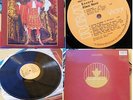
Red Columbia 2-eye labels with ''MONO'' in white lettering at the bottom.
The inside of the gatefold cover shows nine pictures, including one of Claudia Cardinale.
"P" stamped in runouts denotes a Columbia Records Pressing Plant, Pitman pressing.
Album catalog number: C2L 41
Disc One catalog number: CL 2516
Disc Two catalog number: CL 2517
The complete single line of text at the bottom of the inside gatefold reads as follows:
Recorded at Columbia Recording Studios, Nashville, Tennessee / Bob Dylan, Harmonica & Lead Guitar (on "Leopard-skin Pill-box Hat") / Charlie McCoy, Harmonica (on "Obviously 5 Believers") / Musicians: Wayne Moss, Charlie McCoy, Kenneth Buttrey, Hargus Robbins, Jerry Kennedy, Joe South, Al Kooper, Bill Aikins, Henry Strzelecki, Jaime Robertson / Produced by Bob Johnston / ? "COLUMBIA", [Columbia logo] MARCAS REG. PRINTED IN U.S.A.
Barcode and Other Identifiers
· Other (Catalog number, disc 1): CL 2516
· Other (Catalog number, disc 2): CL 2517
· Matrix / Runout (A-side label): XLP 113761-2A
· Matrix / Runout (B-side label): XLP 113762-2G
· Matrix / Runout (C-side label): XLP 113763-4F
· Matrix / Runout (D-side label): XLP 113764-2G
MEDIA CONDITION: Excellent (EX)
COVER CONDITION: Very Good Plus (VG+)
ULTRASONIC CLEANING CARE
ebay Seller: Vinyl Counterattack Records / West Virginia, United States of America
--------------------------------------------------------------------------------------------------
Brought to you by ebay seller: Vinyl Counterattack Records / West Virginia, United States of America
additional information about the history of the record album FROM AN EXCELLENT AND INFORMATIVE INTERNET ARTICLE:
MARCH 17, 2019 BY NEAL
a Blonde On Blonde labelography and price guide
(Photographs omitted, but a search for this article on the Internet would likely include them.)
Last updated: December 17, 2019
THIS IS A LABELOGRAPHY and price guide for the initial pressings of Bob Dylan’s 1966 two-record album BLONDE ON BLONDE. It is intended as a complementary piece to the article “What Was the First Rock Double-Album of the ’60s?” Whereas that piece was for a general readership, this article is intended for collectors (although many of those general readers can enjoy the photos and some of the history).
We determined that the official release of BLONDE ON BLONDE was at least two weeks after the release of FREAK OUT. This gives the Mothers bragging rights over Dylan for the “first rock double-album.” That is, the first two-record set of newly recorded material of rock music. Frankly, this is so much nitpicking, as the two albums were released within a week of each other.
Nitpicking aside, Bob Dylan and Frank Zappa effectively conceived, recorded, and released the first two rock double-album at the same time. Before proceeding here, I suggest you read “What Was the First Rock Double-Album of the ’60s?”
What follows here is a look at Dylan’s album and the background information if the previous article will clarify things.
Columbia released Blonde on Blonde in mono (C2L-41) and stereo (C2S-841). The actual date of release of Blonde on Blonde is uncertain at this time. It may have been released as early as June 27, 1966, in select markets (notably Los Angeles) but it may have not been released until July 10, 1966.
Dylan’s first round of recording sessions his seventh album began on October 5, 1965, at Columbia’s Studio A in New York City. The final sessions were held at Columbia’s Studio B in Nashville, Tennessee, on March 10, 1966. The last overdub session was on June 16. Bob Johnston was the producer for these sessions.
That is, Bob began work on his project five months before the Mothers’ first official session for Verve, yet finished two days after they had wrapped up their sessions. Of course, it was well worth the effort and the wait!
Those of us who came of age in the ’60s grew up with the legend that Dylan wasn’t certain that he had a two-record set until the last session. At that point, he and Bob Johnson realized they had too much material for a single record but not enough for two.
Then Dylan stepped up to the plate and hit a grand-slam, writing all eleven minutes of “Sad-Eyed Lady of the Lowlands” in one sitting just to fill up the fourth side!
Anyway, something along those lines is how the legend went.
Hah!
We now know two facts that ruin that legend:
1. There was plenty of material for two LPs before “Sad-Eyed Lady of the Lowlands.”
2. “Sad-Eyed Lady of the Lowlands” wasn’t even the last track recorded!
The album’s contents and their sequencing were intentional. The released album could have held more music, but Dylan didn’t want any more on the records than what he selected. The decision to place “Sad-Eyed Lady of the Lowlands” as the sole track on the fourth side was exactly that: an aesthetic decision. And a brilliant decision it was!
Photography
Except for one photo, all the images on the inner and outer covers were taken by Jerry Schatzberg.” According to the photographer:
“I wanted to find an interesting location out of the studio. We went to the west side, where the Chelsea Art galleries are now. At the time it was the meat-packing district of New York and I liked the look of it. It was freezing and I was very cold. The frame he chose for the cover is blurred and out of focus.
Of course, everyone was trying to interpret the meaning, saying it must represent getting high or an LSD trip. It was none of the above; we were just cold and the two of us were shivering. There were other images that were sharp and in focus, but to his credit, Dylan liked that photograph.”
Most of us didn’t see the gatefold jacket fully opened unless we or a friend bought it and took it home. As the jacket was manufactured over time, the tones of the colors on the front and back covers varied somewhat.
As this was a gatefold jacket, it opened up into two leaves, both of which included black and white photos. The song titles were printed across the top with additional data such as musician credits along the bottom. The song Stuck Inside of Mobile with the Memphis Blues Again is listed simply as Memphis Blues Again.
Original jackets had nine photos, two of them of women who are not identified (including a prominent one later identified as actress Claudia Cardinale). The black and white photos have grey tones. Supposedly, copies exist with black and white photos with blue tones.
In 1968, the inner panels of the jacket were changed: The two photos of the women were removed and one shot of Dylan was enlarged. All subsequent printings of the jacket featured these seven photographs on the inside.
Mono and stereo versions
While the catalog numbers for the mono and stereo albums are C2L-41 and C2S-841, the individual records have individual catalog numbers. The two mono records are CL-2516 and CL-2517 and the two stereo records are CS-9316 and CS-9317.
• The mono records have significantly different mixes than the stereo records and the length of some of the tracks differ.
• The mono versions issued in Canada and France in the ’60s contained earlier, different mixes than the mono records released in the US.
• In 1968, Columbia started using a slightly different mix on the stereo records, making the stereo albums from the ’60s that much more attractive to fans and collectors.
For even more variations, check out the Electric Dylan website.
Promotional pressing
Like most albums of the time, Columbia pressed special promotional copies with white labels primarily to be shipped to radio stations for airplay.
They were usually mono records and some copies had two white stickers with the song titles and their playing time affixed to the bottom of the back cover.
Promotional pressings were mono records with white labels with two stylized speaker logos (or “eye logos”), one at 9 o’clock and one at 3 o’clock. The word “Nonbreakable” does not appear on the left side. In the perimeter print at the bottom, there is a tiny speaker-logo to the left of “Marcas.” The second song on Side 2 is listed as Memphis Blues Again.
Commercial pressings
From 1966 through 1969, BLONDE ON BLONDE was manufactured with Columbia’s red labels with two speaker logos on each side of the spindle hole, one at 3 o’clock and one at 9 o’clock. On the bottom, “360 Sound” appeared on both sides of either “Mono” or “Stereo” in white print.
During these four years, there were three variations on the mono labels and four for the stereo records.
With NONBREAKABLE and MEMPHIS BLUES AGAIN
Both mono and stereo records (1966) have red labels two stylized speaker logos (or “eye logos”), one at 9 o’clock and one at 3 o’clock. The word “Nonbreakable” appears on the left side below the catalog number. In the perimeter print at the bottom, there is a tiny speaker-logo to the right of “Marcas.” The second song on Side 2 is listed as Memphis Blues Again.
As both the promotional pressing and the album jacket list Memphis Blues Again, I assume that the commercial pressing listing Memphis Blues Again is the first pressing while those listing Stuck Inside Of Mobile With The are later pressings—although they could be alternative first pressings.
This is the most common of the label variations from the ’60s. Nonetheless, as the first pressing it is also the most sought after—if you’re a Dylan or ’60s collector and want one copy of BLONDE ON BLONDE to have in your collection, this is the copy to have!
With NONBREAKABLE and STUCK INSIDE OF MOBILE
Both mono and stereo records (1966) have red labels with two stylized speaker logos (or “eye logos”), one at 9 o’clock and one at 3 o’clock. The word “Nonbreakable” appears on the left side below the catalog number. In the perimeter print at the bottom, there is a tiny speaker-logo to the right of “Marcas.” The second song on Side 2 is listed as Stuck Inside Of Mobile With The.
With NONBREAKABLE and STUCK INSIDE OF MOBILE
Later pressing mono and stereo records (1967-1968) have red labels with two stylized speaker logos (or “eye logos”), one at 9 o’clock and one at 3 o’clock. The word “Nonbreakable” does not appear on the left side. In the perimeter print at the bottom, there is a tiny speaker-logo to the right of “Marcas.” The second song on Side 2 is listed as Stuck Inside Of Mobile With The.
Without NONBREAKABLE with STUCK INSIDE OF MOBILE
Later pressing stereo records (1968-1969) have red labels with two stylized speaker logos (or “eye logos”), one at 9 o’clock and one at 3 o’clock. The word “Nonbreakable” does not appear on the left side. In the perimeter print at the bottom, the tiny speaker-logo is to the left of “Marcas.” The second song on Side 2 is listed as Stuck Inside Of Mobile With The.
The new Columbia label
In 1970, Columbia changed the look of their label: it remained red but dropped the speaker logos and the “360 Sound” and instead had “Columbia” in print printed in gold six times around the perimeter.
Titles released prior to the change kept their original catalog numbers, hence BLONDE ON BLONDE remained C2S-831. This label remained in use into the ’80s and most Dylan albums from the ’60s with these labels sell for approximately $10 in NM condition.
Inner sleeve
Between 1963 and 1967, Columbia released all of their LPs with clear plastic inner sleeves instead of the more common paper inner sleeve. These sleeves were loose and Baggies-like and rounded at one end and sealed at the other end, which was straight across. That is, you could break the shrinkwrap on the album and still have a still-sealed record.
To open, you had to pull off a quarter-inch strip of the baggy along a perforated line.
So all original pressings of BLONDE ON BLONDE from 1966 into 1967 should have the record housed in two Baggies-like sleeves. Later pressings were issued with standard company paper sleeves advertising other Columbia artists and titles.
Special stickers
There are at least three unique stickers that were affixed to the shrinkwrap of commercial copies of BLONDE ON BLONDE and several generic stickers affixed to commercial and promotional copies of the album.
Commercial copies of BLONDE ON BLONDE can be found with special stickers affixed to the shrinkwrap on the front of the album. Rainy Day Women 12&35 and I Want You had both been released prior to the album, so Columbia was safe in printing the sticker noting those two hits the first press run of the album in mid-1966.
Once BLONDE ON BLONDE was completed and released, Columbia could print a new sticker noting the two hits plus listing the rest of the album’s tracks. This sticker was used in the second half of 1966 and may have been printed and used into 1967.
This is another sticker that lists the contents of the album that was apparently affixed to albums in 1966. It is the rarest of the three content stickers.
This sticker was affixed to the jacket of white label promotional pressings of the album and shipped to radio stations for airplay.
This sticker was often affixed to the jacket or the labels of commercial albums that were designated for promotional purposes. These were generic stickers that Columbia used on thousands of different titles over the years.
This gold sticker identifies the album as being designated for promotional use by Columbia’s Special Product division. The first time I ever saw these stickers in general use was in 1968 when the US record industry deleted mono albums from their catalogs and then dumped millions of them on the market, usually by selling them for a fraction of their normal wholesale price to department stores across the country.
Pressing plants
The records were pressed at each of the Columbia’s three pressings plants in Pitman, New Jersey, in Santa Maria, California, and in Terre Haute, Indiana. The Pitman pressings usually have a capital “P” stamped into the runout vinyl; the Terre Haute pressings usually have a capital “T” stamped into the runout vinyl; the Santa Maria pressing have a capital “S” or a backward capital “S” (“?”).
Later pressings and reissues
While Columbia dropped the mono version of BLONDE ON BLONDE from its catalog in 1967, it kept the stereo version in print as an LP, a prerecorded tape, and as a CD. There have been several reissues of the mono album in recent years, my fave being from Sundazed Records.
In 2002, Sundazed issued a remastered, facsimile edition of the mono BLONDE ON BLONDE taken from the original mono masters (Sundazed LP-5110). According to Sundazed’s Bob Irwin:
“There was clear vision throughout the mono mixing. I can let you know, without a doubt, the mono mix was the one that was considered most important to everyone associated with the album at the time. The final mono mix is much, much more complicated and deliberate than the stereo.” (Electric Dylan)
There were problems with the quality of the vinyl and the pressing of the original Sundazed LP-5110 resulting in noisy and warped LPs. In 2008, Sundazed issued a remastered version of LP-5110 that fixed those issues. Both editions have the same bar-code (090771511010) but the corrected version has “KG@CA” in the trail-off/runout area.
Price guide
First, the version of the album with the records that list the second song on Side 2 as Memphis Blues Again is the first pressing (1966-1967) and is also the most common pressing. The variations with that song listed as Stuck Inside Of Mobile With The are apparently second pressings (1968-1969) and are much rarer than the first pressing.
At this time, collectors have not differentiated between them in terms of prices paid:
VG VG+ NM
C2L-41 $ 40-60 75-100 150-200
C2S-841 $ 20-30 40-60 75-100
White label promos are almost impossible to find in any condition and can sell for $1,000 even in less than near mint condition!
Much of the information above is from Frank Daniels’ Bob Dylan Pressings. Frank also provided me with scans of many of the images below and proofed the text.
BLONDE ON BLONDE was certified by the RIAA for a Gold Record Award on August 25, 1967. This award represented $1,000,000 in sales at the wholesale level for approximately 300,000-400,000 copies sold. It was finally certified as Platinum for 1,000,000 copies sold on May 5, 1999.
Finally, BLONDE ON BLONDE may be one of the dumbest titles for one of the greatest rock albums ever but few of us who grew up with the album think about that any more than we think about the fact that Hopalong Cassidy was Irish . . .
ebay Seller: Vinyl Counterattack Records / West Virginia, United States of America
price rating