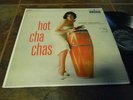
Bebo Valdes She Adores The Latin Type RARE 1956 Decca LP Cheesecake Petty Girl
$
36


Favourite Auctions
To save auctions to your favourites, please login
If you don't have an account, please register
Description
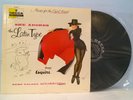
"She Adores The Latin Type" Music For The Girl Friend Bebo Valdes And His Orchestra Tropicana Full-Length 12" Vinyl Album
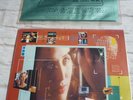
Album Description: This beautiful album cover features a shapely female toreador drawn by the great George Petty. The cover is in very good+ condition, minor surface wear, partial seam split on top with a little clear tape restitution. The vinyl record is in glossy clean good to very good condition, a few light lines/scuffs, plays fine no skips. The vinyl record is in an original Decca Records illustrated discography inner sleeve. Please see pictures. Will be sent safely packaged. Check out our store for a wide variety of vinyl records and CDs. We ship worldwide in secure, padded packaging. Please contact us with any questions.
Tracklist:
1 Batanga Cha Cha Cha
2 Guempa Mambo
3 Hot In Haiti
4 Daiquiri
5 Cuba Libre Cha Cha Cha
6 Penthouse Mambo
7 Ritmando Cha Cha Cha
8 Serenata En Batanga
9 Merengue A La Mode
10 Birthday Mambo
11 Cha Cha Cha In Tropicana
12 Dreamers Cha Cha Cha
This vintage album is a release from the "Music For The Girl Friend" series established alongside the "Music For The Boy Friend" series in 1956 by Decca as part of a joint advertising campaign with American magazine Esquire. Classic cheesecake cover artwork featured pin-ups drawn by George Petty. George Brown Petty IV (1894-1975) was an American pin-up artist. His pin-up art appeared primarily in Esquire and Fawcett Publications's True but was also in calendars marketed by Esquire, True and Ridgid Tool Company. Petty's Esquire gatefolds originated and popularized the magazine device of centerfold spreads. Reproductions of his work, known as "Petty Girls," were widely rendered by military artists as nose art decorating warplanes during the Second World War, including the Memphis Belle. George Petty was born in Abbeville, the seat of Vermilion Parish in south Louisiana. The Petty family moved to Chicago just before the turn of the century, where George III, a photographer of some note, enjoyed considerable success with images of young women, madonnas, and nudes. Petty was not a particularly good student in high school, spending a great deal of time on extracurricular activities instead of schoolwork. His artistic bent first became obvious in high school, where he was the staff artist for the school newspaper. During his high school years, he enrolled in evening classes at Chicago Academy of Fine Arts under the tutoring of Ruth VanSickle Ford. He also worked in his father's photo shop where he learned how to use an airbrush. In Paris, Petty studied art at the Académie Julian with Jean-Paul Laurens and others until 1916, when World War I caused Myron T. Herrick, ambassador at that time, to order all Americans to return home. Petty returned to Chicago, and worked as an airbrush retoucher for a local printing company. He was able to establish himself as a freelance artist, painting calendar girls and magazine covers for The Household. By 1926, he was able to open his own studio. George Petty never discussed in detail those artists who influenced him, other than J. C. Leyendecker (an artist for The Saturday Evening Post during George's high school days) for his interpretation of men, Coles Phillips for his technique, and Maxfield Parrish for his use of light. However, it can be inferred from his later work that other influences included artists who were extremely popular in Paris at the time, such as Alfons Mucha, George Barbier and, in particular, the watercolor technique of Britain's William Russell Flint. Petty is especially known for "the Petty Girl", a series of pin-up paintings of women done for Esquire from its first issue in 1933 until 1956. Petty frequently depicted these women with the relative lengths of their legs being longer—and the relative sizes of their heads being smaller—than those of his actual models. George Petty used his daughter as the model for an optional hood ornament, "Flying Lady" available on the Nash automobiles in the early 1950s. Petty appeared as a guest on the popular TV program What's My Line? on November 20, 1955. (wiki)
Check out our listings for more vinyl records, CD's & more. Save on shipping!
price rating