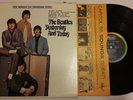
Beatles Yesterday & Today Butcher cover 2nd state Scranton plant good condition
$
199


Favourite Auctions
To save auctions to your favourites, please login
If you don't have an account, please register
Description
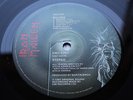
New staring bid of $50. to commemorate the Beatles USA arrival fifty years ago. Up for auction is this in overall good condition Capitol mono LP T2553 "Yesterday and Today" by the Beatles, the "Butcher Cover, 2nd State". Includes original inner sleeve. This copy, I believe, was pressed at the Scranton, Pennsylvania plant as indicated by the number 3 near the RIAA logo on the back cover and the 1 over AM in a tiny triangle in the trail off vinyl. Also included is an off the computer copy of the Capitol Records recall letter. No reserve and low starting bid. Sold as is, with no return, but please contact us with any questions or concerns. Shipping by media mail is $4. for this item, with additional LPs in the same order $1. each or $.50 for each additional 45 rpm. Thanks for looking. Lorraine & John ~~The Vermont Village Gallery ~~
From Wikipedia: The "Butcher cover": Released in June 1966, the Yesterday and Today album's controversial cover (see section below) marked the first time the Beatles' judgement was criticised by the media and distributors. After advance copies were sent to disc jockeys and record reviewers, negative reaction to the cover photo was so strong Capitol recalled 750,000 copies from distributors to replace the cover. The total cost to Capitol to replace the cover and promotional materials was $250,000, wiping out their initial profit. Nevertheless, the album reached #1 on the US Billboard charts by 30 July 1966 and certified gold soon after. It stayed at number one for five weeks. In early 1966, photographer Robert Whitaker had the Beatles in the studio for a conceptual art piece entitled A Somnambulant Adventure. For the shoot, Whitaker took a series of pictures of the group dressed in butcher smocks and draped with pieces of meat and body parts from plastic baby dolls. The group played along as they were tired of the usual photo shoots- Lennon recalled the band having "boredom and resentment at having to do another photo session and another Beatles thing" and the concept was compatible with their own black humour. Although not originally intended as an album cover, the Beatles submitted photographs from the session for their promotional materials. According to a 2002 interview published in Mojo magazine, former Capitol president Alan W. Livingston stated that it was Paul McCartney who pushed strongly for the photo's inclusion as the album cover, and that McCartney reportedly described it as "our comment on the [Vietnam] war". A photograph of the band smiling amid the mock carnage was used as promotional advertisements for the British release of the "Paperback Writer" single. Also, a similar photograph from this shoot was used for the cover of the 11 June 1966 edition of the British music magazine Disc. In the United States, Capitol Records printed approximately 750,000 copies of Yesterday and Today with the same photograph as Paperback Writer. They were assembled in Capitol's four US plants situated in different cities: Los Angeles, California; Scranton, Pennsylvania; Winchester, Virginia; and Jacksonville, Illinois. Numbers designating where the covers originated were printed near the RIAA symbol on the back; for example, stereo copies from the Los Angeles plant are designated "5" and mono Los Angeles copies are marked "6". Mono copies outnumbered stereo copies by about ten to one, making the stereo copies far more rare and valuable to collectors. A small fraction of the original covers were shipped to disc jockeys and reviewers as advance copies. Reaction was immediate, as Capitol received complaints from some dealers. The record was immediately recalled under orders from Capitol parent company EMI chairman Sir Joseph Lockwood and all copies were ordered shipped back to the record label, leading to its rarity and popularity among collectors. At the time, some of the Beatles defended the use of the Butcher photograph. John Lennon said that it was "as relevant as Vietnam" and McCartney said that their critics were "soft". However, this opinion was not shared by all band members. George Harrison (who became a vegetarian) was quoted as saying that he thought the whole idea "was gross, and I also thought it was stupid. Sometimes we all did stupid things thinking it was cool and hip when it was naïve and dumb; and that was one of them." Capitol Records apologised for the offence. Capitol initially ordered plant managers to destroy the covers, and the Jacksonville plant delivered most of its copies to a landfill. However, faced with so many jackets already printed, Capitol decided instead to paste a much more conventional cover over the old ones. The new cover, featuring a picture of the band posed around an open steamer trunk, had to be trimmed on the open end by about 3 mm (1/8 inch) because the new sheet, known as a "slick", was not placed exactly "square" on top of the original cover. Tens of thousands of these so-called "Trunk" covers were sent out. As word of this manoeuvre became known to the public, owners of the altered cover attempted, usually unsuccessfully, to peel off the pasted-over cover, hoping to reveal the original image hidden beneath. Eventually, the soaring value and desirability of unpasted-over Butcher covers spurred the development of intricate and complex techniques for peeling the Trunk cover off in such a way that only faint horizontal glue lines remained on the original cover. Copies that have never had the white cover pasted onto them, known as "first state" covers, are very rare and command the highest prices. Copies with the pasted-on cover intact above the butcher image are known as "second state" or "pasteovers". Today, pasteover covers that have remained unpeeled are also becoming increasingly rare and valuable. Covers that have had the Trunk cover removed to reveal the underlying butcher image are known as "third state" covers; these are now the most common (and least valuable, although their value varies depending on how well the cover is removed) as people continue to peel second state covers. The most valuable and highly prized first and second state Butcher Covers are those that were never opened and remain still sealed in their original shrink wrap. Since the first documented collector's sale of a mono Butcher cover LP in 1974, which fetched US$457.00, the value of first state mono versions has consistently appreciated, reaching $20,000 in 2006. In 1987, former president of Capitol Records Alan Livingston released for sale twenty-four "first state" butcher covers from his private collection. When the original cover was scrapped in June 1966, Livingston took a case of already-sealed "Butcher" albums from the warehouse before they were to be pasted over with the new covers, and kept them in a closet at his home. These albums were first offered for sale at a Beatles convention at the Marriott Hotel near Los Angeles International Airport on Thanksgiving weekend 1987 by Livingston's son. These still-sealed pristine items, which included nineteen mono and five stereo versions, are the very rarest "pedigree" specimen "Butcher Covers" in existence. These so-called "Livingston Butchers" today command premium prices among collectors, the five stereo versions being the most rare and valuable of these. In April 2006, Heritage Auction Galleries sold one of the sealed mono "Livingston Butchers" at auction in Dallas for about $39,000. An extremely rare original "first state" stereo copy that was not from the Livingston collection was presented for appraisal at a 2003 Chicago taping of the PBS series Antiques Roadshow. It was still in the possession of the original owner, who had bought it at Sears & Roebuck on the day of release in 1966, the only day that the original Butcher cover versions were on sale before being recalled by Capitol. Although not in its original shrink-wrap, it had rarely been played and was still in excellent condition, and Roadshow appraiser Gary Sohmers valued it at US$10,000 - $12,000.
From Happy Nat at www.thebeatlesrarity,com: It was likely the art department at Capitol that prepared the originally intended cover art design for the Yesterday And Today cover which used an image of George and Ringo standing around a steamer trunk, with John sitting on top of it and Paul sitting inside it. Capitol submitted this to Beatles manager, Brian Epstein, but when Brian showed The Beatles the proposed photo, John, after just recently seeing Whitaker’s butcher photos, decided he wanted to use one of those instead, and the other Beatles went along with the idea. It’s been suggested that the use of this photo was a statement by the group as to how Capitol “butchered” the Beatles albums into configurations inconsistent with the way they are on the British release (i.e. the way The Beatles intended them to be). Additionally, according to a 2002 interview published in Mojo magazine, former Capitol president Alan W. Livingston stated that Paul stated that he thought of the butcher cover photo as “our comment on the war”.Capitol prepared the cover photo as The Beatles wished during May 1966, even though Capitol’s sales department strongly protested. By June, advance copies of the album were being sent to disc jockeys and newspaper and magazine reviewers. It was even on sale in stores in a few limited areas, but only for about a day. The response was immediate and uniformly negative. Stores were refusing to handle the album due to the grotesque cover. Tony Barrow recalls that the cover could have been worse as the blood stains on the Beatles smocks was airbrushed out, however it was apparently offensive enough. Capitol immediately pulled the plug on the album by sending out recall letters to all who had been sent copies, explaining that a new cover was being prepared, and they would be sent a new copy. The letter requested recipients to return the album they were already sent C.O.D to Capitol. A (pdf) copy of this letter can be downloaded here. Capitol employees spent a weekend stripping the covers from the discs and boxing them up to send back to the plants for new covers still being prepared. The original covers were being destroyed by being cut up and taken to landfills. After many were destroyed, a Capitol employee came up with the money-saving idea of re-using them by simply creating a cover slick to paste over the old covers. The original steamer trunk photo was used on the new cover slicks and the factories were set up to paste the new slicks directly over the original butcher photo slicks and then trim 1/8 of an inch, or so, off of the right side of the jacket, in order to insure a smooth opening edge.
price rating