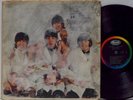
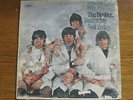
Beatles Butcher Peeled T 2553 Earliest "Yesterday" LP 6
$
106


Favourite Auctions
To save auctions to your favourites, please login
If you don't have an account, please register
Description
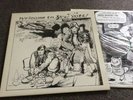
THE BEATLES
YESTERDAY AND TODAY
CAPITOL T 2553
* EARLY PROOF - "Yesterday" in Quotes
* RIAA 6 - Los Angeles Plant Pressing
* PARTIAL PEEL - Portion of "trunk" remain
* CONTROVERSIAL AND HISTORICAL - 1967 Beatles
Memorabilia
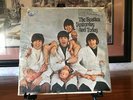
THE BUTCHER COVER:
Alan W. Livingston, President of Capitol Records (USA), decided to pull the "butcher cover" Yesterday & Today album issue a day before release issuing the following statement: "The original album cover, created in England, was intended as pop art satire. However, sampling of public opinion in the United States indicates that the cover design is subject to misinterpretation....For this reason...Capitol has chosen to withdraw the lp and substitute it for a more generally accepted design."
Below is the story of the 'Butcher Cover'
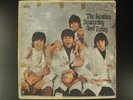
On 25 March 1966, The Beatles went to Whitaker’s Chelsea studio for a photo session, intending to take photos for the cover of (and/or to promote) their forthcoming single, "Rain"/"Paperback Writer". The band and their photographer were determined to create something more than the run-of-the-mill publicity shots, and among the resulting images was one which has since become known as the "butcher" photo, in which The Beatles are depicted wearing white coats, draped with dismembered doll parts, slabs of meat and false teeth.
This now-legendary image, probably the single most famous image of the group, was originally conceived as one of a triptych of photographs, and intended as a surreal, satirical pop art observation on The Beatles’ fame. Whitaker’s inspirations for the images included the work of German surrealist Hans Bellmer, notably his 1937 book Die Puppe (La Poupée). Bellmer’s images of dismembered doll and mannequin parts were first published in the French Surrealist journal Minotaure in 1934.
"It's an apparent switch-around of how you think. Can you imagine actually drinking out of a fur tea cup? I did a photograph of the Beatles covered in raw meat, dolls and false teeth. Putting meat, dolls and false teeth with The Beatles is essentially part of the same thing, the breakdown of what is regarded as normal. The actual conception for what I still call "Somnambulant Adventure" was Moses coming down from Mt. Sinai with the Ten Commandments. He comes across people worshipping a golden calf. All over the world I'd watched people worshipping like idols, like gods, four Beatles. To me they were just stock standard normal people. But this emotion that fans poured on them made me wonder where Christianity was heading".
It has often been claimed that The Beatles intended the "butcher cover" as a protest at the way their music was being "butchered" by their American label, Capitol Records. In a Nov. 15 1991 interview with Goldmine magazine, Whitaker discussed the butcher cover at length, and unequivocally put the protest claims to rest:
"It was mine. Absolutely. It was part of three pictures that should have gone into an icon. And it was a rough. If you could imagine, the background of that picture should have been all gold. Around the heads would have gone silver halos, jewelled. Then there are two other pictures that are in the book [The Unseen Beatles], but not in colour.
"How did you prepare for the shoot?
"It was hard work. I had to go to the local butcher and get pork. I had to go to a doll factory and find the dolls. I had to go to an eye factory and find the eyes. False teeth. There's a lot in that photograph. I think John's almost-last written words were about that particular cover; that was pointed out to me by Martin Harrison, who wrote the text to my book. I didn't even know that, but I'm learning a lot.
"Why meat and dolls? There's been a lot of conjecture over the years about what that photo meant. The most popular theory is that it was a protest by the Beatles against Capitol Records for supposedly "butchering" their records in the States.
"Rubbish, absolute nonsense. If the trilogy or triptych of the three photographs had ever come together, it would have made sense. There is another set of photos in the book which is the Beatles with a girl with her back toward you, hanging on to sausages. Those sausages were meant to be an umbilical cord. Does this start to open a few chapters?
"Were you aware when you shot it that Capitol Records was going to use it as a record cover?"
"No."
"Were you upset when they did and then when they pulled it and replaced it with another photo?"
"Well, I shot that photo too, of them sitting on a trunk, the one that they pasted over it. I fairly remember being bewildered by the whole thing. I had no reason to be bewildered by it, purely and simply, because it could certainly be construed as a fairly shocking collection of bits and pieces to stick on a group of people and represent that in this country.
Quoted in 1966 in the British music magazine Disc and Music Echo, Whitaker said:
"I wanted to do a real experiment - people will jump to wrong conclusions about it being sick, but the whole thing is based on simplicity -- linking four very real people with something real. I got George to knock some nails into John’s head, and took some sausages along to get some other pictures, dressed them up in white smocks as butchers, and this is the result -- the use of the camera as a means of creating situations."
Whitaker was later quoted as saying that the basic motivation for making A Somnambulant Adventure came from the fact that he and The Beatles were "really fed up at taking what one had hoped would be designer-friendly publicity pictures". In the interview conducted just before his death in 1980 (referred to by Bob), John Lennon confirmed this.
John Lennon - "It was inspired by our boredom and resentment at having to do another photo session and another Beatles thing. We were sick to death of it. Bob was into Dali and making surreal pictures."
Whitaker had intended the triptych to be his "personal comment on the mass adulation of the group and the illusory nature of stardom … I had toured quite a lot of the world with them by then, and I was continually amused by the public adulation of four people".
The images in the triptych were actually intended as the foundation of a much more elaborate work. He had planned to retouch the photos to give them the appearance of a religious icon. The background was to be painted gold like a Russian icon and to have the Fab Four’s heads surrounded by jewelled halos, with the photos bordered in rainbow colours. This decoration, contrasted with the bizarre situations of the photos themselves, was evidently intended to create a surreal juxtaposition between the band's image and celebrity, and the underlying fact that they were just as real and human as everyone else.
"John played with all sorts of bits and pieces before we actually did the picture. I did a few outtake pictures which were of them actually playing with a box full of dolls which they pulled out and stuck all over themselves. There was an enormous amount of laughter. There was even George Harrison banging nails into John's head with a hammer. The actual conception of what is termed the ‘Butcher's Sleeve’ is a reasonably diverse piece of thinking ..."
" ... the [butcher] cover was an unfinished concept. It was just one of a series of photographs that would have made up a gate-fold cover. Behind the head of each Beatle would have been a golden halo and in the halo would have been placed a semi-precious stone. Then the background would have contained more gold, so it was rather like a Russian icon. It was just after John Lennon had said that the Beatles were more popular than Jesus Christ. In a material world that was an extremely true statement."
The first photo shows The Beatles facing a woman who stands with her back to the camera, her hands raised as if in surprise (or worship) while The Beatles hold a string of sausages. This was meant to represent the 'birth' of the Beatles, with the sausages serving as an umbilical cord. Whitaker explained: "My own thought was how the hell do you show that they've been born out of a woman the same as anybody else? An umbilical cord was one way of doing it."
The centre panel of the triptych is the image nowadays referred to as the "butcher" photo. It shows the (obviously stoned) Beatles dressed in butchers’ coats, draped with slabs of red meat, false teeth, glass eyes and dismembered doll parts. This picture was actually titled "A Somnambulant Adventure" and Bob’s intention was to add other elements to it which would create a jarring juxtaposition between idolisation of The Beatles' as gods of the pop world and their flesh and blood reality as ordinary human beings, but he was never able to realise this.
The photograph that would have been used for the right-hand panel of the triptych is one of George Harrison standing behind a seated John Lennon, hammer in hand, apparently driving nails into John's head. Whitaker explained that this picture was intended to demonstrate that the Beatles were not an illusion, not something to be worshipped, but people as real and substantial as "a piece of wood".
A fourth picture taken at the same session, but apparently not intended to be part of the triptych, is also included in Whitaker’s book The Unseen Beatles. It shows John framing Ringo's head with a cardboard box, on one of the flaps of which is written "2,000,000".
"I wanted to illustrate that, in a way, there was nothing more amazing about Ringo than anyone else on this earth. In this life he was just one of two million members of the human race. The idolization of fans reminded me of the story of the worship of the golden calf."
CONDITION:
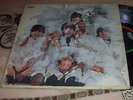
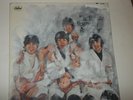
COND. COVER: Partial peel. Portion of the cardboard seen.
Two seems split, other seem unknown (taped)
Tape residue on three sides front / back.
Back side has two tears and raised paper.
COND. VINYL: There is no vinyl record with this auction.
* A TRUE 1967 MONO EARLY ALBUM COVER PROOF ORIGINAL!
* ANY AND ALL QUESTIONS WILL BE ANSWERED PROMPTLY.
* WILL ONLY SHIP TO CONFIRMED ADDRESSES.
* PLEASE BID WITH CONFIDENCE.
* GOOD LUCK AND THANK YOU FOR LOOKING.
* VINYL IS ALWAYS SHIPPED OUTSIDE AND OUTSIDE JACKET PROTECTION.
* SHIPPED WITH DOUBLE RECORD PADS IN L.P. MAILER.
Will Combine Shipping for Multiple Auction Winners.
SHIPPING U.S.:
Media Mail: $3.50 1st LP, $0.50 each additional L.P.
Priority Mail: $7.50 1st LP, $1.00 each additional L.P.
SHIPPING OUTSIDE U.S.:
First Class International: $14.50 1st L.P., $2.50 each additional L.P.
price rating