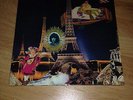
BOTH HANDS FREE - "USE FROM THE POCKET" - RARE 12" VINYL LP - ZYZZLE 1 - 1977/78
£
26
$
34

Favourite Auctions
To save auctions to your favourites, please login
If you don't have an account, please register
Description
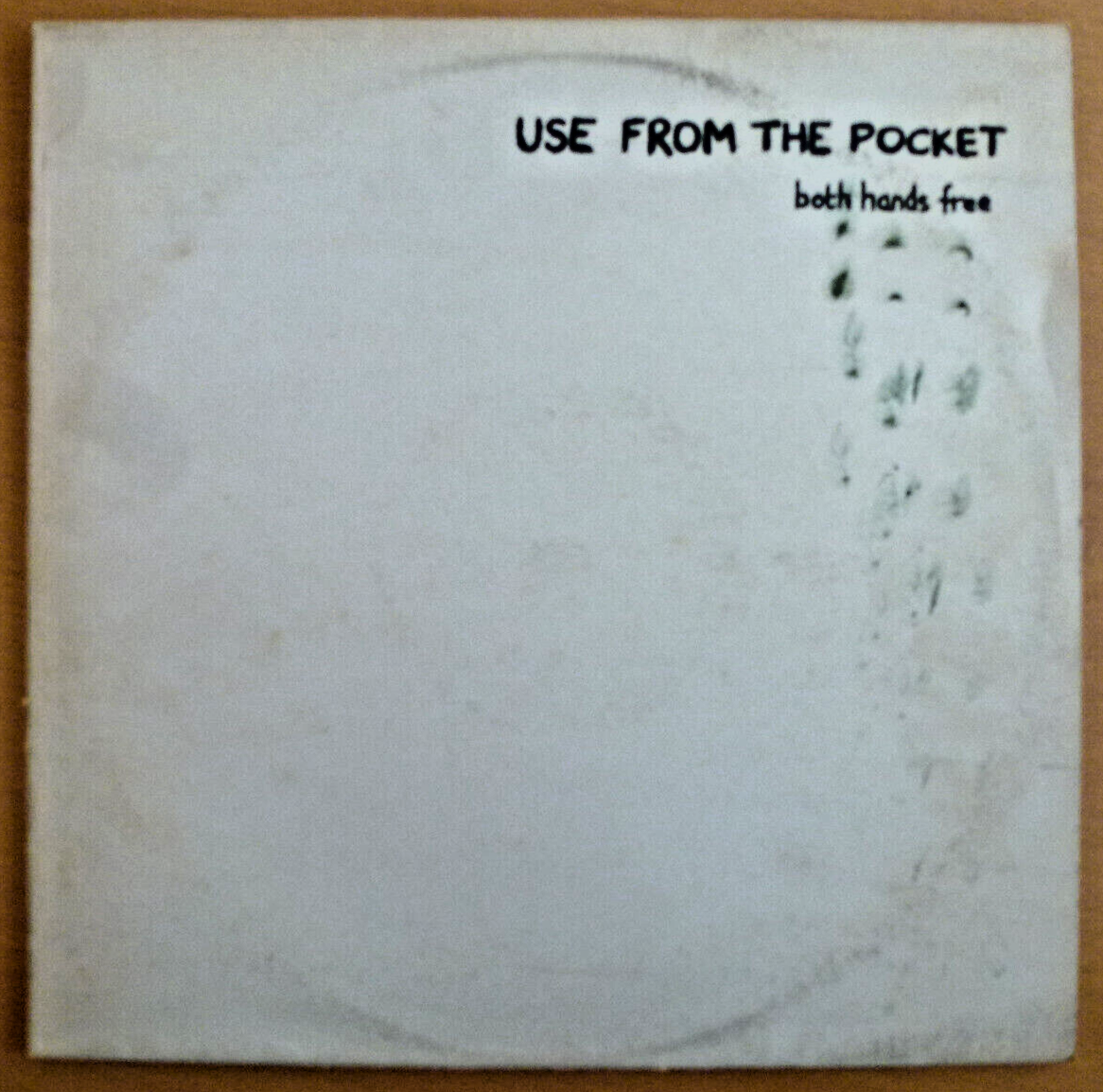
BOTH HANDS FREE - "USE FROM THE POCKET"
A rare opportunity to own this hard-to-come-by 12" Vinyl LP on the ZYZZLE 1 label
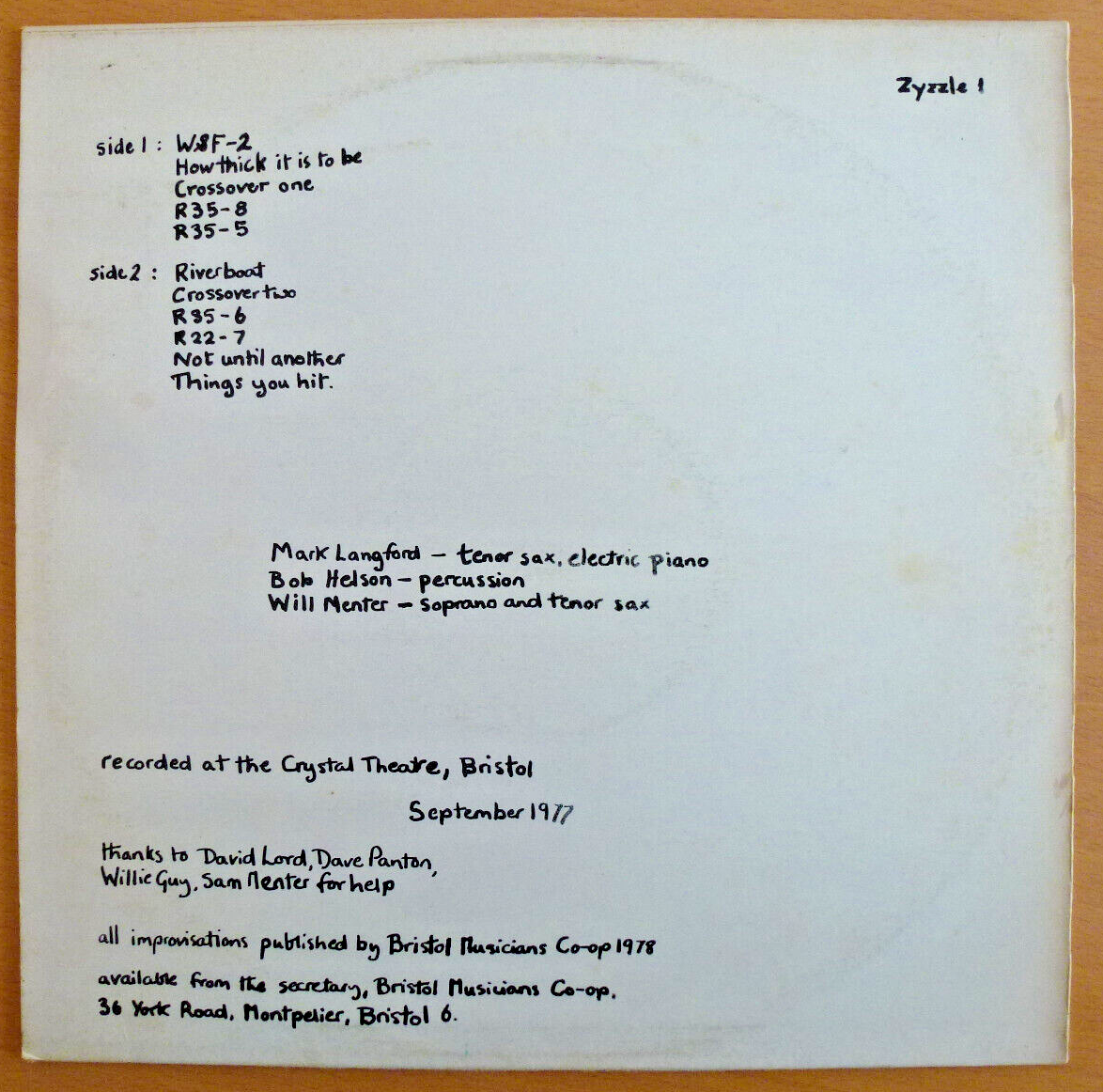
- Mark Langford - tenor sax, electric piano
- Bob Helson - percussion
- Will Menter - soprano and tenor sax
Recorded at the Crystal Theatre Bristol in September 1977 - all improvisations published by the Bristol Musicians Co-op, 1978
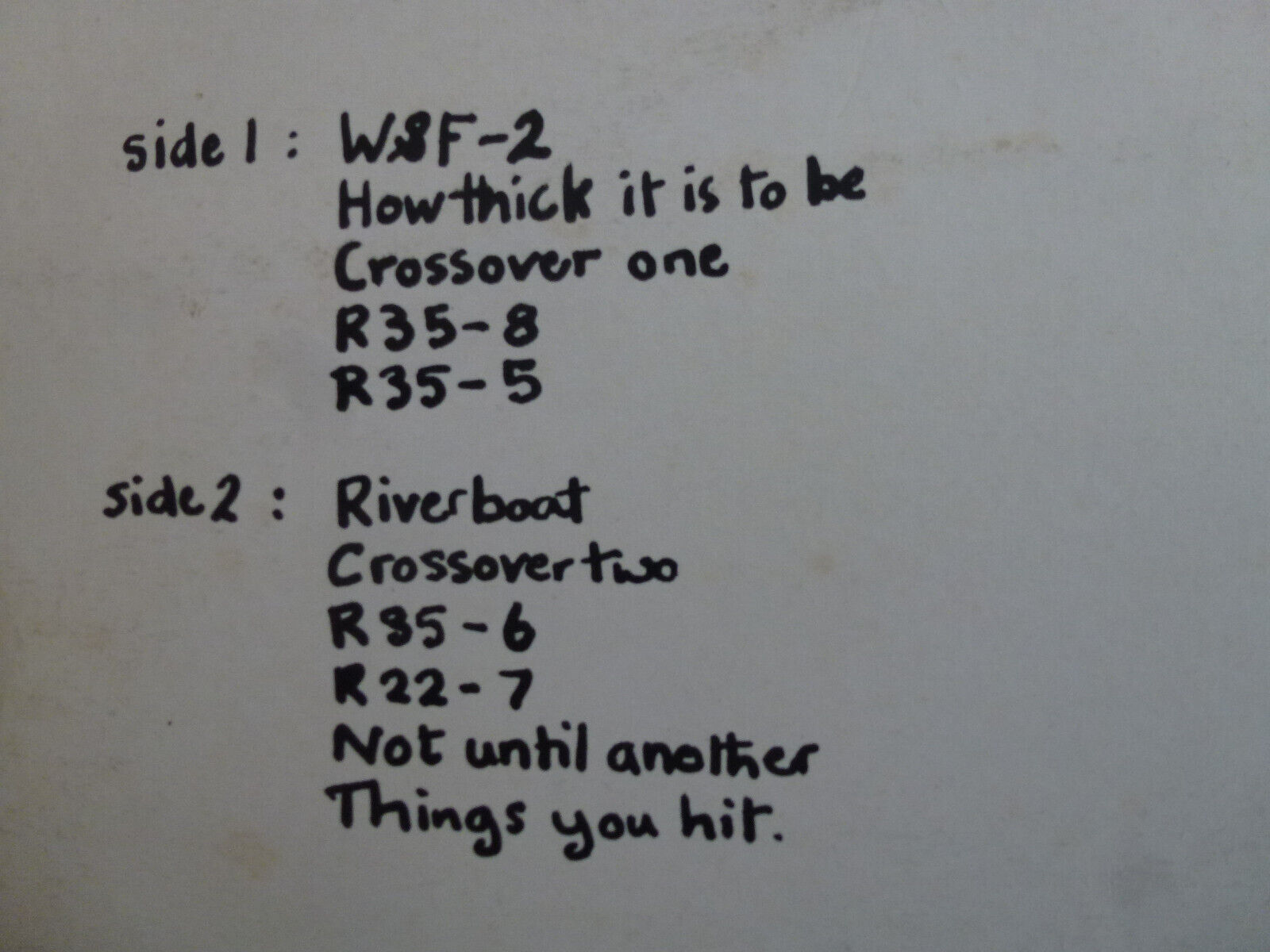
I'm not an expert in the condition of old vinyl records, but this record appears to me to be in very good/excellent condition. It plays well and has recently been cleaned with a SPINCARE Record Cleaner
The record sleeve is in very good condition, with just a few marks and minor scuffs, and the hand-written labels are in very good condition
Please see photos for further details and please get in touch if you have any queries and/or would like to see further photos
Please also see the following review:
TWO THINGS ABOUT 'BOTH HANDS FREE'
by PETER RILEY
1) Tough Quietness: Many young (-er, -ish) improvisation groups go in for this predominantly quiet, spaced-out playing, but BHF is marked by a toughness in its quietness, as by a speed in its sparseness. It doesn't, even when it most seems to, court the sentimentality of pastoral calm: drowsy tinklings faint oriental twinges, presexual flutters. There are also important exceptions to BHF's quietness - important because they maintain the same kind of playing and thus help to define the kind of quietness it is. The quietness is a group ambience; the toughness is donated separately by each player: by Menter's linear persistence, by Langford's brittle tension, and by Helson's sharp and unpredictable virtuosity.
2) Quiet Toughness: There's a great distance between the players, most apparent when Langford plays tenor. Menter's playing is lithe and sinuous; unhurried, often melismatic, and stretched-out; this contrasts sharply with Langford's sax playing: sharp and brief, spluttering or grating (plus some "soft" sax, which is also very distinct from Menter's straight attack). Menter favours the middle of the instrument, Langford the edge. Langford's playing on electric piano is a masterpiece of concealment, for it almost never sounds like an electric piano, but like an amplified guitar, a saxophone, or something undefined. Those who turn green when the el.pf. is announced need have no fears - here it becomes an improvisational instrument. It's a tentative, but distinct playing. On both instruments Langford's predilection for concealment (outer edge playing) stands sharply against Menter's direct approach. Helson is the referee of this match; his percussion, which is remarkably swift and pointed, is the cohesive factor of the group, while itself being a third term, different from either of the others. It's interesting how much of the trio playing is, in fact or in effect, duo playing, as the group's tripartite contrast tends to sort itself out into a polarity. Given these wide distances separating the players, they play very much together, listening and responding, and the tension thus formed is an important location of the toughness they all put into the group-work. Playing closely together at such a distance, requires a constant alertness, as a kind of safeguard of the individual player's musical distinctness, which is put into action in a field of risk against potentially alien friends.
"Tough quietness" means they make sure it is tough because it is quiet, and would otherwise lapse into dreaminess. "Quiet toughness" means they keep it quiet because it is tough, and could easily lapse into aggression.
NOTE: This is based on (a) BHF's record "Use from the Pocket", Zyzzle 1. (b) Their broadcast in February 1979.
First published May 1979 by Bristol Musicians Co-operative in the collection "Co-operative Music". Copyright Peter Riley.
price rating