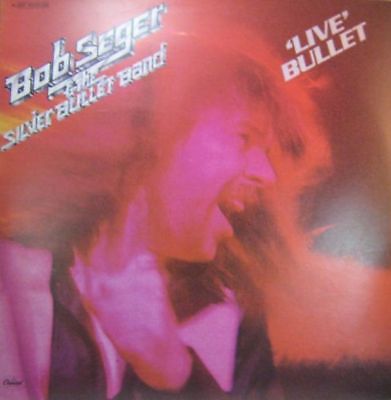
BOB SEGER & the silver band LIVE BULLET capitol 2 LP IT
€
18
$
21


Favourite Auctions
To save auctions to your favourites, please login
If you don't have an account, please register
Description
endrucomics Store
endrucomics Store
PREMESSA: LA SUPERIORITA' DELLA MUSICA SU VINILE E' ANCOR OGGI SANCITA, NOTORIA ED EVIDENTE. NON TANTO DA UN PUNTO DI VISTA DI RESA, QUALITA' E PULIZIA DEL SUONO, TANTOMENO DA QUELLO DEL RIMPIANTO RETROSPETTIVO E NOSTALGICO , MA SOPRATTUTTO DA QUELLO PIU' PALPABILE ED INOPPUGNABILE DELL' ESSENZA, DELL' ANIMA E DELLA SUBLIMAZIONE CREATIVA. IL DISCO IN VINILE HA PULSAZIONE ARTISTICA, PASSIONE ARMONICA E SPLENDORE GRAFICO , E' PIACEVOLE DA OSSERVARE E DA TENERE IN MANO, RISPLENDE, PROFUMA E VIBRA DI VITA, DI EMOZIONE E DI SENSIBILITA'. E' TUTTO QUELLO CHE NON E' E NON POTRA' MAI ESSERE IL CD, CHE AL CONTRARIO E' SOLO UN OGGETTO MERAMENTE COMMERCIALE, POVERO, ARIDO, CINICO, STERILE ED ORWELLIANO, UNA DEGENERAZIONE INDUSTRIALE SCHIZOFRENICA E NECROFILA, LA DESOLANTE SOLUZIONE FINALE DELL' AVIDITA' DEL MERCATO E DELL' ARROGANZA DEI DISCOGRAFICI .
BOB SEGER AND THE SILVER BULLET BAND
'live' bullet
Disco Doppio 2 LP 33 giri , Capitol / Emi italiana , 3C 154- 82225 / 26 , 1978, Italia, first pressing
BUONISSIME CONDIZIONI, both vinyls ex++/NM , cover ex-- (qualche piccola abrasione nel bordo superiore della parte sinistra del gatefold / some little scrapes on left gatefold high edge)
Bob Seger, pseudonimo di Robert Clark Seger (Detroit, 6 maggio 1945), è un chitarrista, pianista, organista, compositore e cantante rock statunitense.
Cresciuto nel sobborgo di Dearborn, iniziò a cantare a metà degli anni sessanta in gruppi minori - quali The Decibels, The Town Criers e Doug Brown and the Omens (con cui nel 1965 incise il suo primo disco singolo) - nei locali di Ann Arbor e Detroit (dove la famiglia si era nel frattempo trasferita).
Tali esperienze gli consentirono di farsi conoscere ed apprezzare da impresari del showbiz e del mondo discografico (la città di Detroit è conosciuta, oltre che per l'industria automobilistica, anche per essere sede della Motown, insieme a Nashville, Tennessee, uno dei più importanti poli musicali statunitensi) e di giungere al grande successo nei successivi anni settanta e ottanta.
Nel 2006 ha pubblicato, a distanza di undici anni dal suo precedente lavoro discografico, l'album Face The Promise. Nella sua lunga carriera non ha mai cessato di portare in tour attraverso l'America le sue canzoni.
Il suo nome appare dal 2004 nella Rock and Roll Hall of Fame ed è in lista insieme quello della Silver Bullet Band nell'elenco dei musicisti che fanno parte delle celebrità della Hollywood Walk of Fame, inscritta al numero 1750 di Vine Street, Hollywood, California.
Questo artista è conosciuto prevalentemente per la sua attività con la Silver Bullet Band, il gruppo musicale da lui creato nel 1974 dopo le esperienze alla guida della Bob Seger and the Last Heard, poi trasformata nella band rock Bob Seger System.
In particolare, gli album Live Bullet, frutto delle registrazioni di una lunga serie di concerti tenuti nel 1976, e Night Moves - ricco di numerosi hit - gli hanno garantito un successo internazionale.
I brani di Seger - che si occupa tanto dei testi quanto della musica - riflettono la filosofia tipica del Midwest (gli stati centrali degli USA) ed affrontano spesso temi legati al mondo del proletariato (quello dei cosiddetti blue-collar, le tute blu delle numerose fabbriche ed industrie di Detroit e dintorni). La prima parte della sua carriera non è stata esente, al pari di quelle di suoi colleghi coevi, da forti influssi della cultura hippy ispirata alle filosofie indiane che avevano il loro epicentro nella città di Kathmandu.
Fanno parte del suo repertorio numerose canzoni registrate a partire dal 1968 per l'etichetta Capitol Records/EMI e diventate classici mondiali del rock and roll, come Turn the Page, ripresa dai Metallica, Like a Rock (che è anche il titolo dell'album omonimo, fra i suoi più conosciuti ed apprezzati, inciso nel 1986 e rilanciato all'interno del film del 2004 The Door in the Floor), e quella che è un po' il simbolo della sua produzione - Old Time Rock and Roll - considerata dalla critica una fra le migliori canzoni del XX secolo e inserita nella colonna sonora del film Risky Business.
Altri suoi motivi di successo sono poi stati Hollywood Nights, We've Got Tonight (portata al successo in Italia nella cover di Gianni Morandi con Amii Stewart "Grazie perché", e da Giorgia in duetto con l'irlandese Ronan Keating il quale l'ha riproposta in duetto anche con le cantanti Jeanette Biedermann e Lulu), Fire Lake e Against the Wind.
‘Live’ Bullet is a live album by American rock band Bob Seger & the Silver Bullet Band, released in April 1976. It was recorded at Cobo Hall in Detroit, Michigan, during the heyday of that arena's time as an important rock concert venue.
'Live' Bullet became a staple of FM rock radio in Detroit. Classics such as the live version of "Nutbush City Limits" and the connected song rendition of "Travelin' Man" and "Beautiful Loser" were among the most widely played live tracks on Detroit stations such as WWWW (quad), WRIF, and WABX. Other tracks such as "Let It Rock", "Turn the Page", and "Get Out of Denver" also received wide airplay in Detroit.
The success of Seger's music at this time, however, was highly regional, with Seger still remaining quite unknown even in adjacent media markets such as Chicago. In June 1976, for example, Seger played the Pontiac Silverdome in metropolitan Detroit at a historic concert that also included Point Blank, Elvin Bishop, and Todd Rundgren. 78,000 people were in attendance and the concert lasted until nearly 1:30 a.m. The next night, Seger played before less than a thousand people in Chicago.
However, it was only in the following winter that the release of his next recording, Night Moves, launched Seger into more national markets. Over time, the life-on-the-road tale "Turn the Page" would become the most nationally played song from 'Live' Bullet, and a perennial favorite on album-oriented rock and classic rock stations.
For Detroit fans, however, the entire 'Live' Bullet recording captured a Detroit artist at the height of his energy and creativity, in front of a highly appreciative hometown crowd. 'Live' Bullet also captured the wild and free spirit of rock concerts in the seventies, and has great historic value in that regard. Critic Dave Marsh called it "one of the best live albums ever made."Etichetta: Capitol / Emi italiana
Catalogo: 3C 154 - 82225 / 82226
Data di pubblicazione: 1978
Date Matrici: 8-11-78
- Supporto:vinile 33 giri
- Tipo audio: stereo
- Dimensioni: 30 cm.
- Facciate: 4
- Gatefold / copertina apribile , white paper inner sleeves
Track listing
All songs written by Bob Seger, except as indicated.
Side One
- "Nutbush City Limits" (Tina Turner) – 4:09
- "Travelin' Man" – 4:41
- "Beautiful Loser" – 4:00
- "Jody Girl" – 4:26
Side Two
- "I've Been Working" (Van Morrison) – 4:45
- "Turn the Page" – 5:06
- "U.M.C. (Upper Middle Class)" – 3:19
- "Bo Diddley" (Bo Diddley) – 5:35
Side Three
- "Ramblin' Gamblin' Man" – 3:11
- "Heavy Music" – 8:13
- "Katmandu" – 6:09
Side Four
- "Lookin' Back" – 3:13
- "Get out of Denver" – 5:21
- "Let It Rock" (Chuck Berry) – 8:30
Recorded Live at Cobo Hall, Detroit , Michigan by Metro Audio, Inc. (Mobile Unit), 1975 September 4th & 5th.
"Thank to Detroit Rock Radio and 24.000 other crazy people for making all this happen"
Introduction by Dan Carlysle WWWW-FM
Engineered by Jim Bruzzese at Pamper Recording Studio, Warren, Michigan.Made in Italy by EMI Italiana S.P.A.
Many songs from the album such as "Nutbush City Limits", "Lookin' Back", and "Turn the Page" became hit singles off the album, whereas their original studio versions were overlooked. "Lookin Back" was released as a single in 1971, but had very short lived success as it was not on an actual Seger album. It was originally performed by Seger's first band, The Bob Seger System, whereas the Live Bullet version featured The Silver Bullet Band.
Silver Bullet Band
- Bob Seger – lead vocals, guitar, piano
- Drew Abbott – lead guitar, background vocals
- Alto Reed - tenor saxophone, alto saxophone, baritone saxophone, percussion, background vocals
- Robyn Robins – organ, clavinet, mellotron, piano on "Katmandu"
- Chris Campbell – bass guitar, background vocals
- Charlie Allen Martin – drums, background vocals, answer vocals on "Heavy Music", harmony vocals on "Jody Girl" and "Get Out of Denver"
Live Bullet introduced Bob Seger to a wide audience, revealing a rocker of unbridled passion and a songwriter of considerable talent. Prior to its release, Seger had been toiling away, releasing seven albums and touring constantly ever since his debut scraped the national consciousness in 1968. The psychedelicized days of Ramblin' Gamblin' Man are long gone on Live Bullet, leaving behind a rocker who loved the Stones for their toughness, Dylan for his honesty, and Chuck Berry for his narrative -- and one who found his own sound when the Silver Bullet Band came into its own through countless tours. Live Bullet was recorded live at Detroit's Cobo Hall, in front of a passionate, loving hometown audience spurring him into a great performance. The song selection relies heavily on Beautiful Loser, yet it dips into the previous albums enough to prove that Seger had been delivering consistently as a songwriter for years. But what really sold Live Bullet is how these terrific songs are delivered with a ferocious, committed intensity. This might not be much more than a simple rock & roll album, but it's one of the best of its kind, establishing Seger, in the eyes of skeptics, as a first-rate performer and writer. Here, "Heavy Music," "Get Out of Denver," "Turn the Page," and "Ramblin' Gamblin' Man" all become hard rock classics, as does the band itself. It's a rare occasion when a double live album captures an artist at an absolute peak, while summarizing his talents, and that's exactly what Live Bullet does.
Imperdibile LIVE di Bob Seger con la Silver Bullet Band, pubblicato nel 1976 (la versione italiana è del 1978). Grandi canzoni, fantastico sound e una band che gira a mille. La voce di Bob è al top, la sua creatività è ai massimi livelli e la performance risulta eccezionale. Uno dei LIVE più belli ed incensati degli anni '70.
I've been listening to Bob Seger since 1966's "East Side Story," an odd, "Gloria"-like single with a theme that predates "Jungleland" by nine years. In Detroit, and much of the Midwest, Seger was (and is) a major star, good for a hard-rock hit every year, ranging from the antiwar diatribe "2+2=?" and the anthemic "Heavy Music" of 1967 to 1973's "Rosalie," a tribute to CKLW music director Rosalie Trombley. But because of poor recording, lack of record company support and what has at times seemed like willful career mismanagement, Seger has had only one national hit, "Ramblin' Gamblin' Man" in 1968. Though he's discovered a pair of stars -- the Eagles' Glenn Frey counts his first major achievement playing on "Ramblin' Gamblin' Man," and Eric Clapton's backing singer Marcy Levy made her debut on "Rosalie" -- Seger remains anonymous. For a man whose best work combines John Fogerty's energy and commitment with the subtle elegance of Van Morrison, the frustrations must be immense.
Seger's obscurity is more inexplicable because he is in so many ways the model of the mainstream rock singer. He has a big, R&B-derived vocal style, an intuitive instinct for classy guitar riffs, writes wonderful melodies. His songs tell their stories with with, economy and passion -- more importantly, he always has stories to tell. His most topical songs are naive (so are many of Fogerty's) but the better ones seem to sum up the mid-American rock experience. "U.M.C.," included here, is merely sanctimonious (the initials stand for "upper middle class") but "Lookin' Back" is the real thing, just what happened to rocking kids in the late Sixties:
Click for larger view. Seger's other theme really amounts to an unshakable faith in the power of rock & roll to change a life -- his own, if no one else's. The versions here of Chuck Berry's "Let It Rock" and "Bo Diddley" are wonderful tributes to the masters who shaped Seger's music and his writing. In "Heavy Music" he manages to capture it all in a single line: "Doncha ever listen to the radio when that big bad beat comes on?" Most of these songs are better recorded elsewhere; "Heavy Music" and "Let It Rock" are particularly disappointing. But the songs from last year's Beautiful Loser are much superior to these versions. If Live Bullet adds little new material to the Seger oeuvre, and if he has still not been properly produced, it has the advantage of offering a fairly extensive overview of his history. And because of the devotion of the crowd and the desperation of Seger's approach (this is something like his last chance to make it to the top, and he knows it), the album transcends its limitations.
Live Bullet doesn't have the feeling of triumph heard in the two greatest live rock records, the Who's Live at Leeds and the Rolling Stones' Get Yer Ya-Ya's Out!, nor does it own the sense of discovery found in Otis Redding's Live in Europe or the recent Nils Lofgren bootleg. This is a man who hasn't got it made, but who has already reckoned with his weaknesses and strengths. He works his heart out and perhaps tells us something special about what it means to be the average guy, with or without guitar.
In a way, the concert becomes a meditation on failure, from "Travelin' Man" to the mournful "Turn the Page," an exegesis of the space between total stardom and final burnout, affectionately reminiscing about the lovely times, excoriating the bad ones. In "Katmandu," the regional hit that earned him the two sold-out nights in Cobo Hall, where this record was made, he thinks of giving it all up, but the strength of his music belies the idea. Better than anyone before him, Seger knows the problems of partial success, and maybe what is so compelling about this record is that he seems so resigned to remaining that kind of star.
Seger's most deeply felt moments come when he moves beyond his personal tragedy into everyone's. "Jody Girl," the wonderful Morrison-style ballad that closes the first side, is a striking characterization of a woman with great potential who's sacrificed a brilliant future for not very much. In the album's best song, "Beautiful Lose," he describes a guy who is "always willing to be second best," who "always asks, always say(s) please," and never quite has the drive to break past his limitations. If I'm a loser, he seems to say, then I'll speak for every loser, but he does it without bitterness, anger or blame. And he's never only resigned. Seger cares for these characters (and in "Jody," I think, he has done something really rare -- created a plausible woman in song). Only once, finally, does he seem to address his own situation specifically:
Yet like John Lennon's, Seger's loser is not what he appears to be. There is resilience and success in the sound, if nowhere else. Live Bullet is a small triumph but, in its way, a magnificent one, capable of speaking without bathos for failures everywhere. With those songs, and this album, he has convinced me that I'll be listening to him for another nine years. And this time, I have a hunch, with a lot more company.
- Dave Marsh, Rolling Stone, 6/17/76.
Bonus Reviews!
One of the kings of heavy metal rock and a popular live attraction does an LP of what he does best -- a concert. Seger and his five-piece group (guitar, bass, drums, sax, keyboards) rip through 14 cuts, including 10 originals and material from Tina Turner, Chuck Berry, Bo Diddley and Van Morrison. Nothing fancy, but a lot more refined than most of the so-called heavy metal acts. Seger, in fact, is quite melodic when he chooses to be. Double set provides a good glimpse of a Seger show. A few good ballads. Best cuts: "Nutbush City Limits," "Beautiful Loser," "Bo Diddley," "Ramblin' Gamblin' Man," "Katmandu," "Let It Rock."
- Billboard, 1976.
The impassioned remakes from Beautiful Loser on side one are what live doubles are supposed to be for, and this one is sparing with the cheerleading and calisthenics. In short, it's good of its kind. But I'm from New York, I see a lot of rock concerts, and even when I'm in the room it takes more than "Ramblin' Gamblin' Man" and "Heavy Music" and refurbished songs from a guy's last album to get me excited. B
- Robert Christgau, Christgau's Record Guide, 1981.
Seger took his raspy-voiced blue-collar rock & roll to superstar status in the mid-seventies on the strength and endurance of his constant touring schedule. As concert recordings go, this one does a credible job of capturing the edgy intensity that Bob and the boys were able to generate live -- particularly on the "Travelin' Man/Beautiful Loser" medley. The release contains most of his obligatory material: "Turn the Page," "Ramblin' Gamblin' Man," and "Katmandu." The band is in fine fettle; Seger (as always) sings his ass off, and the hometown Detroit audience is appropriately appreciative. The sound, while overbright and edgy at its most intense moments, is generally first-rate for a live recording. B+
- Bill Shapiro, Rock & Roll Review: A Guide to Good Rock on CD, 1991.
A blistering live show from Cobo Hall, containing raucous versions of early material like "Nutbush City Limits" and "Get Out of Denver" as highlights. * * * *
- Cub Koda, The All-Music Guide to Rock, 1995.
Maybe it was the bicentennial, but 1976 was a great year for Bob Seger. First, Live Bullet showed the world what he middling production of Seger's eight prior albums couldn't; that he could rock with a fury to match anyone in rock's upper echelon. Playing in front of the partisan hometown brethren at Detroit's Cobo Arena, Seger and the Silver Bullet Band delivered a storming barn-burner of a show that -- thanks to some radio play for "Katmandu" -- finally made the rest of the country notice. Then he delivered Night Moves, a masterful collection of songs that retains the energy of Live Bullet -- particularly on the ferocious rockers "The Fire Down Below," "Sunspot Baby" and "Rock and Roll Never Forgets." * * * * 1/2
- Gary Graff, Musichound Rock: The Essential Album Guide, 1996.
It is rare for an artist to record a live album which then acts as the catalyst for new-found commercial success. But that is exactly what happened with Bob Seger and his Silver Bullet Band and their 'Live' Bullet album, recorded at Detroit's Cabo Hall. While the guitarist/singer had a decent enough following in his own backyard, it was the album's release in the summer of 1976 which boosted his career in his home country and brought him a wider audience beyond the shores of the US. In June 1976, he played in front of 50 people in a Chicago bar. Three days later, he played in front of 76,000 devoted fans in the Pontiac Silverdome outside Detroit.
While 'Live' Bullet managed a modest Number 34 placing on the US Hot 100 and did not even chart in the UK, it nevertheless built slowly and gave an insight into Seger's bluesy, almost funky, approach to rock and roll. Covers of songs such as Tina Turner's "Nutbush City Limits" and Van Morrison's "I've Been Working" are evidence of the funky side, while "Ramblin' Gamblin' Man" is pure American bar-room rock and roll.
As of 2004, 'Live' Bullet was the #44 best-selling album of the 70s.
- Hamish Champ, The 100 Best-Selling Albums of the 70s, 2004.
Released in 1976, "Live Bullet" earned Seger the national recognition that had long been denied him.
Although "Ramblin' Gamblin' Man" reached No. 17 in 1969, Seger's popularity had been largely confined to Michigan and Florida.
He toiled in the rock 'n' roll trenches, playing small venues for a decade and recording a series of outstanding singles and albums largely ignored beyond his home base.
Seger took selections from five of his albums and added the single "Lookin' Back" for the "Live Bullet" setlist.
The 14-track album was recorded at Cobo Hall before 24,000 crazed fans on Sept. 4 & 5, 1975 by Metro Audio.
WWWW-FM radio personality Dan Carlysle was succinct in his introduction: "You are here because you want the real thing. Let's bring on Bob Seger & the Silver Bullet band. Now."
Seger's no-nonsense opening was Tina Turner's "Nutbush City Limits," which was released as a single from the album.
Seger played many of his own gems including "Travelin' Man," "Beautiful Loser," "Turn the Page," "Heavy Music" and "Katmandu."
Although Seger had a cache of originals, the band performed Van Morrison's "I've Been Working" and paid tribute to Elias McDaniel with the classic "Bo Diddley."
The killer show ended with an extended version of "Let It Rock," written by Chuck Berry under the pseudonym E. Anderson.
Il 23-nov-12 alle 22:59:06 CET, il venditore ha aggiunto le seguenti informazioni sull'oggetto:
price rating