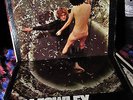
ANTHOLOGY OF HUNGARIAN FOLK MUSIC II NORTH ESZAK 5 LP SETW. BOOK TRADITION
$
75


$ 75
Sold For
May 14, 2022
Sold Date
Mar 5, 2022
Start Date
1
Number Of Bids
USA
Country Of Seller
eBay
Sold at
Favourite Auctions
To save auctions to your favourites, please login
If you don't have an account, please register
Description
********************************************ABOUT MY STORE AND MY COLLECTION*******************************
IF YOU LIKE MY INVENTORY YOU MIGHT LIKE MY ONLINE RADIO SHOW. HAVE A LISTEN. GOOGLE: THE HOUR OF MUSIC MUSIC HOUR ON CASHMERE RADIO.
***************************************************DETAILS ABOUT ITEM**********************************************
Various – Anthology Of Hungarian Folk Music Il. - The North / Magyar Népzenei Antológia Il. - Észak Label: Hungaroton – LPX 18124-28 Series: Magyar Népzenei Antológia – II Format: 5 x Vinyl, LP, Compilation, Mono Box Set Country: Hungary Released: 1986 Genre: Non-Music, Folk, World, & Country Style: Folk, Field Recording, Népzene Tracklist Hide Credits Ghymes (Nyitra) A1 Zörög A Kocsi / The Cart Rattles A2.a Megbetegült / She Has Fallen Ill A2.b Jöjjön Haza / Come Home A2.c Elvégeztük / We've Done A3.a Jelenti Magát / Jesus Announces Himself A3.b Mely Magas Volt / How Tall The Tree Was A3.c Vetekedik Velem / Three Kinds Of Flowers A4.a Arass, Rózsám / Reap, My Darling A4.b Puszta Malomba / In The Deserted Mill Béd (Nyitra) A5.a Talalaj, Talalaj / Talalay, Talalay A5.b Zöld Erdőbe / In Green Woods A5.c Akkor Szeretnék / Then I'd Like A6 Kegyes Jézus / Pious Jesus A7.a Segélj El, Uram / Help Us, My God A7.b Isten Áldjon Meg / God Bless You A7.c Arass, Rózsám / Reap, My Darling A7.d Hosszú Asztal / Around A Long Table A7.e Száztalléros / The Hundred-Tallér Nyitraegerszeg (Nyitra) B1.a Elment A Két Lány / Two Girls Have Gone B1.b Fölhozták A Kakast / The Cock Zsére (Nyitra) B1.c Tananaj, Tananaj / Tananay, Tananay B1.d Sárdó Gyüjjön / Let Shrove Come Menyhe (Nyitra) B2.a Arattam, Arattam / I Did Reap, I Did Reap B2.b Véletlen Embernek / Man's Last Hour B2.c A Kend Édesanyja / Your Mother B2.d Fehír Ruha / White Headkerchief B2.e Kostyál Anna Háza / Over Ann Kostyál's House Kolon (Nyitra) B3.a Uram Isten, Kérünk / Oh, My Lord B3.b Hej, Révész / Hey Ferryman B3.c Bort Nem Iszok / I Don't Drink Wine B3.d Amőre Jén Járok / Where I Go About Kalász (Nyitra) B4.a A Kalászi Keskeny / The Narrow Ditch In Kalász Barslédec (Bars) B4.b Szent Gergely / It's The Day B4.c Menj El Sietséggel / Go With Haste B4.d Lányok Vannak / There Are Girls B4.e Kiment, Kiment / A Little Wife Went Out Aha (Bars) B5.a A Pünkösdi Rózsa / The Whitsun Peony B5.b Szól A Kakas, Szól / The Cock Crows B5.c Hull Az Körté / Pears Drop B5.d Elment A Szeretőm / My Lover Has Left B5.e Elvesztette Ilus / Nell Has Lost B5.f Mel A Dunának / Deep Is Felbár (Pozsony) C1.a Szabad A Madárnak / The Bird Is Allowed C1.b Ua. - Dudán / The Previous Tune - On Bagpipe Bagpipes – Unknown Artist Bagpipes – Unknown Artist Jóka ( Pozsony) C1.c Uccu, Jankó / Go, Johnny C1.d1 Azér Is Csak / I Will Dance C1.d2 Ha Te Tudnád / Did You Know C1.d3 Ez A Lábam / This Leg Of Mine C1.d4 Oda Alá / I Should Be Felsőszeli (Pozsony) C1.e Bánod, Gazda / You Are Sorry, Master C1.f Szent Balázs / For Bishop St Blase Apácaszakállas (Komárom) C2.a Piros Alma / Red Apple Tany (Komárom) C2.b Hallja Meg / Let The Master Martos (Komárom) C2.c Este, Este / Eve, Eve Naszvad (Komárom) C2.d Örül A Mari / Mary Is Glad Kürt (Komárom) C3.a Verbunk - Zenekar / Recruiting Music - Band Band – Unknown Artist Band – Unknown Artist C3.b Dudanóta "Ki Ment Boré" - Zenekar / Bagpipe Tune "Who Went To Fetch" - Band Band – Unknown Artist Band – Unknown Artist C3.c Lassú És Friss "A Hajnali" - Zenekar / Slow And Fast "The Morning Star" - Band Band – Unknown Artist Band – Unknown Artist Kéménd (Esztergom) C4.a Nem Tevéled / Not With You Százd (Hont) C4.b Ma Vagyon Szent / Today Is The Day Ipolyvisk (Hont) C4.c1 Körtéfa / Pear-tree C4.c2 Ha Jó Lyányok / If You Were C4.c3 Lányok Ülnek / Girls Sit C4.d Sírjál Virág / Cry, Flower C4.e Aki Dudás Akar / Who Wants Ipolypalást (Hont) C5.a Most Kezdtem / Now I Began C5.b Ua. - Dudán / The Previous Tune On Bagpipe Bagpipes – Unknown Artist Bagpipes – Unknown Artist Hont (Hont) C5.c Dudanóta - Hegedűn / Bagpipe Tune On Violin Ipolybalog C5.d Haj Ki, Kisze / Ey, Dummy, Out C5.e A Balogi Halastó / The Fish-pond Inám (Hont) C5.f Kelemenyi Laposon / In The Marsh In Kelemen Terbegec (Hont) C5.g Késérj El, Babikám / Come With Me Nagycsalomja (Hont) C5.h Az Éjszaka, Jaj / Last Night, Ugh Csucsom (Gömör) D1.a Ej, Verje Meg / Eh, God Damn D1.b Vasárnap Bort / On Sunday Dernő (Gömör) D1.c Amott Van Ed' / There Is A Big House Hárskút (Gömör) D1.d Lefeküdt A Gulya / The Herd Lay Down Szilice (Gömör) D2.a Édes Volt / My Mother's Milk D2.b Miskolci Verbunk - Zenekar / Recruiting Music From Miskolc - Band Band – Unknown Artist Band – Unknown Artist Szádvárborsa (Gömör) D3.a Lóra, Csikós, Lóra / To Horse, Horse-herd Csoltó (Gömör) D3.b Elment Simon / Simon Went Lice (Gömör) D3.c Amott Legel / Over There Grass D3.d A Licei Kocsma / There Is A Tree D3.e Kifeküdt A Gulyám / My Herd Lay Alsókálosa (Gömör) D4.a "Szállj El" - Zenekar / "Fly Away, Swallow" - Band Band – Unknown Artist Band – Unknown Artist D4.b Lassú És Friss "Hej, Kendermag" - Zenekar / Slow And Fast "Hey, Hempseed" - Band Felsővály (Gömör) D4.c De Nekem Is Volt / I Also Had Gesztete (Gömör) D5.a Zavaross A Tisza / The Tisza's Water D5.b Jó Estét, Jó Estét / Good Evening, Good Evening Ipolyvarbó (Nógrád) E1 Jaj, Pártám / Oh, My Headdress Hugyag (Nógrád) E2.a Amott Jön Egy / There Comes A Cart E2.b Ó, Siralom / Oh, Misery Őrhalom (Nógrád) E2.c Siess, Liba / Hasten, Goose Balassagyarmat (Nógrád) E3.a1 Verbunkos - Zenekar / Recruiting Music - Band Band – Unknown Artist Band – Unknown Artist E3.a2 Közjáték - Zenekar / Interlude - Band Band – Unknown Artist Band – Unknown Artist E3.a3 Friss - Zenekar / Fast - Band Band – Unknown Artist Band – Unknown Artist E3.b1 "Garibaldi" - Zenekar / "Garibaldi" - Band Band – Unknown Artist Band – Unknown Artist E3.b2 "Iszik A Betyár" - Zenekar / "The Rowdy Drinks" - Band Band – Unknown Artist Band – Unknown Artist E3.b3 Friss - Zenekar / Fast - Band Band – Unknown Artist Band – Unknown Artist Cserhátsurány (Nógrád) E4.a Arattam, Arattam / I Reaped, I Reaped Bánk (Nógrád) E4.b Jelzés - Kanásztülkön / Signal - On A Swineherd's Horn Horn [Swineherd] – Unknown Artist Horn [Swineherd] – Unknown Artist Romhány (Nógrád) E4.c "Kezd A Hajnal" - Dudán / "Dawn Is Breaking" - Bagpipe Bagpipes – Unknown Artist Bagpipes – Unknown Artist Szanda (Nógrád) E4.d Haj Ki, Kiszi / Die, Dummy E4.e Nagykarácsony / On Christmas Rimóc (Nógrád) E5.a Jaj, Édes Lyányom / Oh, My Dear Daughter E5.b Házunk Előtt / In Front Of Our House Hollókő (Nógrád) E5.c Vígan, Vígan / Merrily, Merrily E5.d Este Van / Evening Is Here Nagybárkány (Nógrád) F1.a "Elmegyek, Elmegyek" - Hegedű, Brácsa / "I Take Off" Viola – Unknown Artist Violin – Unknown Artist Viola – Unknown Artist Violin – Unknown Artist Nógrádmegyer (Nógrád) F1.b1 "Cickondi Baranyó" - Dudán / "Lamb-song Of Cickond" Bagpipes – Unknown Artist Bagpipes – Unknown Artist F1.b2 "Kukorica, Édes Málé" - Dudán / "Corn, Sweet Polenta" Bagpipes – Unknown Artist Bagpipes – Unknown Artist Szécsény (Nógrád) F1.c Ó, Fényességes / Oh, Brilliant Egyházasgerge (Nógrád) F1.d Karácsonkor / On Christmas Night Karancskeszi (Nógrád) F2.a Szent Gergely / It Is Medico Karancslapujtő F2.b Hej, Szénallya / Hey, Bottom F2.c Zúg Az Erdő / The Wood Rustles F2.d Mari Néni Gyöjjön / Aunt Mary Bárna (Nógrád) F3 Lányom, Édes Lányom / My Daughter F4.a A Bárnai Kertek Alatt / Under The Gardens F4.b Hej, Ki, Ki, Ki / Hey, Out, Out Mátraszele (Nógrád) F4.c Kikiricsës Rózsás / Meadow Full Kazár (Nógrád) F4.d Elmegyek, Elmegyek / I'll Go Away Kisterenye (Nógrád) F4.e Víg Asszonnak / A Merry Woman Nagybátony (Heves) F5.a Süss Fel / Shine Out F5.b Ki Megy Emitt / Who Goes Here F5.c Szépen Hasad / The Morning Breaks F5.d A Bátonyi Templom / The Church Of Bátony Tar (Heves) F6.a Elbeszélés Kodályról / Telling About Zoltán Kodály F6.b Sej, A Tari Réten / Hey, In The Meadow Of Tar Hasznos (Heves) F6.c "Úgy Akartalak" - Furulyán / "That Much I Wanted" Flute – Unknown Artist Flute – Unknown Artist Mátrakeresztes (Heves) G1.a Fülemüle-csalogatás - Kaucsuk Sípon / Nightingale-call Whistle [Caoutchouc] – Unknown Artist Whistle [Caoutchouc] – Unknown Artist Pásztó (Heves) G1.b A Pásztói Bírónak / The Village Mayor G1.c Voltál-e Már Egerbe / Have You Ever G1.d Részegesnek, Csavargónak / The Whole World Szurdokpüspöki (Heves) G2.a Örvend Az Ég / The Sky Rejoices G2.b Madárka, Madárka / Little Bird, Little Bird G2.c Sej, Búra, Búra / Hey, I Was Born G2.d Singolt Az Én / Festooned Are G2.e "Ki Ment Boré" - Lopótök-Hegedűn / "Who Went To Fetch" Violin [Gourd] – Unknown Artist Violin [Gourd] – Unknown Artist Mátraszentimre (Heves) G3.a Édesanyám Sok Szép / My Mother's G3.b Sej, Zárda, Zárda / Hey, Cloister, Cloister G3.c Barna Kislány / Brown Girl's G3.d Édesanyám, Elmegyek / My Dear Mother Szuha (Heves) G4.a Se Nem A Víz / Neither The Water Parádóhuta (Heves) G4.b Mi Van Ma / What Is Today Bodony (Heves) G4.c Aranyos Szép Lányom / My Nice Little Daughter Recsk (Heves) G4.d Rongyot, Asszonyok / Rags, Women Galgamácsa (Pest) G5.a Galgamácsán Kettő / There Are G5.b Méz, Méz, Méz / Honey, Honey G5.c Egy Szem Szilva / A Plum Kartal (Heves) G5.d Hajnalcsillag Szépen / The Morning Star G5.e Sej, Még A Búza / Hey, Even The Wheat Ecséd (Heves) H1.a Elmegyek Messzire / I'll Go Far Away H1.b Erdő, Erdő, De Szép / Wood, Wood H1.c Endre Báró / Baron Andrew Átány (Heves) H2 Jaj, Nékem, Kedves / Poor Me, My Dear Daughter Terpes (Heves) H3.a Mikor Mentem / When I Went H3.b Ég A Gyertya / The Candle Burns Bükkszék (Heves) H3.c "Szépen Hasad" - Furulyán / "Dawn Is Breaking" Flute – Unknown Artist Flute – Unknown Artist H3.d "Szépen Hasad" - B Klarinéton / "Dawn Is Breaking" Clarinet [B-flat] – Unknown Artist Clarinet [B-flat] – Unknown Artist H3.e Körül Csipkés / The Geranium's Leaf H3.f Ha Felkötöm / If I Tie Fedémes (Heves) H4.a Ha Kihajtom / I I Drive Out H4.b1 Ess, Eső, Ess / Rain, Rain, Rain H4.b2 Csiga-boga / Snail, Come Out H4.b3 Szállj El / Fly, Fly H4.b4 Héjja, Héjja / Hey, Hey, Locksmith H4.c Kis Pejlovam / My Little Chestnut Horse H5.a Ha Én Kondás Vólnék / If I Were A Swineherd H5.b Felment A Kondás A Fára / The Swineherd Climbed H5.c A Vidróczki / The Famous Flock H5.d Jaj, De Soká / Oh, How Long Istenmezeje (Heves) H6.a Farsang, Farsang / Carnival, Carnival H6.b Ködöllik A Mátra / It Fogs Egerbocs (Heves) H6.c Ködöllik A Mátra / It Fogs Balaton (Borsod) I1.a Lovat Lopott / Leslie Fehér Stole I1.b Ha Jén Kondás Vónék / If I Were Bükkszentmárton (Borsod) I2.a Felment A Kondás / The Swineherd I2.b Nagy Udvara Van / There Is A Watery Moon I2.c A Miskolci Fegyház / The Convict Prison Felsőtárkány (Heves) I3.a "Hallottad-e" - Zenekar / "Have You Heard" Band – Unknown Artist Band – Unknown Artist I3.b A Tárkányi Réten / In The Meadow I3.c Éfél Után Egyet / The Clock Struck One Bogács (Borsod) I4.a Madárka, Madárka / Little Bird I4.b Meghalok, Meghalok / I Will Die I4.c Cintányírbul Jó / The Fritter Is I4.d Ősszel Érik, Babám / In Autumn Szentistván (Borsod) I5.a1 Csön-Csön Gyűrő / Cling-Clang Ring I5.a2 Haj, Vára, Vára / Hey, Fortress I5.a3 Most Viszik / The Daughter Of I5.a4 Kié Ez A Híd? / Whose Is This Bridge? Parasznya (Borsod) I5.b Parasznyai Bíró / How High I5.c Piros Dunnának / Red Tip Miskolc (Borsod) I5.d Oláhos - Cimbalom / "Walachian" Cimbalom – Unknown Artist Cimbalom – Unknown Artist Tardona (Borsod) J1.a Angoli Borbála / Barbara Angoli's Tornagörgő (Abaúj) J1.b Glória, Glória / Glory, Glory Gesztely (Zemplén) J1.c Zavaros A Tisza / Troubled Is Cekeháza (Zemplén) J2.a Lóra, Csikós, Lóra / To Horse, Young J2.b András Nap Után Az Idő / After Andrew's Day Göncruszka (Abaúj) J3 Ó, Lányom, Ó Lányom / Oh, My Daughter Kéked (Zemplén) J4.a Már Kékeden / In Kéked J4.b Túl A Tiszán / Beyond The River J4.c Bort Iszik / Winde Drinks Mikóháza (Zemplén) J4.d Esteledik, Alkonyodik / It Is Getting Dark Nagyszelmenc (Ung) J5.a Csörög-csattog / The Iron Door Szirénfalva (Ung) J5.b Csuj-beláj / You See Bés (Ung) J5.c Ungvár Felől / Hey, From The Direction Companies, etc. Phonographic Copyright ℗ – Artisjus Credits Design – Péter Nagy (3) Edited By – László Vikár, Lujza Tari* Edited By [Series] – Falvy Zoltán Technician [Reconstruction] – Pál Sztanó Written-By – Traditional Notes Comes with thick, lp-sized, 66 -pages, bilingual lyrics booklet.
℗ 1986 ARTISJUS
Total time LP1 A side: 24'29" Total time LP1 B side: 24'19" Total time LP2 A side: 24'31" Total time LP2 B side: 26'48" Total time LP3 A side: 23'46" Total time LP3 B side: 23'32" Total time LP4 A side: 24'44" Total time LP4 B side: 24'38" Total time LP5 A side: 23'31" Total time LP5 B side: 23'07"
A Magyar Tudományos Akadémia Zenetudományi Intézetének gyűjteményéből szerkesztette: Tari Lujza és Vikár László
A sorozat szerkesztője dr. Falvy Zoltán a Zenetudományi Intézet igazgatója.
Selected from material at the Musicological Institute of the Hungarian Academy of Sciences by Lujza Tari and László Vikár.
Series editor Dr.Zoltán Falvy - Director of the Musicological Institute of the Hungarian Academy of Sciences.
A dallamok lejegyzői / Musical notations by Vikár László (No.1-11,20,22,25,36) Tari Lujza (12-19,21,23,24,26,27,28,30-35,37) Rajeczky Benjámin (29)
Preface
"The collection of Hungarian folk music started with Béla Vikár's 1895 phonograph recordings. After the first few hundred folksongs it became clear that a musical idiom was alive among the rural population and that it was important that this become known, arranged systematically and published, being something of value to those who lived in towns as well, and to music in Hungary, indeed in the whole of Europe. Zoltán Kodály and Béla Bartók after their 1905-6 collecting tours using a phonograph gave priority to the publication of this material in the form of scores. As early as in 1906 they published 20 Hungarian folksongs with piano accompaniment. They only started on scholarly research into the material after that date while continuing their collecting work. The first folk-music records were planned in the 1930s, and in 1936 the Hungarian National Museum, with the help of the Hungarian Academy of Sciences, issued four records complete with programme leaflets entitled Hungarian Folk Music Gramophone Recordings (Series No.1). The four records contained 27 melodies from Somogy and Tolna counties, i.e. Transdanubian melodies which had been collected from a handful of singers and from a long shepherd’s pipe player. The recordings were made by Béla Bartók, László Lajtha and Vilmos Seemayer, and the melodies transcribed by Béla Bartók and Zoltán Kodály. (The scores were included in the programme leaflet.) The notes were arranged, the leaflets edited and the texts translated into English by Dénes Bartha. In the Preface he wrote: „Following Béla Bartók Hungarian folk music is usually divided into four dialect regions. The 27 melodies in the present, first series originate from dialect region I (Transdanubia), and are typical of it. In other areas the same songs occur in variants that differ to a greater or lesser degree (for example the László Fehér Ballad, No.19) The 27 melodies recorded and published here are of course a mere fragment of the Hungarian folk music of Transdanubia, but in the given present circumstances we had to rest content with doing this much.” The preparation of the further folk music recordings continued in 1937-38. The new project had a broader base and was given the title „Patria”. It became a series of folk tales and folk music as a joint undertaking by Hungarian Radio and the Ethnographical Museum. In the preface to the programme leaflet, Gyula Ortutay pointed out that text editions and scores were insufficient for those doing ethnographic research: „The style and innermost features of oral tradition cannot be fully perpetuated in writing. Something, almost the most decisive aspect, is always lacking and cannot be indicated.” Hungary had been the first country in Europe to collect its folk music on phonograph cylinders, but it lagged behind in recording on discs, although records constituted one form of „perpetuation” and also assisted research work and scholarly observation on a „laboratory level”. The rural sociologists of the 1940s and their young assistants selected the folksongs and folk tales for the first Patria records. The 107 records included 530 songs, 9 melodies for flute, 7 for violins and 14 for bagpipes. This appeared first, and was followed by 20 folk tale records. A further 30 matrixes were prepared and test mouldings were, but the records were not issued. After these 157 records that had been prepared and in part released, almost 100 other micro-moulds were made after the Second World War (before the 1960s), relying largely on the work of László Lajtha, but these records have never been released either. And yet there was a public demand for recorded folk music, and in the 1950s the Institute of Folk Art reissued some 50 pieces from the first series. More modern techniques and reliving Hungarian ethnomusicology are in evidence in a long-playing record compiled by the Folk Music Research Group of the Hungarian Academy of Sciences for the IFMC (today the ICTM) congress held in Hungary. It was issued in 1964, and contained 23 melodies. The record is arranged according to folksong types selected from what are known as the old-style and the new-style. Benjamin Rajeczky has expanded this principle in a more recent series of records of his entitled Hungarian Folk Music 1 (1968), 2 (1972) and 3 (1982). The Lps include 250 melodies in the following grouping: I. A, B – Ancient Layer; II. A – European Inheritance; II. B – New Style Melodies; III. A, B – Instrumental Folk Music; IV. A, B – Melodies to accompany Folk Customs. This arrangement was repeated in all three albums. Meanwhile, in 1980, Bálint Sárosi’s album, Hungarian Instrumental Folk Music appeared. The arrangement is by types of instruments used and not types of melodies. The early 1980s brought two centenaries which provided opportunities for the release of archival material. The first marked the centenary of the birth of Béla Bartók. It was edited and annotated by László Somfai and entitled Hungarian Folk Music Records with Béla Bartók’s Notations. (Of the three records, two were accompanied by Bartók’s transcriptions and one by those of Jenő Deutsch.) The other, marking the centenary of Zoltán Kodály’s birth, was edited by Lujza Tari and entitled Hungarian Folk Music from Zoltán Kodály’s Phonograph Recordings. Since the 1960s folksongs have appeared on a few 7-inch records, some with book supplements and some independently. In 1965 Denis Dille issued a few copies of phonograph-cylinders from Bartók’s collection of Arab music in Biskra, as a supplement to his Documenta Bartókiana. After 1970, a foil disc was issued by the folk music collection of the Ethnographical Museum, containing melodies originally collected by Béla Vikár, Béla Bartók, Zoltán Kodály and László Lajtha, edited by Pál Sztanó and Margit Tóth. Some provincial museums have also issued records of items on their collections (e.g. The Folk Music of Somogy, ed. Imre Olsvai as a supplement to a volume by Árpád Együd: The Ethnography of Somogy County). The Musicological Institute (the successor to the Folk Music Research Group) of the Hungarian Academy of Sciences is now issuing 30 LPs of folksongs, as evidence of the fact that recent years have not meant a decline in interest in Hungarian folk music. Ethnomusicologists have selected several hundred vocal and instrumental examples from a collection of nearly 150,000 folksongs bringing to bear great scholarly experience, serious collecting activity and a knowledge of the latest methods int he arrangement of melodies. For the first time a proper, distinct place is assigned to the folk dance (on five records), in an effort to meet a demand evident since the 1970s and the folk dance movement. Relaxation and a laid brack attitude have gone hand in hand with fashion and, the music used for folk dancing has often distorted the original musical material, developing stereotype rhythms that deviate from the source. The records released here present dance dialects in a geographical arrangement. In compiling this series of records the editors have kept Bartók’s noting in mind. The melodies on the 30 records follow a geographical arrangement. Within that the arrangement is according to genres. The groups are as follows: 1. Dance music of the Hungarian people (arranged by dance dialects) 2. Western dialects (Small Hungarian Plain, Transdanubia, Syrmia) 3. Northern dialects (The Mátyus country, the Zobor region, Palots country, and the North-Eastern Hills) 4. Central dialects (Great Hungarian Plain and the Tisza region) 5. Eastern dialects a) The Székely country, Kalotaszeg, the Transylvanian Heath and Gyimes b) Moldavia This splendid undertaking by Hungarian ethnomusicologists has been undertaken in parallel with the ongoing work on a series of books Corpus Musicae Popularis Hungaricae and the publication of scores, folksong types and the latest results in creating a new typology for folk music. Each strand of this variegated work is of equal importance, and each ultimately aims at presenting the folk tradition from as many angles as possible, and at sustaining it through allowing it to be known from all its authentic sources."
Dr. Zoltán Falvy
****************************************CONDITION OF ITEM FOR SALE****************************************
VINYL: NM
COVER: NM
CENTER LABELS: NM
**************************************************COMBINED SHIPPING INFORMATION******************************
FOR INSIDE THE USA:
I SHIP UP TO 5 LP RECORDS FOR $4.00. EACH ADDITIONAL RECORD AFTER 5 RECORDS COST 35 CENTS.
FOR OUTSIDE THE USA:
I SHIP ONE RECORD FOR $22.50.
TWO RECORDS OR DOUBLE LP'S FOR $33.00
FOR EACH ADDITIONAL DISC AFTER 2 IS ANOTHER $3.00 FOR SHIPPING. (EXAMPLE GIVEN BELOW)
SHIPPING 3 RECORDS OUTSIDE THE USA IS: $36.00
SHIPPING 4 RECORDS OUTSIDE THE USA IS: $39.00
SHIPPING 5 RECORDS OUTSIDE THE USA IS: $42.00
ETC.
*****************************************PLEASE ADD ME TO YOUR FAVORITE SELLERS AND SUBSCRIBE TO MY EMAIL LISTING TO GET UPDATES ON MY NEWEST LISTING****************************************
(Sellers note: filed in box#20)
price rating