ALI-BABA (LOUIE RAMIREZ & BOBBY MARIN) ORIGINAL ISSUE FANIA#357 (1972) HEAR
$
40


Favourite Auctions
To save auctions to your favourites, please login
If you don't have an account, please register
Description
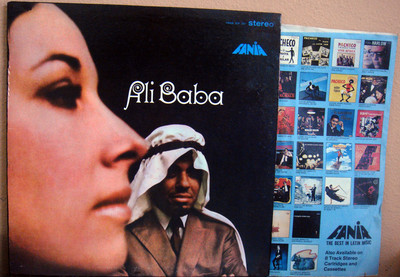
ARTIST : ALI BABA (AKA LOUIE RAMIREZ) TITLE : ALI BABA LABEL & RECORD #: FANIA #SLP357 (1972) STEREO
VINYL CONDITION: HEAR !! : FROM STRONG VG to VG++...HEAR SOUND CLIPS....NO SKIPS...A FEW LIGHT CLICKS!!!....HAVING PROBLEMS TO INCLUDE THE 2nd SOUND CLIP...AS SOON AS MEDIAPLAYER RESOLVES THE PRBLEM I WILL ADD IT!
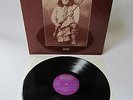
LABELS CONDITIONS: SEE SCAN : NM (I WILL INCLUDE AS THE THIRD SCAN A MONGUITO REISSUE LABEL....THEY USED AN EXTREMELY DARKER ORANGE TINT FOR THE CLOUDS LABEL...} LATER THE ORANGE TINT WAS MUCH LIGHTER LIKE MOST OF THE Colon, Barretto, Harlow years) ALMOST PINK!)
THE ORANGE CLOUDS LABEL WERE USED FOR A FEW YEARS AFTER THE GOLD LABEL WAS DISCONTINUED!
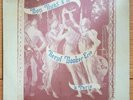
COVER CONDITION : SEE SCAN : VG+...NO SPLITS!
REMARKS: ALMOST IMPOSSIBLE TO FIND (THERE WAS AN "AWFULL" REISSUE" IN THE 2000s...TWO LATIN SOUL?BOOGALOO GIANTS!
O-R-I-G-I-N-A-L PRESSING …..NOT THE RECENT REISSUE WITH WHITE COLOR IN THE COVER INSIDE, ORIGINAL FANIA INNER SLEEVE (NOT IN THE "NEW" REISSUES" IT INCLUDED A WHITE SLEEVE) AND THE CLOUDS LABEL SEEMS AS BOTH, THE VINYL AND LABEL WERE PRESSED IN 1 SHOT !. THOSE REISSUES PRESSED BY A MIAMI CORP. DID NOT DO A GOOD JOB ON THE SOUND!!!....MASTERS USED????
When Louie Ramirez signed his first contract with Fania Records in 1971, Fania President Jerry Masucci, who was also a lawyer, decided to release Louie’s first album using the pseudonym Ali Baba to avoid any possible legal repercussions from his previous recording commitment.
Even before Salsa’s evolution began in the late 1960s and early 1970s, Louie Ramirez was at the forefront of the New York Latin Mambo sound. His flare for creating electrifying, danceable musical arrangements was embraced by top band leaders of the era. From Tito Puente and Tito Rodriguez to the flourishing Boogaloo bands of that time, Louie was sought after for his musical talents, professionalism and attention to intricate detail—not to mention his charisma and ability to make others feel at ease.
This album features a wonderful blend of the New York Boogaloo sound of the early 1970’s (which reached its peak during this decade) as well as some early Salsa rhythms. Rudy Calzado does an extraordinary job on vocals. The harmonious sounds of “BOBBY MARIN &The Latin Chords” (REMEMBER WHEN BOBBY TOOK CARE OF THE LATIN SOUL AT THE “GREEN” UNTED ARTIST LATIN LABEL, HIS GROUP, “OCHO” ETC!...GREAT!) are used effectively on the Latin Soul and Boogaloo tunes.
Louie’s flair for composing and arranging music were comparable to his abilities as a percussionist, vibraharpist and pianist. Louie began playing vibes for the Joe Loco Band when Pete Terrace left in 1956 and subsequently rose to fame while writing and playing for the top orchestra leaders of the day. Louie later formed his own orchestra and became a successful recording artist in his own right.
#1. UNGAWA
Louie demonstrates his humorous side on this original composition. Trumpeter Larry Spencer steps out for a few solo licks. Both the Boogaloo and Latin influences prevail throughout this clever tune, which were written especially for this album.
#2. EL TITERE
Another Ramirez composition, El Titere, was originally recorded by Johnny Pacheco during the early Fania years. In this version, Louie solos on the timbales while his conjunto swings wildly. Check out Willie Torres’ duet with Rudy Calzado at the end of the song.
#3. I DIG RHYTHM
In this clever Boogaloo, Louie and Jimmy Sabater perform vocal renditions of percussion instruments during the breaks. However, at the end of the recording, one of the coristas erroneously utters “Deen Deen” instead of “Doon Doon” during the vocal/percussion segment, which is expertly picked up by Larry Spencer and sends Jimmy Sabater laughing.
#4. WHAT CAN I DO
The romantic side of Louie Ramirez emerges in this Latin soul ballad that evolves into a Boogaloo-blues sound. Louie often worked on cross-over composition/arrangements. Here you will hear the great Latin soul blends of Louie Ramirez, where Latin chords act as vocals.
#5. COOKIN’ WITH ALI
A funky Son Montuno performed by Louie’s band with veteran Guarachero Rudy Calzado on vocals. Jimmy Sabater, Willie Torres and Bobby Marin sing the chorus. A very danceable number with a clever mambo arrangement.
#6. ALI BABA
Another one of Louie’s funny Boogaloo recordings, here Louie shows his expertise in writing for a small conjunto. Louie always said it was much easier to write for a large orchestra than a small group of musicians. Check out the banter produced by Bobby and Jimmy and Larry’s trumpet solo.
#7. CACHITA
This ancient classic is treated delightfully by Louie with the expert vocal style of veteran Rudy Calzado. The tune kicks off as an uptempo rhumba then evolves into a New York-style son. Listen for Louie’s solo on the piano.
#8. IT’S NOT WHAT YOU SAY
The Latin Chords, four guys from the Bronx who created harmony under the street lights, provide the vocals in this funky Boogaloo rendition. Louie provides melodic lines for the two trumpets during the mambos.
#9. YAMBU
This clever descarga (or jam session) features Louie’s band. Frankie Malabe’s conga solo sparkles while the band kicks it into high gear. Larry Spencer solos into the fade. Louie again appears at the end of the album with his witticisms and expertly-contrived piano piece at the end. Enjoy!
Arrangements: Louie Ramirez
Musicians: what A GROUP!!!!!!!!
Louie Ramirez Timbales
Elio Osacar Piano
Larry Spencer Trumpet
Demereado Alberto Trumpet
Bobby Valentin Trumpet (NOT BASS!!)
Hector de Leon Trumpet
Manuel Gonzalez Trombone
Victor David Perez Bass
Bobby Rodriguez Bass
Victor Allende Conga
John Rodriguez Jr. Bongo & Bell
Vocalists:
Bobby Marin
Rudy Calzado
Chorus:
Jimmy Sabater
Frank Delgado
Raphael Sanchez
Willie Torres
Produced by: Jerry Masucci
Recording Director: Johnny Pacheco
Audio Engineer: Irving Greenbaunn
Liner Notes: MAX SALAZAR
TRACKS SIDE A:#1. UNGAWA
Louie demonstrates his humorous side on this original composition. Trumpeter Larry Spencer steps out for a few solo licks. Both the Boogaloo and Latin influences prevail throughout this clever tune, which were written especially for this album.
#2. EL TITERE
Another Ramirez composition, El Titere, was originally recorded by Johnny Pacheco during the early Fania years. In this version, Louie solos on the timbales while his conjunto swings wildly. Check out Willie Torres’ duet with Rudy Calzado at the end of the song.
#3. I DIG RHYTHM
In this clever Boogaloo, Louie and Jimmy Sabater perform vocal renditions of percussion instruments during the breaks. However, at the end of the recording, one of the coristas erroneously utters “Deen Deen” instead of “Doon Doon” during the vocal/percussion segment, which is expertly picked up by Larry Spencer and sends Jimmy Sabater laughing.
#4. WHAT CAN I DO
The romantic side of Louie Ramirez emerges in this Latin soul ballad that evolves into a Boogaloo-blues sound. Louie often worked on cross-over composition/arrangements. Here you will hear the great Latin soul blends of Louie Ramirez, where Latin chords act as vocals.
#5. COOKIN’ WITH ALI
A funky Son Montuno performed by Louie’s band with veteran Guarachero Rudy Calzado on vocals. Jimmy Sabater, Willie Torres and Bobby Marin sing the chorus. A very danceable
#1. ALI BABA
Another one of Louie’s funny Boogaloo recordings, here Louie shows his expertise in writing for a small conjunto. Louie always said it was much easier to write for a large orchestra than a small group of musicians. Check out the banter produced by Bobby and Jimmy and Larry’s trumpet solo.
#2. CACHITA
This ancient classic is treated delightfully by Louie with the expert vocal style of veteran Rudy Calzado. The tune kicks off as an uptempo rhumba then evolves into a New York-style son. Listen for Louie’s solo on the piano.
#3. IT’S NOT WHAT YOU SAY
The Latin Chords (Bobby Marin's Latin Soul/Doowiop group recorded 1 collector item on the green Uniyted Artists Latino), four guys from the Bronx who created harmony under the street lights, provide the vocals in this funky Boogaloo rendition. Louie provides melodic lines for the two trumpets during the mambos.
#5. YAMBU
This clever descarga (or jam session) features Louie’s band. Frankie Malabe’s conga solo sparkles while the band kicks it into high gear. Larry Spencer solos into the fade. Louie again appears at the end of the album with his witticisms and expertly-contrived piano piece at the end. Enjoy!
WEB REMARKS:
Louie Ramirez was a boogaloo, salsa and latin jazz percussionist, vibraphonist, band leader and composer. He was born on February 24, 1938 in New York City. He died on June 7, 1993. He co-wrote with Johnny Pacheco the 1961 hit, El Güiro De Macorina. He has been called “the Quincy Jones of Salsa.”
He made his professional debut with Joe Loco’s band in 1956, replacing vibraphonist Pete Terrace. He made his own debut as a bandleader in 1963, with Introducing Louie Ramirez (Remo Records). He subsequently recorded for Alegre, Fania, Atco, United Artists Records, Caiman and FNA.
He partnered with Charlie Palmieri and Joe Cuba in 1965 to 1968. He partnered with Tito Rodriguez and released Tito Rodríguez y Louie Ramírez En Algo Nuevo LP in 1972. He became a staff producer at Fania in 1975. He appeared as a sideman or a production assistant on many recordings by other artists, such as Willie Colón in the 1970s.
On June 7, 1993, while driving along Junction Boulevard in Queens, New York, Louie Ramirez suffered a fatal heart attack at the age of 55. He was recording his third album with singer Ray De La Paz. It was entitled “Preparate Bailador”.
A LITTLE BIT OF INFO ABOUY THE "UNHERALDED" BOBBY MARIN:
These recordings cover five decades of Latin music production, going back to the 1960’s. Although many of the recordings feature traditional Hard Salsa or Charanga music, there is a variety of Latin Soul recordings included as well. I always found it interesting to experiment with cross-over music, fascinated by the mixture of Afro Cuban rhythms and the music enjoyed by the Spanish-speaking youth of New York. - Bobby Marin
The exciting all-female “Pasion” orchestra is a fine example of fusion music by blending Charanga, Jazz and Pop music. It was created by flautist, Connie Grossman, and violinist, Betsy Hill. Debbie Resto does an outstanding job on the vocals portraying the Gloria Gaynor hit, “I Will Survive”. Debbie is also featured in “Let Him Hear My Heart”, a Latin Jazz ballad, composed and arranged by Debbie, and featuring an inspired flugle horn solo by Mac Gollehon.
New York singing duo Nite & Day do a clever rendition of the Bee Gee hit “How Deep Is Your Love”; a nice blend of Salsa/Reggae/Rap. Jimmy Sabater, croons in “When I’m Alone”, which comes from an idea I had to create an answer to Jimmy’s mega-hit “To Be With You” while a member of the Joe Cuba Sextet.
In 1999, we experimented with the tune, “Millennium Bug”, which celebrated the arrival of the 21st century. Joe Bataan, who hadn’t sung in several years, agreed to provide the vocal for this quirky Chico Mendoza composition.
“She” was another experiment, this time utilizing Chico Mendoza’s Ocho band on a ballad transformed into Latin Jazz. The vocal part was supposed to be recorded by Jimmy Sabater but current contractual obligations did not permit it. Here, we use the original vocal demo track I laid down for Jimmy to learn the song.
“Charanga Jam” is from a recording originally styled after Joe Cuba, which eventually was transformed into Charanga with legendary musicians Pupi Legarretta and Mauricio Smith added to the fray.
“Mi Perrito” comes from a song written by band leader Eddy Rivera and myself, after I discovered a Dr. John blues recording entitled “How Come My Dog Don’t Bark When You Come Around”.
In 1977, my label El Sonido outbid other labels for the right to sign up and record a new band by the name of Charanga America, led by George Maysonet. The single from the album, “Ay San Antonio” was a hit everywhere but Puerto Rico, where radio stations refused to play Charanga music.
Flautist extraordinaire, Andrea Brachfeld, signed with Latin Cool Records, a label formed by David Wasserman and myself, and came up with a wonderful album recorded by her band, Son Charanga, which featured Oscar Hernandez and Alfredo DeLaFe. “Descarga Son Charanga” displays the artistry and extraordinary talents of Andrea.
The “Ocho” band was formed when I signed Chico Mendoza to a contract with United Artists Latino Records in the seventies. When I formed El Sonido Records, years later, I contracted Ocho and recorded an album. One of my favorite recordings from that album is the classic, “Mamey Colorao”.
Legendary Fania artist, Larry Harlow, was recorded during a Live performance at the renowned Birdland club in New York. Latin Cool acquired the rights to this album, where the band performed the Harlow classic “La Cartera” featuring Bobby Sanabria, Ronnie Cuber, Mac Gollehon, Chembo Corniel and Eddie Gua Gua Rivera as part of the Harlow orchestra.
When I formed Mambo City Records with Jeff Davis, back in the nineties, we seeked out talented artists. We signed up Eddy/Eddy, Luisito Rosario, Nite & Day, Adriel and Bronx vocalist, Willie Amadeo. Here we feature Willie at his best in “Si Nos Dejan”; a composition by Willie’s compadre, Mike Amadeo.
During the Mambo City era, vocalist Luisito Rosario had just left Grupo Hechizo to join the Harlow orchestra. We signed him up as a solo artist. One of the recordings was backed by Hechizo; the classic “Jurame” which is expertly interpreted by Luisito in this recording.
In 1975, I recorded a Christmas album by Fania All Stars and Marc Anthony stand-out, Yomo Toro, with vocalist, Miguelito Poventud. One of the songs from that album was “Fuikiti”, from an album that was recorded in one session thanks to expert musicianship and a bottle of Ron Canita.
I formed the Salsa Record label with Ismael Maisonave, in 1969. We signed up Jimmy Sabater and recorded a disco hit, “To Be With You”, back in the seventies. The first artist we signed up to the label was the illustrious pianist/bandleader, Charlie Palmieri. One of the recordings was “Tu Corazon” featuring Victor Velasquez on the vocals. In this recording Charlie demonstrates his virtuosity on the black and whites.
Please Follow The Shipping Rates Below:
LPs
1 Item
Xtra Item
Air Mail Media U.S.A
$4.00 (Delivery Confirmation Included)
Add $0.25
Air Mail Priority U.S.A
$8.50 (Delivery Confirmation Included)
Add $1.50
Air Mail Canada
$7.60
Add $2.00
Air Mail Europe
$14.25
Add $2.00
Air Mail Asia
$14.25
Add $2.00
Air Mail Caribbean
$12.00
Add $2.00
Air Mail South America
$13.50
Add $2.00
INTERNATIONAL SHIPPING 4 POUNDS AND OVER HAS TO BE MAILED VIA USPS PRIORITY MAIL (FASTER, A LITTLE BIT MORE $$, SOME FREE INSURANCE BASED ON PACKAGE WEIGHT) EXAMPLE= APPROX. 5 TO 6 LPs OR 13 TO 14 45RPMs...ASK!
If Buying More Than 3 Records We Will Inform You The Shipping & Handling....We do combine shipping for multiple purchases.
Insurance Available If Requested - Domestic Only:
$1.75 ................ $0.01 to $50
$2.25 ................ $50.01 to $100
$2.75 ................ $100.01 to $200
* We offer a money back + shipping costs guarantee on our records (unless otherwise noted) if you feel the LP was not graded properly (in Grading “disputes” Return Shipping Not Included). We will issue a full refund upon its return, once our mistake has been verified.
Record Grading: Standard guidelines for grading records comes down to a subjective judgment that may vary from person to person. We grade records and LP covers visually AND (when possible) play-tested. We make every effort to give full disclosure (remember that the LP has at least 12 tracks and the grading may vary between each other) and your satisfaction is guaranteed. Don't assume that our vinyl determination of "Very Good+" is the same as yours!
RECORD OR COVER GRADED VG or LESS WILL BE "SOLD AS IS"
MINT: Unplayed, still sealed.
NM RECORDS: are shiny, with no visible defects, they might have one or 2 minor superficial scuff and they should play without any noise. Writing, stickers or other markings cannot appear on the label, nor can any “spindle marks” from someone trying to blindly put the record on the turntable. Major factory defects also must not be present; a record and label obviously pressed off center is not Near Mint. If played, it will do so with no surface noise. (NM records don’t have to be “never played”; a record used on an excellent turntable can remain NM after many plays if the disc is properly cared for.)
NM COVERS:
have no creases, ring wear or seam splits of any kind.
Picture Sleeves: should look as if they never housed a record. This is a great reason to remove your 45s from their picture sleeves and keep them separate. Just keeping the 45 inside the sleeve will cause damage than can reduce the grade of the sleeve.
VG++ (Excellent) RECORDS:
Barely noticeable play wear and background noise. May have surface scuffs and/or superficial marks, which will be inaudible or indiscernible from the background, no scratches. Very nice, flaws noted.
VG++ COVERS:
Artwork is still as close to perfect as can be. Some impression to the cover (minor outer ring wear) but no ink wear! Some slight creases to the corners, but not wrinkled and obtrusive to the eye. The corners can show white (where the artwork pasted slick was) meaning, slight wear. No seam splits or writing on the cover or taped repairs can make this grade.
VG+ RECORDS:
may show some slight signs of wear, including light scuffs or very light scratches that do not affect the listening experience. Slight warps that do not affect the sound are OK. Minor signs of handling are OK, too, such as telltale marks around the center hole, but repeated playing has not misshapen the hole. There may be some very light ring wear or discoloration, but it should be barely noticeable.
VG+ COVERS:
should have only minor wear. A VG+ cover might have some very minor seam wear or a split (less than one inch long) at the bottom, the most vulnerable location. Also, a VG+ cover may have some defacing, such as a cut-out marking. Covers with cut-out markings can never be considered Near Mint.
VG+ PICTURE SLEEVES:
might show some very light creasing where it is obvious that a record once resided (or still does reside). A VG+ picture sleeve might have some very minor seam wear or a split (less than one inch long) at the bottom, the sleeve’s most vulnerable location.
VG RECORDS:
They have more obvious flaws than their counterparts in better shape. They lack most of the original gloss found on factory-fresh records. Groove wear is evident on sight, as are light scratches deep enough to feel with a fingernail. When played, a VG record has surface noise, and some scratches may be audible, especially in soft passages and during a song’s intro and ending. But the noise will not overpower the music otherwise. Minor writing, tape, or a sticker can detract from the label. Many collectors who have jukeboxes will use VG records in them and not think twice. They remain a fine listening experience, just not the same as if it were in better shape.
VG COVERS and PICTURE SLEEVES:
will have many signs of human handling. Ring wear in the middle or along the edges of the cover where the edge of a record would reside, is obvious, though not overwhelming. Some more creases might be visible. Seam splitting will be more obvious; it may appear on all three sides, though it won’t be obvious upon looking. Someone might have written or stamped a price tag on it, too.
RECORDS GRADED VG OR BELOW WILL BE "SOLD AS IS"
Items are to be paid within 7 days (if not paid by that time it will be subject for relisting) of auction close and will be shipped within 48 hours of receipt of payment. Paypal is the preferred method of payment.
Carlos A. Flores 25830 Crippen Dr. Land O' Lakes, FL 34639
price rating