2 PINK FLOYD ALBUMS 1 ROGER WATERS ALBUM Animals, Greatest Hits, Pros and Cons
$
28


Favourite Auctions
To save auctions to your favourites, please login
If you don't have an account, please register
Description
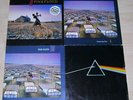
Two Pink Floyd Albums and One Roger Waters album.
- Animals
- A Collection of dance songs
- Pros and cons of hitchhiking
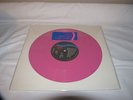
The vinyl on each of these items appears to be in fine shape. I do not however have a turn table to play them on so I can not guarantee that they play well. A visual inspection of the vinyl does not reveal any scratches or imperfections. I have taken very good care of them. I am confident that they will play just fine, but I can not guarantee that. The covers have seen better days and I have done my best to illustrate their condition on the photos I have uploaded. I would be happy to take additional close-up photos if you are concerned about the condition of any section of the vinyl or covers, just ask.
I will accept a return if you are not completely satisfied with your purchase. Just pay the cost of return shipping and I will promptly refund your purchase price. No questions asked.
Animals is the tenth studio album by English progressive rock group Pink Floyd, released in January 1977. A concept album, it provides a scathing critique of the social-political conditions of late 1970s Britain, and presents a marked change in musical style from their earlier work. Animals was recorded at the band's studio, Britannia Row, in London, but its production was punctuated by the early signs of discord that several years later would culminate in keyboardist Richard Wright leaving the band. The album's cover image, a pig floating between two chimneys on Battersea Power Station, was conceived by bassist and writer Roger Waters, and photographed by long-time collaborators Hipgnosis.
A Collection of Great Dance Songs is a compilation album by Pink Floyd released on 23 November 1981 on Harvest in the United Kingdom and on Columbia Records in the United States. The title is facetious, given that Pink Floyd are not known for making particularly danceable music. This is perhaps evidenced by the album art, which featured a photograph of ballroom dancers anchored to the ground so they cannot move. The inner sleeve had pictures of dancers in either a white (UK) or black (US) background. The picture labels were a black background with blue lines and red sketch lined dancers on side one and reverse on side two.
The Pros and Cons of Hitch Hiking is the first solo album by Roger Waters released in 1984. The following year Waters announced his departure from Pink Floyd. The album was certified gold in the United States by the Recording Industry Association of America in April 1995. The concept, as envisioned by Waters in 1977, rotated around a man's scattered thoughts during a road trip through California, focusing on his midlife crisis, and how he dreams of committing adultery with a hitchhiker he picks up along the way. Along the way he also faces other fears and paranoia, with all of these things taking place in real time in the early morning hours of 04:30:18 AM to 05:12 AM on an unspecified day.In July 1977, Waters played some of the music demos of what he had pieced together, but he also played parts of another album he was preparing titled Bricks in the Wall to the rest of his bandmates in the group Pink Floyd.[4][5] After a long debate, they decided that they preferred the concept of Bricks in the Wall instead,[5] even though their manager at the time, Steve O'Rourke, thought that Pros and Cons was a better-sounding concept,[6] and David Gilmour calling Pros and Cons stronger musically.[5]
Well, the idea for the album came concurrently with the idea for The Wall – the basis of the idea. I wrote both pieces at roughly the same time. And in fact, I made demo tapes of them both, and in fact presented both demo tapes to the rest of the Floyd, and said "Look, I'm going to do one of these as a solo project and we'll do one as a band album, and you can choose." So, this was the one that was left over. Um...I mean, it's developed an awful lot since then, I think.
— Roger Waters, [7]price rating
![The Weeknd: Hurry Up Tomorrow [Clear Vinyl, Limited Assai Obi Edition]](https://www.popsike.info/php/thumbnail.php?url=https://www.popsike.pics/pix/20250223/267168790567.jpg)