1966 FLORIDA COLLEGE CHORUS JAMES WALKER CENTURY RECORD VINYL TEMPLE TERRACE FL
$
40




Favourite Auctions
To save auctions to your favourites, please login
If you don't have an account, please register
Description
1966 FLORIDA COLLEGE CHORUS JAMES WALKER CENTURY RECORD VINYL TEMPLE TERRACE FL
1966 FLORIDA COLLEGE CHORUS JAMES WALKER CENTURY RECORD VINYL TEMPLE TERRACE FL
Description
GREETINGS, FEEL FREE
TO
"SHOP NAKED."
We deal in items we believe others will enjoy and want to purchase.
We are not experts.
We welcome any comments, questions, or concerns.
WE ARE TARGETING A GLOBAL MARKET PLACE.
Thanks in advance for your patronage.
Please Be sure to add WDG to your favorites list!
BUYERS: please note that WDGgladly sellsits merchandise on the EBAYauction format, however by the definition of an auction it requires at least two interested bidding parties. If the item does not have two legitimate bidders by the final 12 hours, the item may be cancelled and relisted at a later time. This is fair for our sellers / consignors and we hope still permits thebuyer to a good deal.
We hopeyou can appreciate and understandour position.
NOW FOR YOUR VIEWING PLEASURE
1966 FLORIDA COLLEGE CHORUS
DIRECTED BY JAMES WALKER
TEMPLE TERRACE, FL
CENTURY RECORDS, RONNIE STANCIL
ST. PETERSBURG, FL
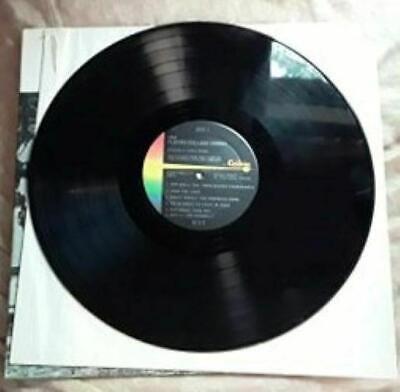
SIDE 1
1. HOW SHALL THE YOUNG SECURE THEIR HEARTS
2. SEND LIGHT
3. WHEN I SURVEY THE WONDEROUS
4. TIS SO SWEET TO TRUST IN JESUS
5. HOW GREAT THOU ART
6. SOFTLY & TENDERLY
SIDE 2
1. I WALK WITH GOD
2. IN JOSEPH'S LOVELY GARDEN
3. LOST IN THE NIGHT
4. NOW THANK WE ALL OUR GOD
5. HOSANNA
SOUND TESTED
BUYER APPROVED
RECORDS PLAY EX+ > NM
COVER VG+
LIMITED PRESSING
---------------------
FYI
Gospel music is a music genre in Christian music. The creation, performance, significance, and even the definition of gospel music varies according to culture and social context. Gospel music is composed and performed for many purposes, including aesthetic pleasure, religious or ceremonial purposes, and as an entertainment product for the marketplace. Gospel music usually has dominant vocals (often with strong use of harmony) with Christian lyrics. Gospel music can be traced to the early 17th century, with roots in the black oral tradition. Hymns and sacred songs were repeated in a call and response fashion. Most of the churches relied on hand clapping and foot stomping as rhythmic accompaniment. Most of the singing was done a cappella. The first published use of the term ″Gospel Song" probably appeared in 1874. The original gospel songs were written and composed by authors such as George F. Root, Philip Bliss, Charles H. Gabriel, William Howard Doane, and Fanny Crosby. Gospel music publishing houses emerged. The advent of radio in the 1920s greatly increased the audience for gospel music. Following World War II, gospel music moved into major auditoriums, and gospel music concerts became quite elaborate.
Gospel blues is a blues-based form of gospel music (a combination of blues guitar and evangelistic lyrics). Southern gospel used all male, tenor-lead-baritone-bass quartet make-up. Progressive Southern gospel is an American music genre that has grown out of Southern gospel over the past couple of decades. Christian country music, sometimes referred to as country gospel music, is a subgenre of gospel music with a country flair. It peaked in popularity in the middle 1990s.
Bluegrass gospel music is rooted in American mountain music. Celtic gospel music infuses gospel music with a Celtic flair, and is quite popular in countries such as Ireland. British black gospel refers to Gospel music of the African diaspora, which has been produced in the UK. Some proponents of "standard" hymns generally dislike gospel music of the late 19th and early 20th centuries. Today, with historical distance, there is a greater acceptance of such gospel songs into official denominational hymnals.
Gospel music in general is characterized by dominant vocals (often with strong use of harmony) referencing lyrics of a Christian nature. Subgenres include contemporary gospel, urban contemporary gospel (sometimes referred to as "black gospel"), Southern gospel, and modern gospel music (now more commonly known as praise and worship music or contemporary Christian music). Several forms of gospel music utilize choirs, use piano or Hammond organ, tambourines, drums, bass guitar and, increasingly, electric guitar. In comparison with hymns, which are generally of a statelier measure, the gospel song is expected to have a refrain and often a more syncopated rhythm.
Several attempts have been made to describe the style of late 19th and early 20th century gospel songs in general. Christ-Janer said "the music was tuneful and easy to grasp ... rudimentary harmonies ... use of the chorus ... varied metric schemes ... motor rhythms were characteristic ... The device of letting the lower parts echo rhythmically a motive announced by the sopranos became a mannerism".
Patrick and Sydnor emphasize the notion that gospel music is "sentimental", quoting Sankey as saying, "Before I sing I must feel", and they call attention to the comparison of the original version of Rowley’s "I Will Sing the Wondrous Story" with Sankey's version. Gold said, "Essentially the gospel songs are songs of testimony, persuasion, religious exhortation, or warning. Usually the chorus or refrain technique is found."
Roots and background
Coming out of the African American religious experience, gospel music can be traced to the early 17th century. Gospel music has roots in the black oral tradition, and typically utilizes a great deal of repetition. The repetition of the words allowed those who could not read the opportunity to participate in worship. During this time, hymns and sacred songs were lined and repeated in a call and response fashion, and the Negro spirituals and work songs emerged. Repetition and "call and response" are accepted elements in African music, designed to achieve an altered state of consciousness we sometimes refer to as "trance", and strengthen communal bonds.
Most of the churches relied on hand clapping and foot stomping as rhythmic accompaniment. There would be guitars and tambourines available every now and then, but not frequently. Church choirs became a norm only after emancipation. Most of the singing was done a cappella.
19th century
The first published use of the term ″Gospel Song" probably appeared in 1874 when Philip Bliss released a songbook entitled Gospel Songs. A Choice Collection of Hymns and Tunes. It was used to describe a new style of church music, songs that were easy to grasp and more easily singable than the traditional church hymns, which came out of the mass revival movement starting with Dwight L. Moody, whose musician was Ira D. Sankey, as well as the Holiness-Pentecostal movement. Prior to the meeting of Moody and Sankey in 1870, there was an American rural/frontier history of revival and camp meeting songs, but the gospel hymn was of a different character, and it served the needs of mass revivals in the great cities.
The revival movement employed popular singers and song leaders, the most famous of them being Ira D. Sankey. The original gospel songs were written and composed by authors such as George F. Root, Philip Bliss, Charles H. Gabriel, William Howard Doane, and Fanny Crosby. As an extension to his initial publication Gospel Songs, Philip Bliss, in collaboration with Ira D. Sankey issued no’s. 1 to 6 of Gospel Hymns in 1875. Sankey and Bliss’s collection can be found in many libraries today.
The popularity of revival singers and the openness of rural churches to this type of music (in spite of its initial use in city revivals) led to the late 19th and early 20th century establishment of gospel music publishing houses such as those of Homer Rodeheaver, E. O. Excell, Charlie Tillman, and Charles Tindley. These publishers were in the market for large quantities of new music, providing an outlet for the creative work of many songwriters and composers.
20th century
The holiness-Pentecostal movement, or sanctified movement, appealed to people who were not attuned to the Europeanized version of black church music. Holiness worship has used any type of instrumentation that congregation members might bring in, from tambourines to electric guitars. Pentecostal churches readily adopted and contributed to the gospel music publications of the early 20th century. Late 20th-century musicians such as Elvis Presley, Jerry Lee Lewis, Mahalia Jackson, Andrae Crouch, and the Blackwood Brothers either were raised in a Pentecostal environment, or have acknowledged the influence of that tradition.
The advent of radio in the 1920s greatly increased the audience for gospel music, and James D. Vaughan used radio as an integral part of his business model, which also included traveling quartets to publicize the gospel music books he published several times a year. Virgil O. Stamps and Jesse R. Baxter studied Vaughan's business model and by the late 1920s were running heavy competition for Vaughan. The 1920s also saw the marketing of gospel records by groups such as the Carter Family.
The first person to introduce the ragtime influence to gospel accompaniment as well as to play the piano on a gospel recording was Arizona Dranes.
In African-American music, gospel quartets developed an a cappella style following the earlier success of the Fisk Jubilee Singers. The 1930s saw the Fairfield Four, the Dixie Hummingbirds, the Five Blind Boys of Mississippi, the Five Blind Boys of Alabama, The Soul Stirrers, the Swan Silvertones, the Charioteers, and the Golden Gate Quartet. Racism divided the nation, and this division did not skip the church. If during slavery blacks were treated as inferior inside the white churches, after emancipation they formed their own separate churches. The gospel groups which were very popular within the black community, were virtually unknown to the white community, though some in the white community began to follow them.[14] In addition to these high-profile quartets, there were many black gospel musicians performing in the 1920s and 30s, usually playing the guitar and singing in the streets of Southern cities. Famous among them were Blind Willie Johnson, Blind Joe Taggart and others.
In the 1930s, in Chicago, Thomas A. Dorsey (best known as author of the song "Precious Lord, Take My Hand"), who had spent the 1920s writing and performong secular blues music under the name "Georgia Tom", turned to gospel music, establishing a publishing house. He had experienced many trials in his life,including the death of his pregnant wife. Thomas gained biblical knowledge from his father, who was a Baptist minister, and was taught to play piano by his mother. He started working with blues musicians when the family moved to Atlanta. It has been said that 1930 was the year when modern gospel music began, because the National Baptist Convention first publicly endorsed the music at its 1930 meeting. Dorsey was responsible for developing the musical careers of many African-American artists, such as Mahalia Jackson.
Meanwhile, the radio continued to develop an audience for gospel music, a fact that was commemorated in Albert E. Brumley's 1937 song, "Turn Your Radio On" (which is still being published in gospel song books). In 1972, a recording of "Turn Your Radio On" by the Lewis Family was nominated for "Gospel Song of the Year" in the Gospel Music Association's Dove Awards.
Following the Second World War, gospel music moved into major auditoriums, and gospel music concerts became quite elaborate. In 1950, black gospel was featured at Carnegie Hall when Joe Bostic produced the Negro Gospel and Religious Music Festival. He repeated it the next year with an expanded list of performing artists, and in 1959 moved to Madison Square Garden. Today, black gospel and white gospel are distinct genres, with distinct audiences. In white gospel, there is a large Gospel Music Association and a Gospel Music Hall of Fame, which includes a few black artists, such as Mahalia Jackson, but which ignores most black artists. In the black community, James Cleveland established the Gospel Music Workshop of America in 1969.
-----------------------------------
In music, a single or record single is a type of release, typically a recording of fewer tracks than an LP or a CD. This can be released for sale to the public in a variety of different formats. In most cases, the single is a song that is released separately from an album, but it can still appear on an album. Often, these are the most popular songs from albums that are released separately for promotional uses such as commercial radio airplay, and in other cases a recording released as a single does not appear on an album. 45 rpm records are played on a record player or turntable. They can be played one at a time, with the records changed manually after they finish, or a stacking spindle could be used to play up to six in succession without manually changing them. The use of the spindle led to the coined "Stack O Wax" term in the 1950s.
History
The basic parameters of the music single were established in the late 19th century, when the gramophone record began to supersede phonograph cylinders in commercial music. Gramophone discs were manufactured with a range of playback speeds (from 16 rpm to 78 rpm) and in several sizes (including 12/30 cm). By around 1910, however, the 10-inch (25 cm) 78 rpm shellac disc had become the most commonly used format.
The inherent technical limitations of the gramophone disc defined the standard format for commercial recordings in the early 20th century. The relatively crude disc cutting techniques of the time and the thickness of the needles used on record players limited the number of grooves per inch that could be inscribed on the disc surface, and a high rotation speed was necessary to achieve acceptable recording and playback fidelity. 78 rpm was chosen as the standard because of the introduction of the electrically powered synchronous turntable motor in 1925, which ran at 3600 rpm with a 46:1 gear ratio, resulting in a rotation speed of 78.26 rpm.
These factors, combined with the 10-inch songwriters and performers increasingly tailored their output to fit the new medium. The 3-minute single remained the standard into the 1960s when the availability of microgroove recording and improved mastering techniques enabled recording artists to increase the duration of their recordings. In 1968 songwriter Jimmy Webb shattered the standard 3 minute format with "MacArthur Park" which exceeds 7 minutes length. Although Webb had written million-selling songs and was a multiple Grammy winner, the song had been rejected by several labels as simply too long for the marketplace to bear. The Beatles' also challenged deliberately the long-standing 3-minute standard for pop singles with their 1968 7 minute 20 second single "Hey Jude" which according to some was extended in length in order to exceed "MacArthur Park"
Singles have been issued in various formats, including 7-inch (18 cm), 10-inch (25 cm) and 12-inch (30 cm) vinyl discs (usually playing at 45 rpm); 10-inch (25-cm) shellac discs (playing at 78 rpm); cassette, 8 and 12 cm (3- and 5-inch) CD singles and 7-inch (18 cm) plastic flexi discs. Other, less common, formats include singles on digital compact cassette, DVD, and LD, as well as many non-standard sizes of vinyl disc (5/12 cm, 8/20 cm, etc.).
The most common form of the vinyl single is the 45 or 7 inch, the names are derived from its play speed, 45 rpm and the standard diameter 7 (18 cm).
The 7 45 rpm record was introduced in 1949 by RCA as a smaller, more durable and higher-fidelity replacement for the 78 rpm shellac discs. The first 45 rpm records were monaural, with recordings on both sides of the disc. As stereo recordings became popular in the 1960s, almost all 45 rpm records were produced in stereo by the early 1970s.
Although 7 remained the standard size for vinyl singles, 12 singles were introduced for use by DJs in discos in the 1970s. The longer playing time of these singles allowed the inclusion of extended dance mixes of tracks. In addition, the larger surface area of the 12 discs allowed for wider grooves (larger amplitude) and greater separation between grooves, the latter of which results in less cross-talk. Consequently, they 'wore' better, and were less susceptible to scratches. The 12 single is still considered a standard format for dance music, though its popularity has declined in recent years.
The sales of singles are recorded in record charts in most countries in a Top 40 format. These charts are often published in magazines and numerous television shows and radio programs count down the list. In order to be eligible for inclusion in the charts the single must meet the requirements set by the charting company, usually governing the number of songs and the total playing time of the single.
In popular music, the commercial and artistic importance of the single (as compared to the EP or album) has varied over time, technological development, and according to the audience of particular artists and genres. Singles have generally been more important to artists who sell to the youngest purchasers of music (younger teenagers and pre-teens), who tend to have more limited financial resources. Perhaps the golden age of the single was on 45's in the 1950s and early 1960s in the early years of rock music. Starting in the mid-sixties, albums became a greater focus and more important as artists created albums of uniformly high quality and coherent themes, a trend which reached its apex in the development of the concept album. Over the first decade of the 21st century, the single generally received less and less attention in the United States as albums, which on Compact Disc had virtually identical production and distribution costs but could be sold at a higher price, became most retailers' primary method of selling music. Singles continued to be produced in the UK and Australia but have declined since the mid first decade of the 21st century.
Dance music, however, has followed a different commercial pattern, and the single, especially the 12-inch vinyl single, remains a major method by which dance music is distributed.
As of 2006 the single seems to be undergoing something of a revival. Commercial music download sites reportedly sell mostly single tracks rather than whole albums, and the increase in popularity seems to have rubbed off on physical formats. Portable audio players, which make it extremely easy to load and play songs from many different artists, are claimed to be a major factor behind this trend.
A related development has been the popularity of mobile phone ringtones based on pop singles (on some modern phones, the actual single can be used as a ringtone). In September 2007, Sony BMG announced they would introduce a new type of CD single, called "ringles", for the 2007 holiday season. The format included three songs by an artist, plus a ringtone accessible from the user's computer. Sony announced plans to release 50 ringles in October and November, while Universal Music Group expected to release somewhere between 10 and 20 titles.
In a reversal of this trend, a single has been released based on a ringtone itself. The Crazy Frog ringtone, which was a cult hit in Europe in 2004, was released as a mashup with Axel F in June 2005 amid a massive publicity campaign and subsequently hit #1 on the UK charts.
(THIS PICTURE FOR DISPLAY ONLY)
---------------------------
Thanks for choosing this auction. You may email for alternate payment arrangements. We combine shipping. Please pay promptly after the auction. The item will be shipped upon receipt of funds. WE ARE GOING GREEN, SO WE DO SOMETIMES USE CLEAN RECYCLED MATERIALS TO SHIP.
Please leave feedback when you have received the item and are satisfied. Please respond when you have received the item.
*****
5*'s
*****
If you were pleased with this transaction, please respond with all 5 stars! If you are not pleased, let us know via e-mail. Our goal is for 5-star service. We want you to be a satisfied, return customer.
Please express any concerns or questions. More pictures are available upon request. The winning bid will incur the cost of S/H INSURED FEDEX OR USPS. See rate calculator or email FOR ESTIMATE. International Bidders are Welcome but be mindful if your country is excluded from safe shipping.
Thanks for perusing THIS and ALL our auctions.
Please Check out our other items!
WE like the curious and odd.
BUY, BYE!!
Track Page Views With
Auctiva's Counter Images sell!
Get Supersized Images & Free Image Hosting Get Auctiva's Listing Templates
on your items with a few clicks.
price rating