1933 GREGORIAN CHANT REQUIEM Missa per Defunctis Solesmes Edition M-177 78
$
61


Favourite Auctions
To save auctions to your favourites, please login
If you don't have an account, please register
Description
Please wait for me to send you an invoice. DO NOT USE EBAY CHECKOUT if you want the lowest possible postage.
Welcome to my auctions of great records
This is my FIRST WEEK of 2 weeks of great auctions – I WILL PACK AND BILL YOUR RECORDS after the close on MAY 22.
PLEASE DO NOT PAY before I send you an invoice. It will take me up to 48 hours to pack your records, but this is the ONLY WAY to get you the LOWEST POSTAGE. If you pay before I sent you an invoice, the EBAY system will charge you a HIGHER POSTAGE for shipping.
International shipping: approx postage 1x10"=$25: 1x12"=$36: 10"Album 4 Rec=50$: 12" Album 2 Rec=50$
HOWEVER in most cases I can get you SIGNIFICANT savings by using other services. Pls contact me for a quote.
About 30% less to Canada. Pls ignore international postage displayed in Ebay, rates are too high
Pleas do not use EBAY CHECKOUT, send me an invoice request instead and I will pack your records and bill you promptly.
GREGORIAN CHANT by the premiere US Enseble of Gregorian Chant in the Abbaye St Pierre de Solesmes Tradition
The Pius X School of Liturgical Music at the Manhattanville College of the Sacred Heart in Purchase, New York under their formidable leader Julia Sampson
The Requiem Mass
78=US=Victrola M 177
Title: The Requiem Mass
Also issued as:
Performers: Pius X School Choir
Director: Julia Sampson
Solo:
Date: rec. 27 January, 3 & 21 February, 7 March 1933
Comments: set of 5 discs in album
Chant List:
1. Si iniquitates ANTI (8) LU 1774 AM 1152b [2:12] -- AVA ps.129 organ mx.75376:11528A
1. Subvenite sancti Dei RESP (4) LU 1765 GT 692 GT 878b AM 1168 [2:21] -- abridged organ mx.75736:11528A
2. Exsultabunt Domino ANTI (1) LU 1764 GT 688 [4:36] -- AVA ps.50 organ mx.75271:11528B
1. Requiem aeternam INTR (6) LU 1807a GT 669 WG 119*a [1:57] -- 3x organ mx.74994:11529A
1. Kyrie (6) LU 1807b GT 767b WK 45a WG 119*b [1:51] -- 3x organ mx.74994:11529A
2. Requiem aeternam GRAD (2) LU 1808 GT 670 WG 120*a [2:41] -- RV organ mx.75270:11529B
2. Absolve Domine TRCT (8) LU 1809 GT 672 WG 120*b [1:34] -- omits v.2 organ mx.75270:11529B
1. Dies irae SEQU (1) LU 1810 [4:41] -- omits v.7-12 organ mx,74996:11530A
2. Domine Jesu Christe OFFR (2) LU 1813 GT 674 OT 189 WG 121* [3:31] -- organ mx.74997:11530B
1. preface OMC 187 [2:24] -- mx.75039:11531A
1. Sanctus ( ) LU 1814 LU 63a GT 767c LC 26a [0:44] -- organ mx.75039:11531A
1. Pater noster [1:16] -- mx.75039:11531A
2. Agnus Dei … dona eis ( ) LU 1815a WG 123*b GT 768 LU 63b LC 29a [0:46] -- organ mx.75268:11531B
2. Lux aeterna COMM (8) LU 1815b GT 676 WG 123*c [0:46] -- organ mx.75268:11531B
1. Libera me Domine de morte RESP (1) LU 1767 WG 126* WP 37* [4:41] -- organ mx.75268,75041:11531B,11532A
2. In paradisum … Chorus ANTI (7) LU 1768 GT 697a GT 881a [0:59] -- organ mx.75377:11532B
2. Ego sum resurrectio ANTI (2) LU 1770 GT 697c GT 882a LC 61 [3:24] -- AVA cant. Benedictus organ mx.75377:11532B
The centre from which modern theories of mediæval chant performance have emanated is undoubtedly the Abbey of Solesmes in France. It is the monks of Solesmes who have provided the official chant books of the Catholic Church throughout the twentienth century. The earlier, and now largely discredited, rhythmic theory of Dom. André Mocquereau is generally represented by the earlier recordings listed below which are directed by Dom. Joseph Gajard. More recent recordings are directed by Dom. Jean Claire, whose direction is more likely to be informed by the more recent rhythmic theories of Dom Eugène Cardine. The reinterpretation here is subtil, unlike some of the more radical attempts by others to give practical form to Cardine's ideas.
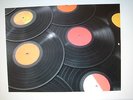
5x12" 78 rpm Record in original orthophonic album with patterned sleeves M-177:
Condition: EXCELLENT Close to pristine, dusty, plays very quiet w faintest hiss. Album close to new, but top 3 cm of spine loose
GREGORIAN CHANT DISCOGRAPHY
(Continued)
Dom Adel/ard Bouvilliers, O.S.B.; M.A.;
Mus. Doc.; Belmont, N. C.
395
One cannot apprise the worth of these discs
without being reminded of Olin Downes'
press comments. The Chants, as sung
by the Choir of Pius X School and
directed by Mother G. Stevens of the Sa
cred Heart College (Manhattan), N. Y. or
by Mrs. Justine B. Ward. . . . "give an ex
cellent example of the feeling and mood, the
radiant beauty, the sculptured line of plain~
chant in its purest flowering of design and
consummation of the text." Again, he
writes: "The beauty of this music, standing
so far apart from that of the present period
and its emotional and cultural currents, was
presented with a remarkable technical finish,
taste and assimilation of its spirit." And it
is sure that Dom Mocquereau would ap
prove of the rendition which has been im
printed on these discs. They record soul
stirring singing, reminiscent of monastic
choirs-but here it is sung by the sweet,
clear and trained voices of children.
Album Set No. M177 was recorded under
the direction of Miss Julia Sampson, with
Mr. Achille Bragers accompanying on the
harmonium.
The r,ecording of Pius X School Choir is
uniformly good. I subscribe fully to James
A. Boylan's review of the same (M-177) in
the first number of The Musical Record
(June 1933, p. 3435):-"One cannot but
wonder at the power of these children to
sing the intricate phrases of a florid com
position like the Gradual or Tract of the
Requiem Mass (11529B) . These pieces
were evidently written for virtuoso singers.
As the melody unfolds itself in its long lines,
it seems as if these children were under no
compulsion to stop for breath. Yet the pro
portion and the balance of one phrase
against the other is unimpaired; there is no
hurry or confusion; the melodic line is there
in all its austere beauty. Everything is pre
cise and confident. It is an achievement of
a very high order and reflects great credit
on the school which so carefully and so intel.
ligently prepared the little ones for a task
of no small difficulty.H
Mr. Achille Bragers' accompaniment is
purposely subdued, but as light as it sounds,
it illustrates the proper function of Gregorian
accompaniment, which should be merely a
light harmonic support, so as to serve as a
background for the cantilena and when there
is need to guide and help the singers.
The discs of both these albums offer invaluable service as examples of what Gre
gorian Chant is when well rendered,~when
the rhythmical accuracy and the shading
and the intelligence of the text is reflected in
the Iluances, and the organist knows his role.
These create a true sense of reverence for
more of these eminently worthwhile inter
pretations of Liturgical Music, for these re
cordings are a helpful medium. They en
able seminarians, priests, choirmasters, organists
and singers to become acquainted
with the best methods of teaching and learn
ing. One sees and becomes convinced that
children's choirs can be trained to sing with
intelligence and thus, according to Pope
Pius' words, HTo pray with beauty."
by Lucy E. Carroll
Picture a large, beautiful chapel filled with a congregation of musicians and music students. Imagine that congregation singing Gregorian chant from the Liber Usualis and singing hymns and motets in four-part harmony. Visualize liturgy with extraordinary attention to the beauty of detail. These are my memories of the two annual semesters I spent at Pius X, a bit of heaven on earth. I was a junior, then a senior, in high school, and I was privileged to be attending college-level courses at the Pius X School of Liturgical Music. I was admitted because I was already playing organ at Mass and working with choirs. Life was good.
The Religious of the Sacred Heart, a French order founded by Saint Madeleine Sophie Barat, operated the Manhattanville College of the Sacred Heart in Purchase, New York. In summers, the entire campus was turned over to music, and it became the Pius X School of Liturgical Music. Priests, seminarians, nuns, organists, and choir directors came from all over the United States — and some from beyond our borders — to attend this most prestigious school.
Classes were offered in Gregorian chant (various levels), chironomy (the conducting of chant), theory, harmony, liturgical singing (from the Liber Usualis), organ, voice, polyphony, music literature, and even music education. We all sang in choir. One could take courses, or matriculate into a full degree program. Most folks simply took the needed courses for church work.
Stepping on to that campus in summer was like walking into a living encyclopedia of traditional religious garb. Nuns still wore full habits. White, black, grey and brown robes were topped with scapulars or capelets. Headpieces included wimples, coifs, bonnets and caps: pointed, rounded, squared, pleated, frilled. Veils were short, long, sheer, or full. Rosaries clatter at sides. Priests wore collars. Brothers wore hooded robes. We laity looked like poor country cousins. No one wore jeans!
A number of years before I arrived there, composer Richard Rodgers visited the school to hear accurate Catholic music as he prepared to compose the music for his new Broadway show, The Sound of Music.
He listened to the nuns chanting the Office, and circled in on the second Gregorian psalm tone. He used this for the nuns’ chorus in the show. He also composed music in four parts for the nuns’ chorus at the opening of the musical, based on what he heard. (Sadly omitted in many productions). Some of the nuns who attended Pius X while I was a student there told of meeting Mr. Rodgers and singing for him.
Hearing the Religious of the Sacred Heart chant the Office at Pius X was celestial food indeed. Singing sacred music in a large choir — everything from Palestrina to Fauré to Moussorgsky and lots in between — was exhilarating. I remember standing in the corridor of the practice room area, hearing all manner of organ, piano, and voice music emanating from the little rooms, and thinking that it just couldn’t get much better than this.
We learned chant under the aegis of the Solesmes Benedictines, who sometimes visited the school. We used Solesmes choirmaster Dom Joseph Gajard’s book. We sang the solfege syllable “te” (lowered seventh tone of the mode) as “ter” in the French manner.
I found myself writing term papers, something I had just learned to do in high school. I was an avid bookworm, and even assisted some of the sisters who were classmates because I kept such accurate class notes. I remember sitting under a tree and practicing my sight reading. I remember the serious recitals, and the fun ones as well.
Sister Mary John’s father, a vaudevillian, came to play the musical saw. Mother Jenkins sang spirituals so beautifully it brought tears to many eyes. I remember drawing and posting cartoons on the dorm bulletin board about funny events on campus. (No mice in those days.)
The campus library had a musty smell. There were so many volumes in French that I brought my dictionary and struggled through some of them. There were volumes upon volumes on chant, and on designing, building, and playing pipe organs. I absorbed as many as I could.
One day, while a group of us were reviewing class notes, a young Maryknoll sister came over to share sad news. She had tears in her eyes. She had just received word that she was being assigned to Mexico.
She was happy about the missionary work, but devastated that, in those days, Mexico’s secularization laws forbade the wearing of religious habits. She had just received the habit, she said, and it was the sign of her consecration to God and to her apostolate. She wanted to wear it.
I often wonder how the sisters could have so easily divested themselves of the habit just a few years later, given that one sister’s attachment. But it was the late 1960s, and the Church had turned upside down.
I attended Pius X in the heady summers of 1963 and 1964. The Council was closing; we had been receiving information about the meetings. We were told that Latin remained the official language, but vernacular could be used with permission. We began to be trained in setting chant into English.
We were told that choirs would be more important than ever, that the very best composers were going to be writing the very best music for the liturgy. We sang works by skillful modern composers such as Russell Woollen. Father Lucien Deiss came to hold workshops and have us sing through his new compositions. We were told that we organists were more needed than ever. It was heady stuff.
And it was true, of course, as far as it went. Within a few years, however, all of that was ignored. In the parishes, out went the pipe organs and in came the guitars and tambourines. Out went the beautiful sacred music; in came the popsy-folksy tunes.
It was devastating. But for those two summers, I bathed in the best that our church had to offer. I learned polyphony. I wrote music. I conducted. I sang. I played the organ. I attended concerts. I learned from everyone.
My second year there, there was a beginning undertone of dissent and questioning. Rumors flew: the Council would abolish religious habits, the Council would allow priests to marry, and so on. It was an undercurrent, and it disturbed those who read the actual documents coming from the Council which, of course, said no such things. I understand the undercurrent grew stronger the next few years.
Despite my tender years, I was treated well by everyone there. I spoke with nuns, priests, seminarians, organists, directors — and began to soak up their wisdom, experiences, and ideas. I knew that this was what I wanted to do all my life.
Alas, I was not able to do that until many years later. I found myself doing the sacred polyphonic works only in secular concert venues. What a loss, what a shame.
Today at the monastery, we do chants and traditional music. Our congregation, aided by the choir behind them and the nuns in front of them, sing chant Masses. Our choir may be small, but it is brave in approaching the difficult polyphony and other sacred choral works I present to them. In our first year together, when I first presented a work by Antonio Lotti, they called me “delusional”. Last year they conquered a difficult work by Tomás Luis de Victoria.
I often think of the days at Pius X and wonder what state our Catholic church music would be in today if we had all followed the letter rather than “the spirit” of Vatican II; if we had truly used the best and most elevated compositions rather than the bubble-gum variety; if we had emphasized choirs and organ as the Council Fathers intended.
The school is long gone, and I am one of few survivors. Even Manhattanville College of the Sacred Heart is now a secular school and the “of the Sacred Heart” is missing from its name. I wonder what happened to the gorgeous campus chapel.
It was always my dream to head up a school like that. Instead, I found myself as music coordinator over nine public schools, and teaching high school, college, and graduate school. Quite a different world.
The training at Pius X was wonderful because everything was rooted in chant. It is impossible to prepare music for the sacred Eucharistic liturgy without a thorough grounding in chant, for all appropriate liturgical musical styles spring from it.
It is my sincere hope that such a school as Pius X arises again, at the national level. In the meantime, diocesan schools must be established, but they must be run by dinosaurs who, like me, were properly trained in the Benedictine school of chant, in the historic, diverse and sacred choral literature of the church, and in the true purpose of music in the liturgy, bringing souls to God by lifting them out of the mundane and into the sacred.
More Great Records on sale right now:
http://shop.ebay.com/carsten_sf/m.html
http://shop.ebay.com/carsten_sf/m.html
====
A Quick NOTE ON GRADING AND SHIPPING:
As you can see from my feedback, I try hard to earn your POSITIVE FEEDBACK and FIVE STAR RATINGS.
If for any reason your transaction was NOT SATISFACTORY, pls contact me and I will work something out with you. YOU WILL NEVER HAVE A REASON TO GIVE ME A NEGATIVE RATING or a LOW STAR RATING.
Quick note on grading:
The Grade (Excellent to Fair, I don't give Mint) refers to the WEAR of the record. Any other defects are stated separately
When I listen to a record, I may also give it an aural grade (again E to F), and make a SUBJECTIVE judgment of the pressing quality for hiss and surface noise.
"SUPERQUIET" is basically noiseless, like a vinyl pressing.
"VERY QUIET" is an exceptionally quiet record for a given pressing.
"Quiet" is a record that is a great example without undue noise for a give pressing.
These judgments are SUBJECTIVE and will depend one the styli, phonograph etc. you use on your own equipment.
Pls check my other auctions for more great records and phonograph items:
Multiple item shipping: I am happy to combine items for shipment in one parcel.
If you win multiple items, pls send me an INVOICE REQUEST to calculate the correct postage. Ebay check out will not give you the multiple item discount!
Records will be packed safely between corrugated cardboard in a sturdy box with plenty of padding for safe shipment.
Shipment is usually Media Mail, unless another service is requested. Shipping is at your risk, I will be happy to insure items at your cost.
I charge actual postage plus a small fee for packing materials
As always, I guarantee your satisfaction. If you don't like the item, just return it, and I will refund the full purchase price.
If you are in the San Francisco area, I encourage pick-up in person.
US Domestic Shipping:
Here is a guideline for US Media Mail Shipping:
Prices below are for regular 78 rpm records. Up to about 5 records, I will ship Edison Discs for the same rates. Albums from Album Sets count as 1 record. Above that and for international shipments, it will be actual weight plus a small packing charge (1-3$ depending on size of shipment)
1 record: 4.50 – 5.00$
2 records: 5.75$
5 records: 7.50$
10 records: 9.50$
MANY MORE RECORDS: Don't worry. I safely ship 40 - 50 pounds of records double boxed in moving boxes, and even then Media Mail will probably not exceed 30$.
Please send me a message if you would like to lower your shipping rates!
International Buyers:
All'attenzione degli acquirenti italiani:
ATTENTION TO ITALIAN BUYERS:
Due to rare problems with delivery in ITALY, I will NOT GUARANTEE delivery of parcels sent by US Postal Service First Class and Priority Mail. If you prefer secure delivery, I will be happy to quote you either Registered Mail or shipment by FEDEX
I am very happy to ship records worldwide.
Please use the EBAY shipping cost only as a guideline. My actual charges are usually lower
One record usually ships for 25 – 28$ for 10" 35$ for most 12" records (Less for Canada).
I can get SIGNIFICANTLY LOWER rates from FedEx and the US Postal service for any kind of parcel weight, and will make use of all the cost-saving shipment methods
Pls contact me for a shipping estimate, or send me an invoice request after close of auction.
AND AGAIN -THANK YOU FOR YOUR INTEREST
As you can see from my feedback, I take great care in presenting, grading and shipping your items. I really want you to be happy with the purchase. If you feel that anything is wrong with the item or the shipping, contact me and we will work it out !!!
As always, I would appreciate any suggestions and corrections from you, pls contact me with any question.
Thank you very much, and good luck bidding !!!
price rating