1930 HANS PFITZNER BEETHOVEN Symphony No 6 PASTORAL Berlin State Opera Orch 78
$
45


Favourite Auctions
To save auctions to your favourites, please login
If you don't have an account, please register
Description
Please wait for me to send you an invoice. DO NOT USE EBAY CHECKOUT if you want the lowest possible postage.
Welcome to my new listings of great records
Over 1000 records at great fixed price listings, opera, jazz, early and rare records, as well as ethnic Greek, Turkish, Jewish and Arabic records
PLEASE DO NOT PAY before I send you an invoice, otherwise the Ebay system will charge you a higher shipping charge.
A series of great Violin, Piano and Orchestra records on rare labels, from 1902 Monarch to 1940 War Germany recordings.
Deutsche Grammophon made some costly mistakes in their recording equipment, which lead to sometime 4 recordings of lenghty classical works in the 1920:
The first acoustic recordings up to mid 1924 are still prized for their incredible fidelity.
In late 1924, DG re recorded a lot of works in their proprietary TELEPHONE MICROPHONE early early electric Process. These issues are the rarest of all sets
This was superseded in 1926 with licensing the Brunswick Light Ray system.
With the Advent of Electrola in 1926 of great recordings on noiseless surfaces, DG needed a competitive answer: New noiseless shellac and their Polyfar Raumklang system provided some of the greatest, high fidelity recordings of all 78s (next to Ultraphon-Telefunken 1928 system and Alan Bluemleins 1931 recorder these are the absolute best recordings made in the 78 period)
The Beethoven Centenary in 1927, and Schubert in 1928 provided another motivation for the incredible cornucopia of DF recordings
Great German composer and conductor HANS PFITZNER with the BERLIN State opera Orch
Beethoven Symphony No. 6
Berlin State Opera Orchestra
1930, Berlin
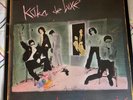
Orig Issue French Polydor 6x12" 78 rpm records in generic album
Condition: ECXELLENT minus scuffed, dusty needs cleaning, plays very quiet light crackle
Album like new
Pfitzner prepared this recording at around the time when he was putting the finishing touches to his cantata Das dunkle Reich and although far from immaculate, technically speaking, it is full of intuitive insights. Freer in style than Kleiber’s Second, it is also rather more respectful of Beethoven’s fast metronome markings.
The Symphony opens to a quiet pizzicato chord, which in turn leads to a solemn adagio theme and a hymn-like motif (at 2:11, where Pfitzner’s strings introduce one or two of those ‘portamento’ slides). So much for the darkness. Light dawns suddenly, first on crescendoing violins, then on two affirmative orchestral chords (2:27) and an Allegro vivace where Pfitzner immediately starts to push the tempo (2:40). A cheeky bassoon flavours the mix (2:59), the tempo dips for a second idea (again led by the bassoon, at 3:36), then speeds again as marching crotchets 3:49 deliver us to the second subject (4:07 - clarinet in duet with the bassoon). The development section (4:47) is eerily quiet. At 5:59 gentle violin crotchets reflect on that initial, excited ‘darkness to light’ transition to allegro vivace, alternating with equally quiet timpani (though they are not terribly quiet here) before leaping back at full force for the recapitulation (from 6:48). This particular performance is interesting in that while many conductors at the time slow the development to virtual immobility, Pfitzner keeps things on the move.
The Adagio second movement opens to quiet second-violin semiquavers in 3/4 time that switch to clipped staccato triplets as soon as the first violins take up the first theme cantabile (or ‘sweetly’). In this recording, however, Pfitzner ‘back-dates’ the staccato effect to the opening bars so that when first fiddles come in with their theme, the accompaniment is consistent. The idea, one presumes, is to mark a maximum contrast between a singing top line and its crisp, even breathless ‘backing’. After a hammering climax, woodwinds take over the theme and lower strings provide a pizzicato accompaniment. Next comes a noble, arching motif on the strings (at 1:40) followed by a delicately accompanied clarinet solo. A little later, at 4:00, violins take the lead with a variation on the principal theme before string choirs intertwine (5:09). The movement's closing moments have the horn, clarinet and flute enter into a ‘speaking’ exchange that anticipates the close of the Pastoral Symphony’s ‘Scene by the Brook’.
Pfitzner’s “Menuetto” is lively but casual, and openly appreciative of those weird, curling figurations shared between woodwinds and strings (from 00:03) that seem to anticipate the twilit world of late Brahms. The folksong-like trio is slowed significantly and the rush back to the opening idea (2:52) is something of a mess. Beethoven’s Allegro ma non troppo heading for the finale contradicts a very fast metronome marking, but Pfitzner sensibly keeps the pace both moderate and flexible so that you can hear, say, the rocking clarinet accompaniment (at 0:35) and crucial sforzando string figurations later on. The central section (from 1:38) is full of tiny pauses and speed alterations, but the return statement of the second idea at 3:23 is beautifully drawn. And when, towards the end of the piece, Beethoven lulls us into a false sense of restfulness, Pfitzner keeps the secret and the vigorous finale bars are shockingly conclusive.
The hundredth anniversary of Beethoven’s death coincided with the dramatic improvement in sound recording brought about by the electrical process. A large-scale edition of Beethoven’s works was launched by English Columbia, including a complete set of the Symphonies. At the same time, the German Grammophon label (exported as Polydor) commenced its own series of the Beethoven Symphonies. The Berlin Philharmonic Orchestra and the Berlin State Opera Orchestra shared the recordings, conducted by Hans Pfitzner, Richard Strauss, Oscar Fried and Erich Kleiber.
Hans Erich Pfitzner (May 5, 1869 û May 22, 1949) was a German composer and self-described anti-modernist. His best known work is the opera Palestrina, loosely based on the life of the great sixteenth-century composer Giovanni Pierluigi da Palestrina.
[edit] Biography
Born in Moscow, Pfitzner spent most of his life in Germany, working as conductor, pianist, and teacher as well as composer. Pfitzner was the son of a professional violinist and received lessons from his father when he was quite young. The family moved to Frankfurt in 1872. His earliest compositions were composed when he was 11, and in 1884 he wrote his first songs. From 1886 to 1890 he studied composition with Iwan Knorr and piano with James Kwast at the Hoch Conservatory in Frankfurt. He taught at the Koblenz Conservatory from 1892 to 1893. In 1894 he was appointed conductor at the Stadttheater in Mainz. His own music - which includes pieces in all the major genres except the symphonic poem - was respected by contemporaries such as Gustav Mahler and Richard Strauss, although neither man cared much for Pfitzner's innately acerbic manner (and Alma Mahler reciprocated his adoration with contempt). Particularly notable are Pfitzner's numerous and delicate Lieder, influenced by Hugo Wolf, yet with their own rather melancholy charm. (Several of them were recorded during the 1930s by the distinguished baritone Gerhard Hnsch, with the composer at the piano.) His first symphony underwent a strange genesis: it was not conceived in orchestral terms at all, but was a reworking of a string quartet.
Hans Pfitzner featured on a 1994 German postage stampEasily the most celebrated of Pfitzner's prose utterances is his pamphlet Futuristengefahr ("Danger of Futurists"), written in response to Ferruccio Busoni's Sketch for a New Aesthetic of Music. "Busoni," Pfitzner complained, "places all his hopes for Western music in the future and understands the present and past as a faltering beginning, as the preparation. But what if it were otherwise? What if we find ourselves presently at a high point, or even that we have already passed beyond it?"
Increasingly nationalistic in his middle and old age, Pfitzner was at first regarded sympathetically by important figures in the Third Reich (in particular by Hans Frank, with whom he remained on good terms). But he soon fell out with chief Nazis, who were unimpressed by his long musical association with the Jewish conductor Bruno Walter. He incurred extra odium by refusing to obey the regime's request to provide incidental music to A Midsummer Night's Dream that could be used in place of the music of Felix Mendelssohn, who was also Jewish. Pfitzner maintained Mendelssohn's original was far better than anything he himself could offer as a substitute. After the war he ended up in an old people's home in Salzburg, Austria where he died. Following long neglect, his music began to reappear in opera houses and concert halls, as well as recording studios, during the 1990s.
More Great Records on sale right now:
http://shop.ebay.com/carsten_sf/m.html
http://shop.ebay.com/carsten_sf/m.html
====
A Quick NOTE ON GRADING AND SHIPPING:
As you can see from my feedback, I try hard to earn your POSITIVE FEEDBACK and FIVE STAR RATINGS.
If for any reason your transaction was NOT SATISFACTORY, pls contact me and I will work something out with you. YOU WILL NEVER HAVE A REASON TO GIVE ME A NEGATIVE RATING or a LOW STAR RATING.
Quick note on grading:
The Grade (Excellent to Poor, I don't give Mint) refers to the WEAR of the record. Any other defects are stated separately
When I listen to a record, I may also give it an aural grade (again E to P), and make a SUBJECTIVE judgment of the pressing quality for hiss and surface noise.
"SUPERQUIET" is basically noiseless, like a vinyl pressing.
"VERY QUIET" is an exceptionally quiet record for a given pressing.
"Quiet" is a record that is a great example without undue noise for a give pressing.
These judgments are SUBJECTIVE and will depend one the styli, phonograph etc. you use on your own equipment.
Multiple item shipping: I am happy to combine items for shipment in one parcel.
If you win multiple items, pls send me an INVOICE REQUEST to calculate the correct postage. Ebay check out will not give you the correct multiple item discount!
Records will be packed safely between corrugated cardboard in a sturdy box with plenty of padding for safe shipment.
Shipment is usually Media Mail, unless you request another service. Shipping is at your risk, I will be happy to insure items at your cost.
I charge actual postage plus a small fee for packing materials
As always, I guarantee your satisfaction. If you don't like the item, just return it, and I will refund the full purchase price.
If you are in the San Francisco area, I encourage pick-up in person.
US Domestic Shipping:
Here is a guideline for US Media Mail Shipping:
Prices below are for regular 78 rpm records. Up to about 5 records, I will ship Edison Discs for the same rates. Albums from Album Sets count as 1 record. Above that and for international shipments, it will be actual weight plus a small packing charge (1-3$ depending on size of shipment)
1 record: 4.75 – 5.50$
2 records: 6.50$
5 records: 8.00$
10 records: 12.00$
MANY MORE RECORDS: Don't worry. I safely ship 40 - 50 pounds of records double boxed in moving boxes, and even then Media Mail will probably not exceed 35$.
Please send me a message if you would like to get an estimate for you shipping rates!
I am very happy to ship records worldwide.
Please use the EBAY shipping cost only as a guideline. My actual charges are usually lower
One record usually ships for 25$ for 10" 25-35$ for most 12" records (Less for Canada).
As always, I would appreciate any suggestions and corrections from you, pls contact me with any question.
Thank you very much, and good luck bidding !!!
price rating